

“It is error only, and not truth, that shrinks from inquiry.”
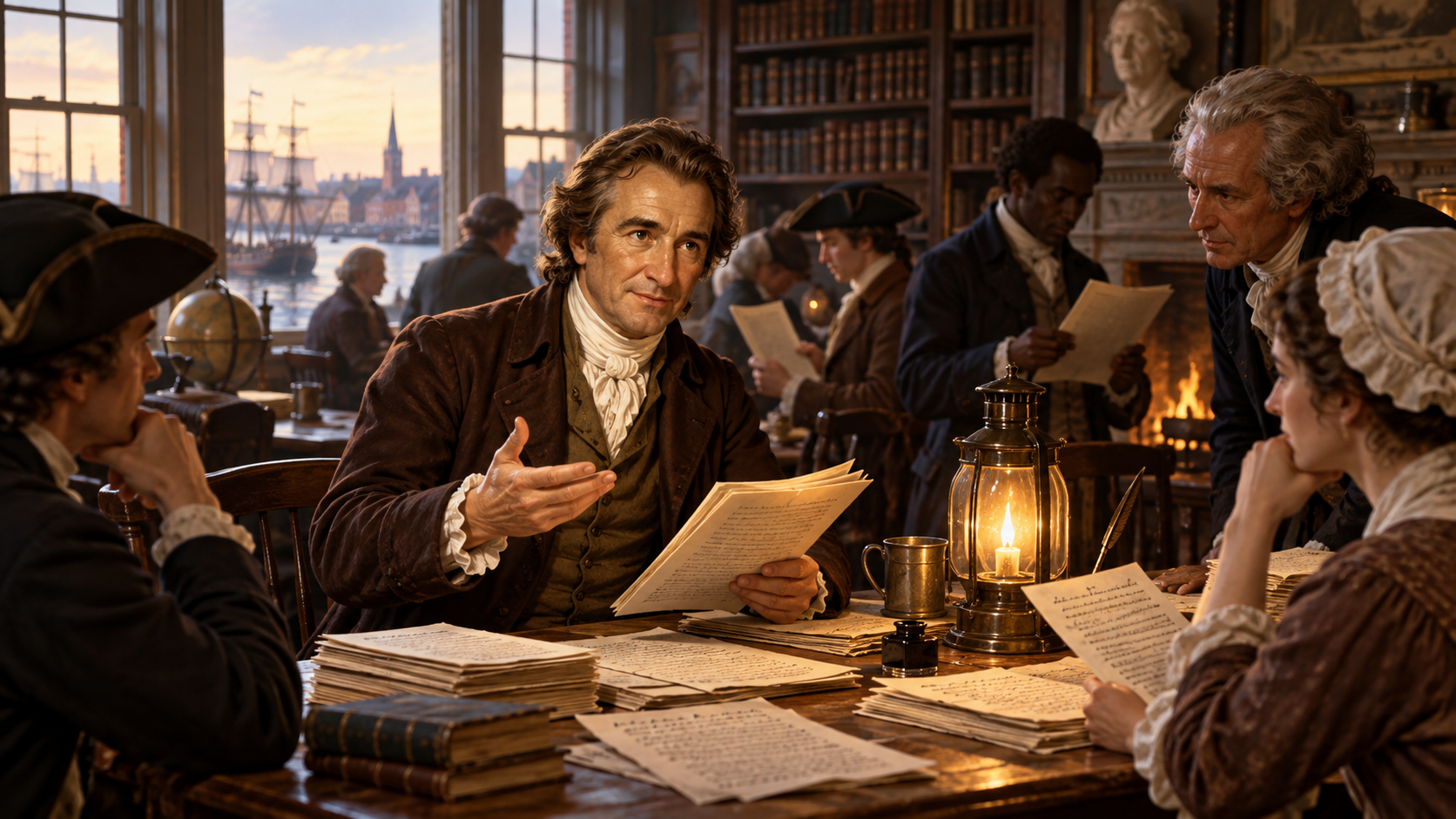
Thomas Paine published the first part of Rights of Man in 1791 while political argument over the French Revolution was spreading through Britain, France, and the Atlantic world. The book answered Edmund Burke’s attack on the revolution and challenged inherited political authority. Paine’s compact observation about truth and error appears within that larger defense of reasoned public examination. He was insisting that institutions and ideas should be judged by what can be demonstrated, not protected by age, rank, or custom. Pamphlets were the fast-moving political media of his period, and Paine used them to bring constitutional arguments to readers beyond elite circles.
The quotation does not promise that inquiry will be easy or that truth will always win quickly. Evidence can be incomplete, audiences can be manipulated, and confident errors can survive sustained criticism. Paine’s point is normative: a sound claim has no legitimate need to hide from honest examination. For journalism, this means treating scrutiny as a service rather than an insult. Reporters ask for records, test official explanations, seek knowledgeable disagreement, and correct findings when stronger evidence appears. The line also applies to news organizations themselves. Credibility grows when reporting methods and corrections can be inspected rather than defended by institutional prestige alone.
In contemporary information systems, falsehood can move faster than verification, while public figures may label inconvenient questions as hostility. Paine’s sentence offers a useful standard without turning skepticism into cynicism. Inquiry requires more than reflexive disbelief; it demands specific questions, relevant evidence, and fair attention to answers. Readers can apply the same discipline by checking original documents, dates, and context before sharing a claim. Newsrooms can make that work visible through links, source explanations, and transparent updates. Truth does not become true because it is popular, but a public culture that protects inquiry gives reliable knowledge its best chance to be recognized and improved.
Paine’s sentence offers a demanding standard for both public officials and news organizations: a claim that deserves confidence should survive sincere questioning. In practice, that means publishing the documents behind an assertion when possible, explaining how a conclusion was reached, and correcting it when stronger evidence appears. Inquiry is not automatically virtuous; questions can be framed to mislead, exhaust sources, or manufacture suspicion. The test is whether the questioning is tied to verifiable facts and whether the same evidentiary standard is applied to allies and opponents. Reporters can make that standard visible by distinguishing what is known, what is disputed, and what remains unknowable at the time of publication. They should also show readers which evidence would alter the story. Paine’s contrast between truth and error is therefore less a promise that truth always wins than a rule for building public knowledge: credible conclusions remain open to inspection, while unsupported claims depend on avoiding it.
Paine wrote during a transatlantic dispute over revolution, representation, and inherited government. Rights of Man was both a rebuttal to Burke and an argument that political arrangements must answer to reason and public judgment.
Inquiry is not the same as suspicion without evidence. Paine’s claim supports testing assertions through questions and proof; it does not imply that every challenge is valid or that established facts must be endlessly relitigated in bad faith.
The line remains relevant when officials resist records requests, sources challenge newsroom findings, or viral claims outrun verification. Accountability depends on institutions being willing to show how they know what they say they know.
Explore more "Quotes of The Day"
Discover more notable quotes from influential voices across politics, science, business, technology, sports, and culture. Each quote offers insight into how ideas, beliefs, and decisions shape the world around us.