

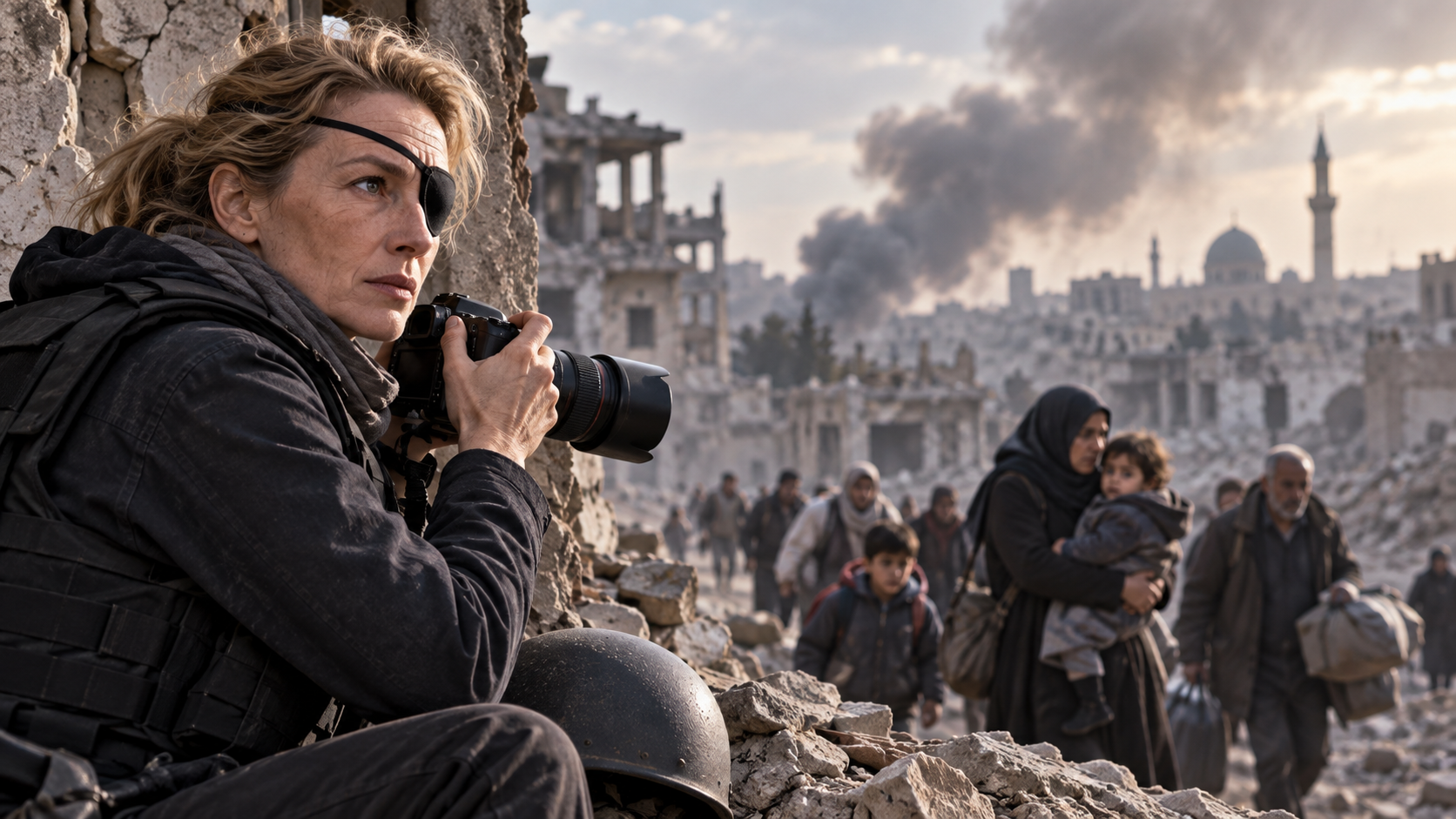
“Our mission is to report these horrors of war with accuracy and without prejudice.”
Marie Colvin delivered this line at a 2010 service honoring journalists killed while reporting conflict. The veteran correspondent described bearing witness as the core of the profession and focused on civilians trapped by decisions made far from them. Colvin had reported from wars across the Middle East, the Balkans, and Asia. She was killed in Homs, Syria, in 2012 while covering the siege. Her words place accuracy and the rejection of prejudice beside moral attention, making clear that witness is not simply proximity to danger or dramatic description.
War reporting faces unusual barriers to verification. Access is restricted, combatants spread propaganda, communications fail, and traumatized witnesses may possess only part of the picture. Without prejudice does not require a reporter to treat aggressor and victim as morally equivalent. It requires claims to be tested consistently and people to be seen as more than representatives of a side. Accuracy includes location, timing, military context, uncertainty, and ethical use of images. Newsrooms must also protect local journalists, translators, and fixers whose knowledge and risk are often hidden behind a foreign correspondent’s byline.
The mission remains urgent as wars are documented through satellite imagery, phones, open-source research, and traditional field reporting. New tools can corroborate events but cannot replace judgment about safety, dignity, and context. Graphic material may prove an atrocity while also harming families or reducing victims to images of suffering. Colvin’s formulation offers a demanding standard: report what happened, show how it was established, resist propaganda, and keep civilians visible as people. Bearing witness earns its value through disciplined truthfulness rather than danger alone.
Colvin’s mission statement defines war reporting through method rather than spectacle. Accuracy requires confirming location, timing, weapons, casualties, and responsibility through more than one form of evidence whenever conditions allow. Absence of prejudice requires more than quoting each belligerent; it means applying consistent standards to their claims and keeping civilians visible as people rather than symbols. Reporters must also protect vulnerable sources, avoid publishing details that expose escape routes or medical sites, and explain when access restrictions prevent independent observation. Images and testimony should be presented with enough context to inform rather than shock. Colvin’s formulation remains important as open-source video, satellite imagery, and remote interviews expand what can be documented while also creating new opportunities for manipulation. The mission is fulfilled neither by emotional distance nor by advocacy without verification. It depends on bearing witness closely, checking what can be checked, and being candid about what the reporter could not see.
Colvin spoke at an annual London service for journalists and support staff killed in conflict. She described the practical and moral reasons correspondents enter places where civilians are otherwise unseen.
Accuracy in war is difficult and often provisional. Rejecting prejudice means consistent verification and human recognition, not artificial symmetry between unequal evidence or conduct.
Open-source tools now complement field reporting, but ethical choices about images, attribution, and source safety remain central to a factual record of conflict.
Explore more "Quotes of The Day"
Discover more notable quotes from influential voices across politics, science, business, technology, sports, and culture. Each quote offers insight into how ideas, beliefs, and decisions shape the world around us.