

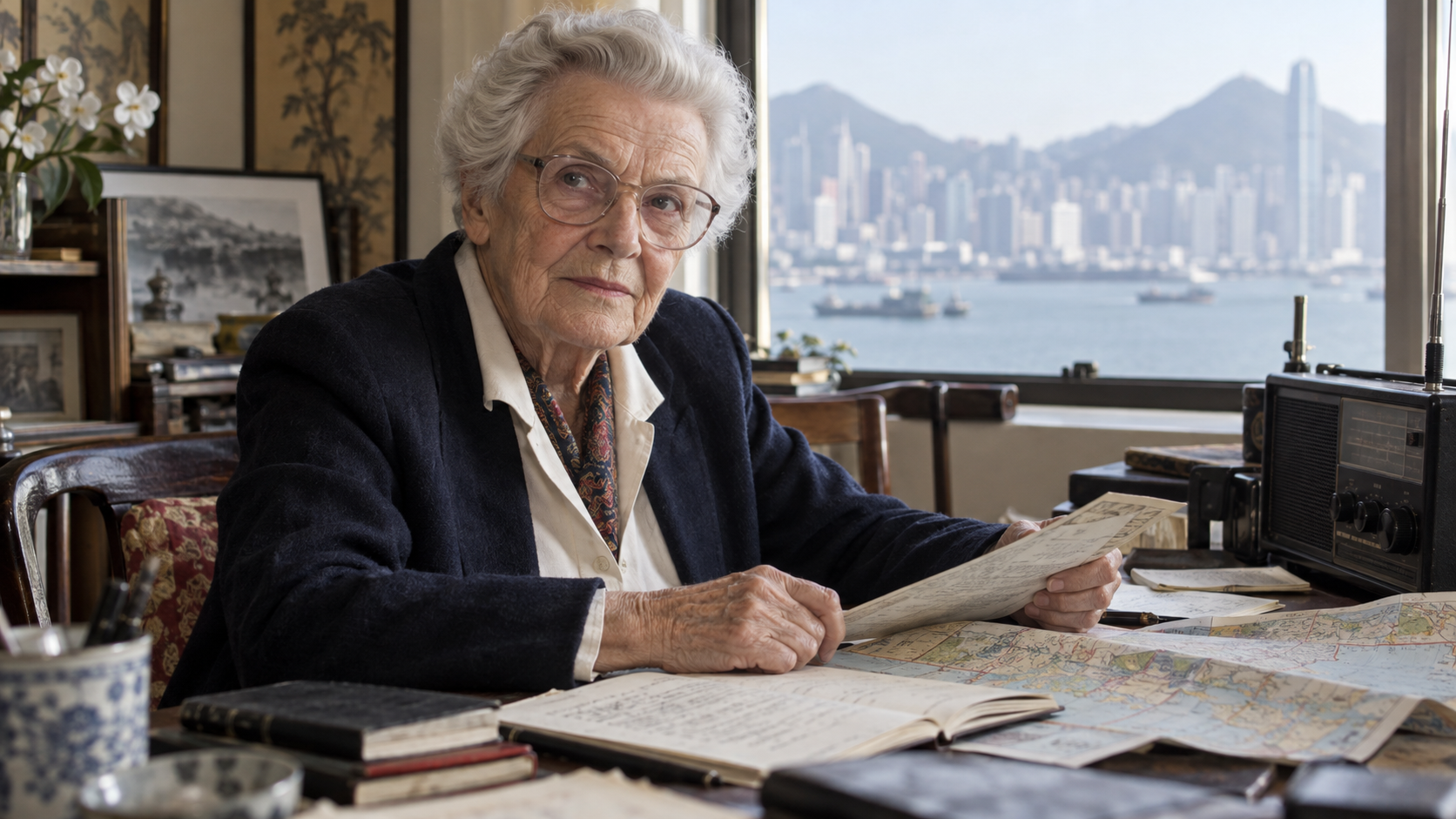
“I can't tell you the truth about that because I don't know.”
Clare Hollingworth used this sentence repeatedly in a 2000 South China Morning Post interview, according to the reporter who spoke with her. By then she had spent decades covering war and international affairs, beginning with her 1939 discovery of German forces massing near Poland. Her reputation rested on finding consequential facts quickly, yet the remark emphasizes restraint rather than bravado. It marks a boundary between observation and assumption. For a correspondent working amid secrecy, danger, propaganda, and incomplete communication, saying what is not known can be as important as reporting a confirmed development.
That discipline is central to breaking news. Early accounts often contain real observations mixed with estimates, rumors, official claims, and social-media fragments stripped of context. A responsible report labels each category. Journalists can say what they witnessed, identify who supplied a claim, explain whether it has independent confirmation, and state what evidence is still missing. They should update prominently when facts change instead of treating correction as embarrassment. Hollingworth’s sentence models confidence without pretense: credibility does not come from sounding certain at every moment; it comes from making the limits of knowledge legible to the audience.
The quote is not an argument for withholding everything until perfect certainty arrives. News often concerns urgent risks, and delay can itself harm the public. Reporters must sometimes publish partial but well-supported information while continuing to investigate. The key is calibration. A firsthand observation deserves different language from an anonymous allegation; a preliminary official figure should not be presented as a final count; an image verified for location may still be uncertain in date or authorship. Editors can help by separating confirmed facts, attributed claims, and open questions in both headlines and live updates.
Hollingworth’s habit is increasingly useful in an environment that rewards speed and punishes hesitation. Synthetic images, recycled footage, coordinated influence campaigns, and instant commentary can create pressure to fill every gap. Explicit uncertainty slows that cycle and gives readers a map of the reporting process. It also makes later accountability possible: audiences can see which claims were provisional and which evidence changed the story. The strongest newsroom is not the one that never says ‘I don’t know.’ It is the one that knows precisely when to say it, continues reporting, and returns with an answer that has earned its certainty. Newsrooms can reinforce the practice by timestamping updates, preserving visible correction notes, and assigning verification roles during major events. Those routines turn candor about uncertainty into a repeatable production standard instead of leaving it to an individual reporter’s confidence under pressure.
Hollingworth repeatedly used the sentence during a 2000 interview late in a career that included major war reporting and the first report of German forces massing near Poland in 1939.
The admission is a standard of calibration, not passivity. It separates verified observation from inference while leaving room to publish urgent, clearly labeled preliminary information.
Live news, recycled media, and synthetic content make visible uncertainty essential. Clear labels for confirmed facts, attributed claims, and open questions help audiences follow how knowledge changes.
Explore more "Quotes of The Day"
Discover more notable quotes from influential voices across politics, science, business, technology, sports, and culture. Each quote offers insight into how ideas, beliefs, and decisions shape the world around us.