

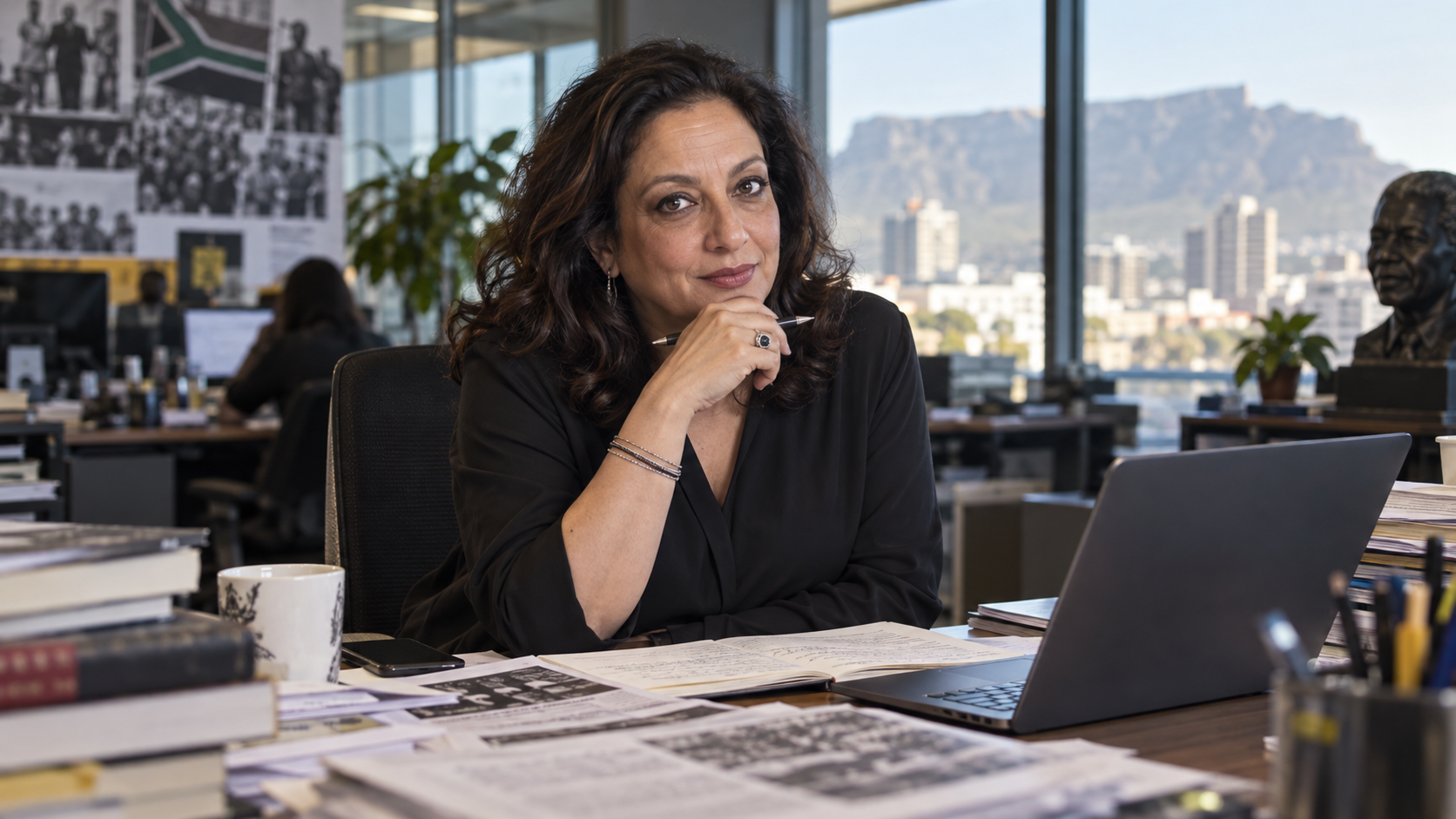
“A journalist's place is not in jail. It is on the street, in the newsroom, raking the muck, holding power to account.”
South African editor Ferial Haffajee used these words while accepting CPJ’s 2014 press freedom honor. She dedicated the award to jailed Swazi journalist Bheki Makhubu and human rights lawyer Thulani Maseko, whose criticism of judicial conduct had put them behind bars. Haffajee contrasted imprisonment with the places journalists belong: among the public, inside newsrooms, and wherever evidence of abuse can be gathered. The sentence turns press freedom from an abstract constitutional promise into a description of necessary work. Reporters must be able to move, question, investigate, and publish if institutions are to face meaningful public scrutiny.
Her phrase ‘raking the muck’ points toward journalism that follows records and consequences rather than repeating official announcements. Effective accountability reporting identifies who made a decision, which rule or public resource is involved, who benefits, who bears the cost, and what documentation supports the conclusion. Sources should be corroborated, and implicated officials should receive a fair opportunity to respond. Editors need to separate a finding from an inference and a proven violation from a political disagreement. Those distinctions protect credibility when a story challenges people with the means to attack the reporter or the publication.
Jail is the most visible form of suppression, but Haffajee’s speech also described secrecy laws, old statutes, costly litigation, and the steady temptation of power to close off uncomfortable truths. Newsrooms should treat legal threats as an editorial risk that can be prepared for rather than a signal to retreat automatically. Careful notes, preserved source material, prepublication review, and shared reporting partnerships can make investigations more resilient. Public explanation matters too. When authorities use law or procedure against a journalist, coverage should show the disputed reporting, the legal theory, and the broader effect on citizens’ access to information.
The quote remains relevant because accountability depends on sustained presence. A single investigation may expose a problem, but reporters must return to court hearings, budgets, procurement records, communities, and promised reforms. News organizations also have to defend the people who do that work, especially freelancers and local journalists whose protection is often weakest. Haffajee’s formulation combines freedom with purpose: society does not keep journalists out of jail to grant them special status, but so they can test power against evidence and preserve facts that officials may prefer to hide. Democratic vigilance is built from those repeated acts of reporting, correction, and follow-up. When journalists can work without imprisonment or intimidation, the public gains a stronger capacity to see how power operates and to demand that it serve the common good.
Haffajee delivered the line in her 2014 CPJ speech while honoring jailed Swazi journalist Bheki Makhubu and lawyer Thulani Maseko and defending a critical, independent press.
Accountability reporting gains force through records, corroborated sources, precise legal language, right of reply, and a clear separation between documented fact and interpretation.
Legal preparation, collaboration, public explanation, and sustained follow-up make newsrooms more resilient when secrecy laws, litigation, or detention are used to discourage scrutiny.
Explore more "Quotes of The Day"
Discover more notable quotes from influential voices across politics, science, business, technology, sports, and culture. Each quote offers insight into how ideas, beliefs, and decisions shape the world around us.