

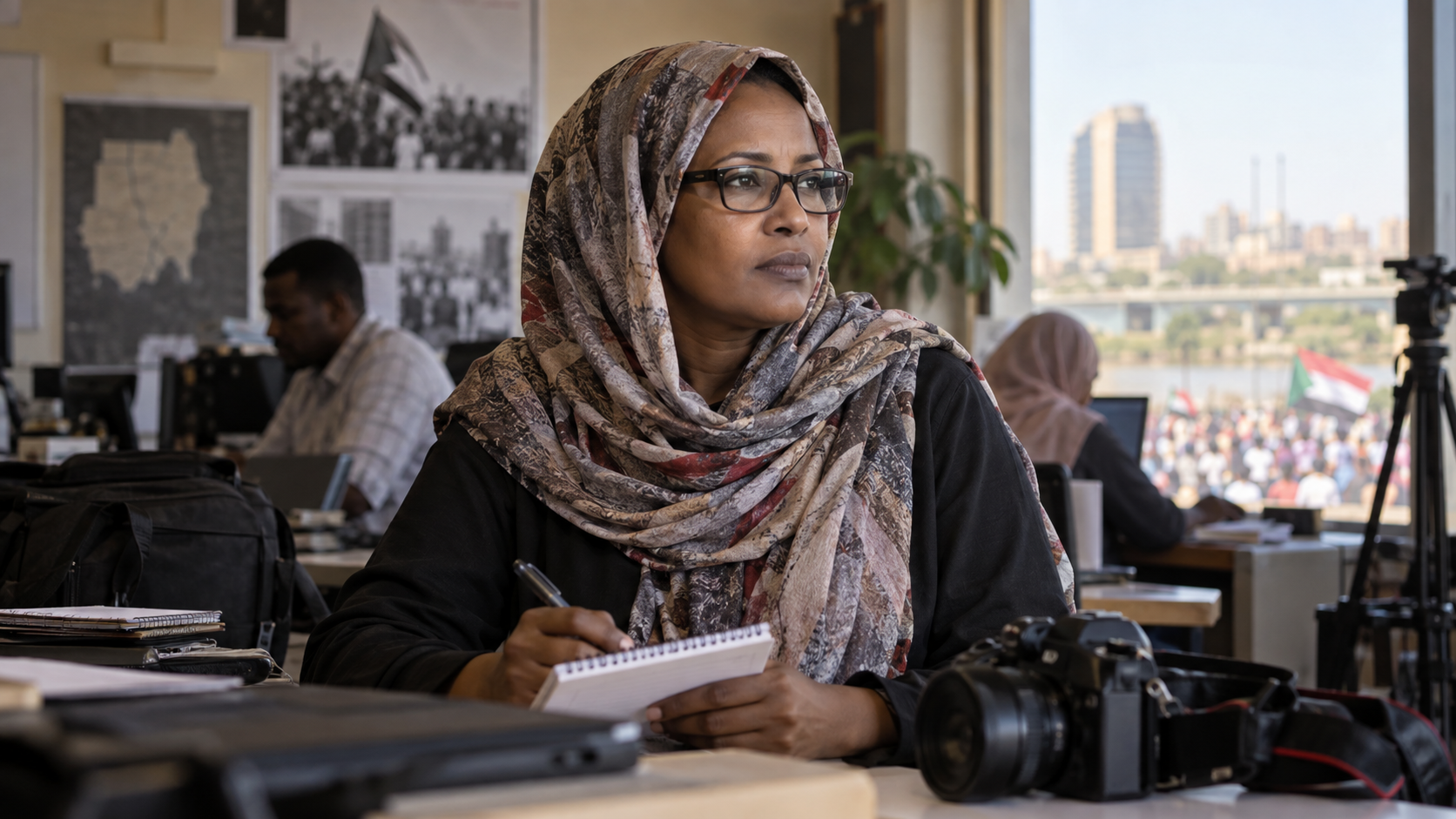
“Journalists in Sudan are in the frontline against the regime.”
Sudanese journalist Amal Habbani delivered this sentence in her 2018 Committee to Protect Journalists award speech. A freelance reporter and co-founder of the Sudanese Journalists Network, she documented protests, official misconduct, corruption, and restrictions on religious and women’s rights. Authorities repeatedly detained and harassed her. After covering anti-inflation demonstrations in January 2018, she spent 34 days in custody and reported being beaten with electric sticks. By calling journalists the frontline, Habbani emphasized their proximity to public harm and the pressure used to prevent facts from reaching society.
Front-line reporting requires disciplined preparation, not a mythology of fearlessness. Before covering a demonstration, journalists should assess routes, exits, communications, medical needs, detention risks, and the location of trusted legal contacts. Newsrooms need check-in schedules and authority to withdraw when conditions change. Reporters should avoid carrying unnecessary source data, secure devices before entering high-risk areas, and agree on what colleagues will do if contact is lost. Protective planning allows journalists to preserve their independence without treating injury or arrest as a professional requirement.
Verification during unrest presents another challenge. Crowd estimates, casualty claims, arrests, and allegations of force often change as evidence develops. Reporters should attribute early figures, record when information was obtained, compare independent witnesses, and distinguish personal observation from material supplied by activists or authorities. Images require original files, location checks, and attention to sequence. Identifying protesters can expose them to retaliation, so the public value of a name or face must be weighed against foreseeable danger. Corrections should remain visible as the account becomes more complete.
Habbani argued that censorship concealed violations of human rights and the collapse of essential services. That connection matters because restrictions on reporting rarely affect journalists alone. When newspapers are confiscated or editors compelled to accept self-censorship, communities lose information about health, education, environmental hazards, gender violence, and public spending. Coverage should therefore follow both the immediate restriction and the subject officials sought to suppress. Regional partnerships, mirrored archives, legal aid, and emergency funding can keep work available after a newsroom is raided or a reporter is detained. The quote remains relevant because the frontline is not merely a physical location. It is the point where evidence meets power. Journalism serves the public there by documenting conduct precisely, protecting vulnerable sources, and refusing to let intimidation determine which harms become part of the record. Follow-up reporting can show whether promised investigations or reforms actually reach affected communities.
Habbani spoke the line in her 2018 CPJ address after repeated arrests, beatings, travel restrictions, and pressure connected to reporting on protests and official wrongdoing.
Responsible protest coverage uses risk plans, timed check-ins, attributed figures, original files, witness corroboration, visible corrections, and careful decisions about identification.
Legal aid, emergency funding, mirrored archives, regional partnerships, and continued reporting on suppressed subjects protect both journalists and the public record.
Explore more "Quotes of The Day"
Discover more notable quotes from influential voices across politics, science, business, technology, sports, and culture. Each quote offers insight into how ideas, beliefs, and decisions shape the world around us.