

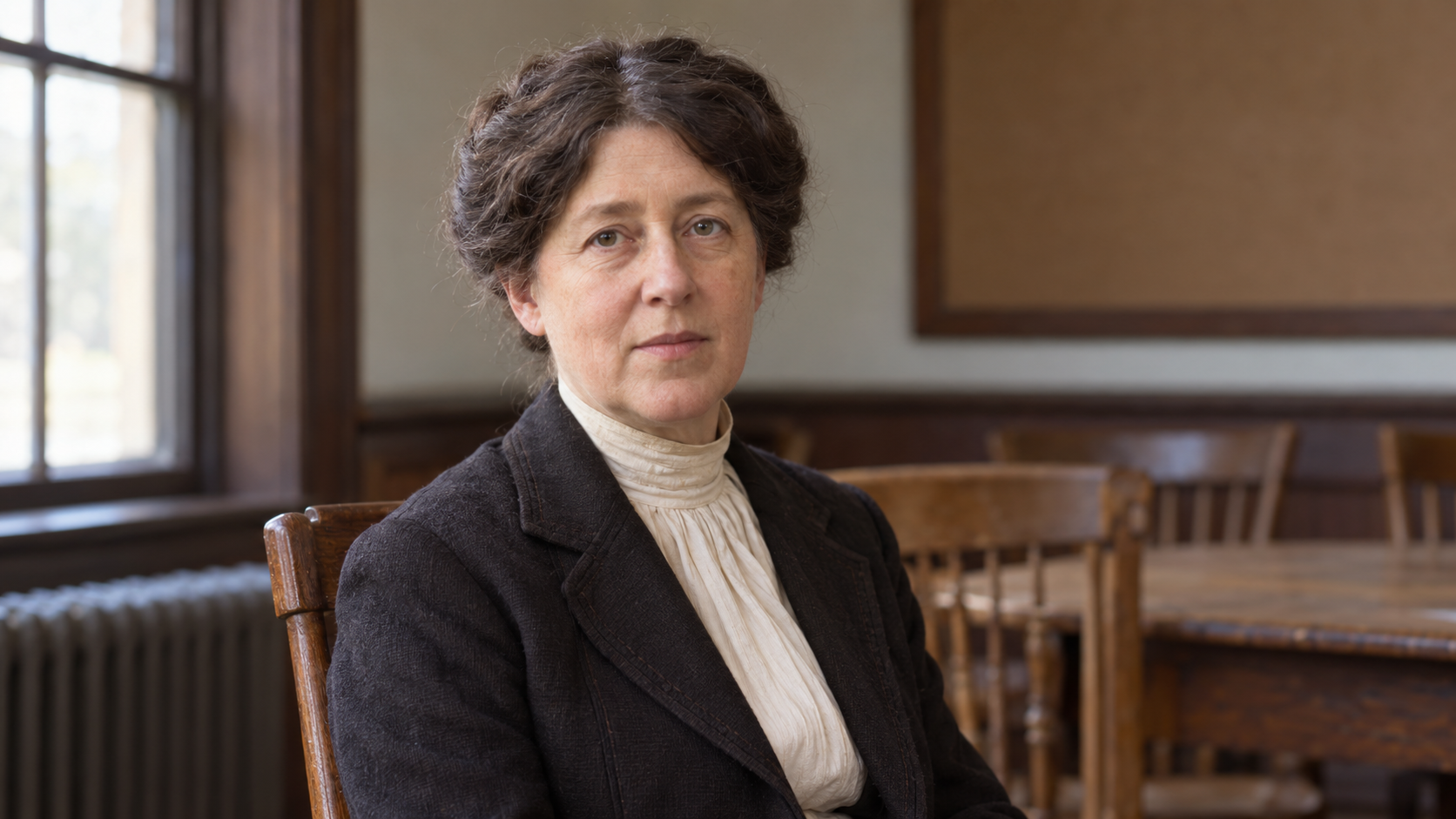
“Democracy must be conceived as a process, not a goal.”
Mary Parker Follett wrote this sentence in The New State, published in 1918. It appears in Chapter XIII, where she examines a progressive society and the continuing formation of a shared will. Her distinction changes what counts as success in democratic life. A community cannot simply reach a final arrangement, declare itself democratic, and stop attending to the relationships that sustain it. Democracy involves an ongoing activity through which people work out common purposes. The quotation's exact wording matters: familiar shortened versions can make it sound like a general motivational saying. Follett is making an argument about how political life is created through participation.
Calling democracy a process places attention on the work between individuals. Voting has a role, but adding separate preferences together does not necessarily create a genuinely shared judgment. Follett emphasizes groups in which people encounter one another's experience and develop something through interaction. The resulting common will is not merely one person's command imposed on everyone else. Nor does it have to mean that participants abandon every difference in order to appear agreeable. The political task is to organize relationships that can make differences productive. On this view, participation is not only a way to choose among finished proposals; it can also change what participants understand and what proposals become possible.
The wider book places neighborhood organization and group life within an account of democratic renewal. Follett believes political institutions need to arise from active social relationships rather than remain distant machinery. That approach helps explain her resistance to treating a goal as an endpoint. New conditions and new encounters continue to reshape what a community needs to do. Her confidence in constructive group activity also leaves practical questions. Groups can exclude people, reproduce inequalities, or allow a confident minority to dominate a discussion. A process deserves examination through who can participate and how much their contribution can matter. The word democracy does not automatically remove those difficulties from any gathering that claims it.
The passage offers a useful test for public participation. Are people invited only to approve a decision already made, or can their knowledge affect the question, the alternatives, and the eventual outcome? A process that allows real influence requires time, access, and an opportunity to respond to others. It also needs the ability to revisit decisions as circumstances change. Follett's sentence does not make formal rights or stable institutions unnecessary. It reminds readers that those arrangements must support living relationships rather than substitute for them. Democratic practice continues through the work of learning, deliberating, and forming purposes together. Its achievement cannot be measured solely by the existence of a procedure whose participants have ceased to exercise meaningful judgment within it.
The sentence appears in Chapter XIII of The New State, published in 1918. Follett is discussing progressive society and the formation of a shared will.
She treats democracy as continuing activity among people, rather than an endpoint reached by establishing a final arrangement.
Group interaction can develop judgments that are more than a tally of separate preferences. Participation can shape the available proposals themselves.
Groups still need scrutiny for exclusion and domination. Merely calling an activity democratic does not guarantee meaningful influence for every participant.
The passage invites assessment of whether people can affect a decision or are only asked to approve it.
Institutions and rights remain important supports. Follett's emphasis is that democratic life also needs continuing relationships, learning, and shared judgment.
Explore more "Quotes of The Day"
Discover more notable quotes from influential voices across politics, science, business, technology, sports, and culture. Each quote offers insight into how ideas, beliefs, and decisions shape the world around us.