

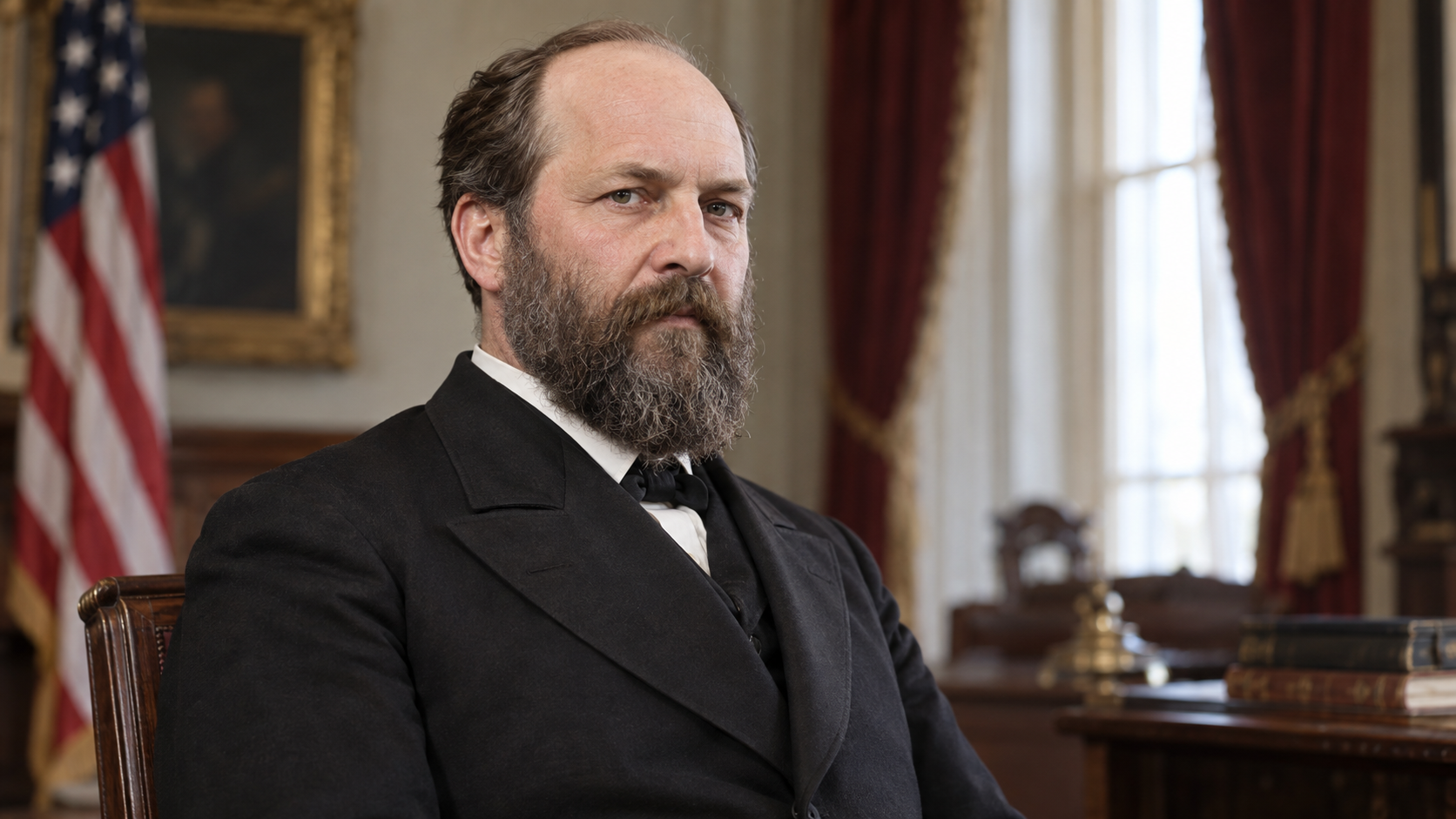
“There can be no permanent disfranchised peasantry in the United States.”
James A. Garfield made this statement in his inaugural address on March 4, 1881. He was discussing the transformation from slavery to citizenship and the continuing denial of Black Americans' voting rights. The sentence rejects a permanent class of people who live within the country while remaining excluded from its political authority. Garfield's language belongs to a particular argument about emancipation and the ballot. It cannot be treated as a claim that equal participation had already been achieved. The surrounding address explicitly acknowledges that freedom of voting remained in question and that legal protection still needed to become effective in practice.
The image of a disfranchised peasantry links political exclusion with a fixed social condition. A republic cannot treat a population as permanently subject to decisions while denying its members a meaningful share in choosing the decision-makers. Garfield argues that suppressing the ballot damages the government's own basis of authority. That is stronger than describing exclusion as an unfortunate inconvenience for the people affected. It makes their rights a condition of the system's legitimacy. The argument therefore connects individual citizenship with the public order as a whole. A community's claim to govern through the people becomes unstable when it decides that some of those people should remain without political voice.
Garfield also discusses education and the allegation that insufficient learning could endanger sound government. His response is to call for education rather than accept interference with the ballot as a satisfactory remedy. The speech places responsibilities on both national and state institutions and asks the country to help prepare future citizens for self-government. Readers should recognize the limits of its historical language. Women remained outside the national guarantee of voting rights, and legal declarations did not end racial violence or exclusion. Garfield's short presidency cannot be treated as proof that the aspiration was fulfilled. The quotation is valuable as a stated standard against which conditions could be assessed, rather than as evidence that those conditions already met it.
The passage encourages a distinction between formal membership and effective participation. People may be described as citizens while facing barriers that prevent their judgment from entering public decisions. Examining that gap requires attention to enforcement, access, and the actual operation of institutions. Garfield's statement also directs the remedy toward inclusion and the development of capacity, instead of making a disadvantaged condition permanent. Its continuing political use lies in that refusal to define some people as naturally fitted only to obey. The historical setting remains essential: the immediate subject was Black citizenship after emancipation. Preserving that context makes the sentence more precise and prevents a broad appeal to republican values from obscuring the exclusion it was meant to challenge.
Garfield spoke on March 4, 1881, in his inaugural address. The immediate subject was Black citizenship after emancipation and the continuing denial of voting rights.
He did not claim that equal suffrage was already secure. The address acknowledges that the ballot required effective protection.
A permanently excluded population would undermine a republic's claim to govern through its people. Garfield links individual rights with the system's legitimacy.
His discussion calls for education as a response to concerns about voters' preparation, rather than treating suppression of the ballot as an adequate remedy.
The passage helps distinguish legal citizenship from meaningful participation. Institutions must be examined through their actual operation.
The aspiration was not a completed achievement, and women still lacked a national voting guarantee. Historical limits should remain part of the reading.
Explore more "Quotes of The Day"
Discover more notable quotes from influential voices across politics, science, business, technology, sports, and culture. Each quote offers insight into how ideas, beliefs, and decisions shape the world around us.