

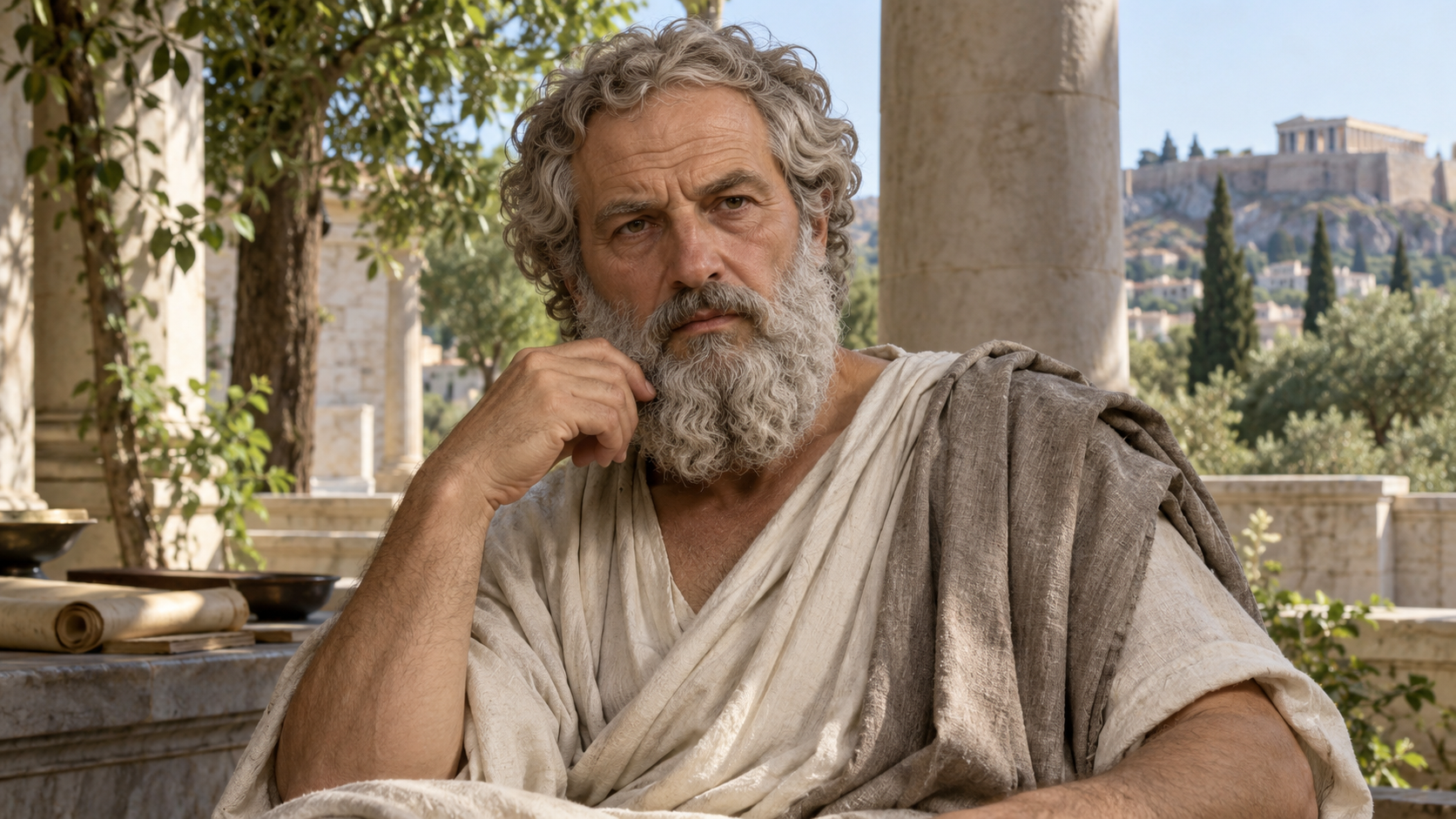
“he who refuses to rule is liable to be ruled by one who is worse than himself.”
This excerpt appears in Book I of Plato’s Republic, in the argument commonly located at 347c. The wording follows Benjamin Jowett’s English translation in its third edition of 1888. Plato presents the thought through Socrates as a speaker in a philosophical dialogue; it should not be treated as a verified transcript of a historical conversation. Dating the author and work to the fourth century BCE indicates their period of the work and its author. The passage considers why a good person might accept the burden of governing even without wanting the rewards of office. One reason is the prospect that a worse person will take authority if he declines.
The surrounding discussion treats rule as an activity directed toward the benefit of those governed. Socrates compares it to a craft whose proper work serves its subject. Under that account, authority is not inherently a prize for the person who exercises it. Payment, honor, or the avoidance of an undesirable alternative may explain why someone takes on the labor. The quoted clause identifies that alternative: declining responsibility can leave a person subject to inferior judgment. Reluctance to seek power can therefore coexist with a reason to accept a duty. The argument separates the desire to dominate from the willingness to perform necessary public work.
Plato’s discussion should not be turned into a slogan claiming that every citizen must seek elected office. The dialogue is examining justice and the nature of rule, rather than offering a modern participation campaign. Plato’s political thought also differs sharply from contemporary commitments to democratic equality. A reader can find the problem of neglected responsibility illuminating without accepting his larger prescriptions for political order. The passage asks about a consequence of refusal, but it does not settle who is qualified to govern, how that qualification should be assessed, or what institutions should prevent abuse. Those questions need additional argument beyond a memorable sentence.
The excerpt can be useful when responsibility is repeatedly left to others because the work appears thankless or inconvenient. In a committee, public body, or civic organization, withdrawing capable judgment may create space for poorer decisions. Accepting a role should still involve an honest assessment of competence, available time, and accountability. The choice is not between limitless ambition and total withdrawal. It concerns whether a particular duty can be performed well and whether declining it has foreseeable effects on others. Plato’s dialogue makes that consequence visible. Its continuing interest lies in the uneasy relationship between disliking power and recognizing occasions when responsible participation becomes necessary.
The excerpt comes from Republic, Book I, 347c. This post follows Jowett’s 1888 third edition translation.
Plato writes Socrates as a dialogue speaker. The passage is philosophical literature rather than a verified conversational transcript.
The argument describes governing as work for the benefit of the governed. A capable person may accept it to avoid worse rule.
This does not establish a universal duty to seek elected office or endorse modern democratic institutions. It raises a problem about refusal and consequences.
Consider what happens when qualified people consistently decline necessary roles. Poorer judgment may fill the space they leave.
Accept a responsibility with attention to competence and accountability. The useful question concerns the effects of a specific decision to participate or withdraw.
Explore more "Quotes of The Day"
Discover more notable quotes from influential voices across politics, science, business, technology, sports, and culture. Each quote offers insight into how ideas, beliefs, and decisions shape the world around us.