

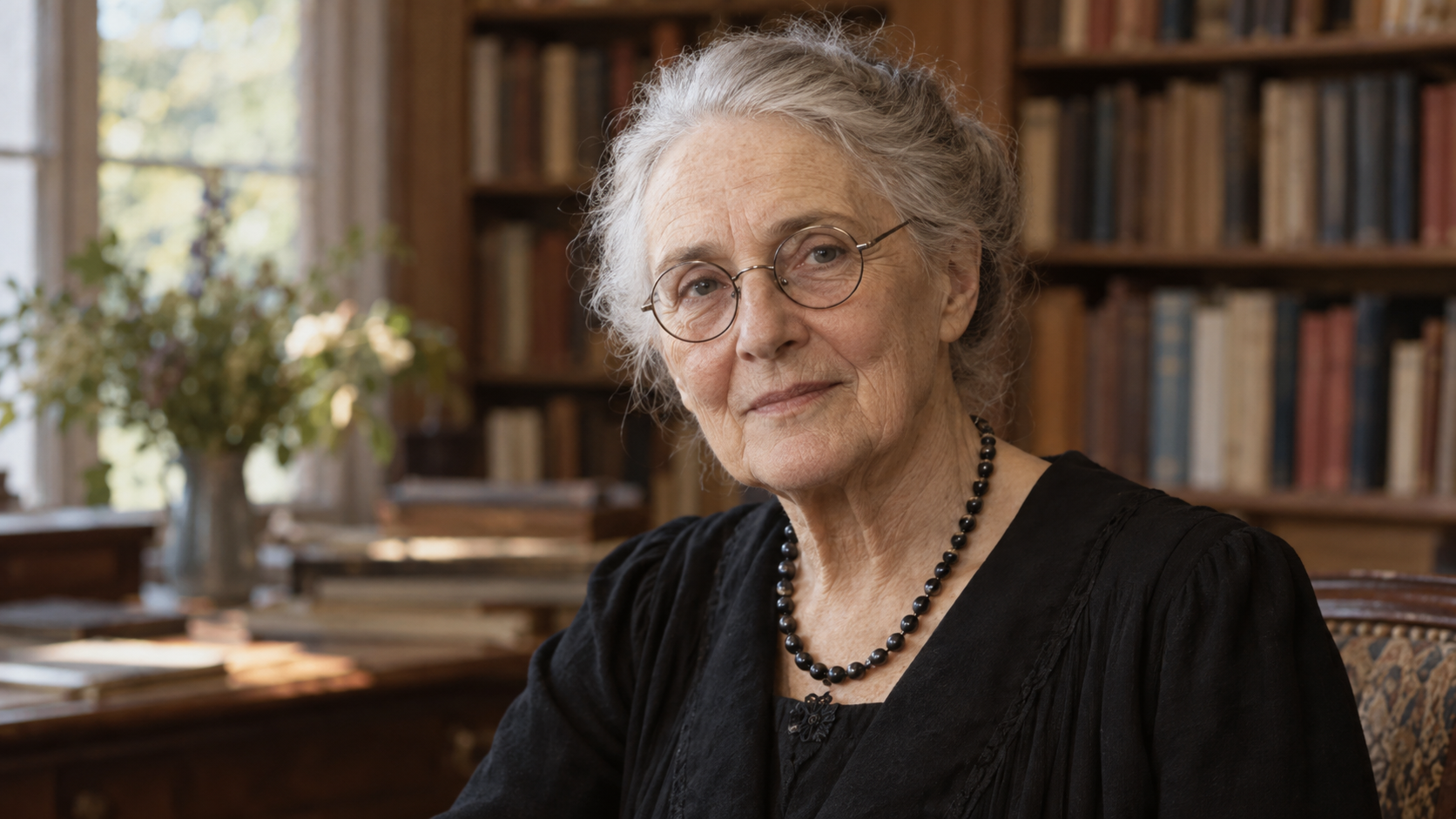
“We have not only to study them but to act.”
Understanding events does not remove the responsibility to influence them. Emily Greene Balch placed that idea near the opening of her Nobel lecture on April 7, 1948. The word “them” refers to events and the forces shaping the future, which she had just been discussing. Her sentence joins study with action rather than asking readers to choose between the two. It acknowledges that people experience developments they cannot control while also making choices that affect their course. That combination makes the line useful for thinking about political responsibility, where uncertainty is real but seldom provides a complete reason to remain passive.
Balch received the Nobel Peace Prize for 1946, but her lecture was delivered in 1948. The year in this post therefore identifies the speech rather than the award. Entitled Toward Human Unity or Beyond Nationalism, the lecture considered the prospects for peace after the Second World War. Balch examined forces that could draw people together as well as habits and institutions that could divide them. Her account was situated in the early postwar period, when international cooperation faced enormous hopes and unresolved tensions. Its historical assessments should be read as arguments from that moment, rather than treated as descriptions of the world today.
The short sentence is demanding because careful analysis can become a comfortable stopping point. A person may identify a problem, describe its complexity, and still avoid deciding what responsibility follows. Yet acting without study carries its own dangers. A confident intervention can misunderstand the people involved, repeat an old mistake, or create costs its supporters never considered. Balch’s formulation keeps both obligations in view. Learn enough to understand the situation, then consider what your position and resources allow you to do. The scale of an action matters less than whether it responds intelligently to the conditions it aims to change.
Political action also needs a way to learn from its results. A decision made responsibly at one stage may require revision when evidence changes or affected people describe consequences that were missed. Connecting study and action therefore suggests an ongoing practice rather than a single heroic gesture. Institutions can make that practice possible through open information, meaningful participation, and willingness to correct their work. Individuals can contribute by testing claims and following through on concrete commitments. The quotation offers no guarantee that an effort will succeed. It asks that understanding become part of responsible conduct, and that conduct remain answerable to what further understanding reveals.
The lecture was delivered on April 7, 1948. Balch’s Nobel Peace Prize was awarded for 1946.
The pronoun “them” points to events and forces affecting the future, discussed immediately before the sentence.
Balch links analysis with responsibility. Studying a problem is necessary, but it does not exhaust the choices people can make.
The sentence also resists careless action: understanding and practical judgment belong within the same process.
Choose a concrete contribution that fits the evidence and the resources available. Reconsider it when the situation changes.
Public institutions can support that process by sharing information and making room for people affected by their decisions.
Explore more "Quotes of The Day"
Discover more notable quotes from influential voices across politics, science, business, technology, sports, and culture. Each quote offers insight into how ideas, beliefs, and decisions shape the world around us.