

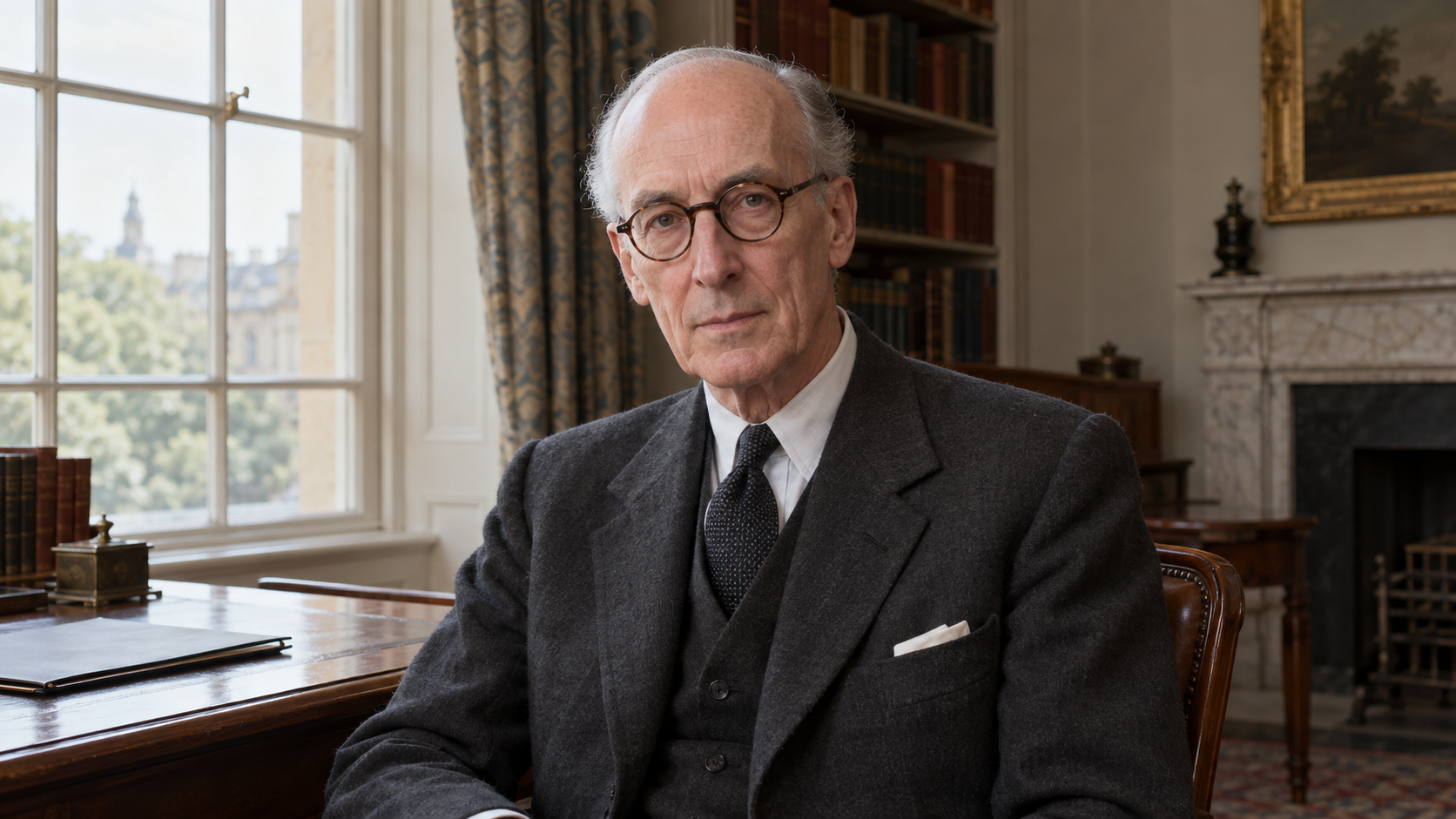
“The danger is not in trying to do too much, but in trying to do too little.”
Philip Noel-Baker used this sentence in his Nobel lecture on December 11, 1959, while arguing for an ambitious response to the arms race. The British politician and disarmament advocate discussed the possibility of comprehensive arrangements supported by inspection and control. His warning concerned the risk of leaving dangerous structures largely intact through measures too small to change their direction. The quotation was therefore attached to a particular problem and a proposed institutional response. It should not be treated as a universal instruction to expand every government program or to pursue the largest available policy regardless of evidence and consequences.
The sentence reverses a familiar assumption about prudence. Political debate often treats a limited step as the safer choice because its immediate demands are smaller. Noel-Baker asks readers to consider the danger that remains after that step is taken. A modest action may reduce uncertainty for the decision-maker while doing little for those exposed to the underlying problem. This changes how a proposal should be judged. The relevant comparison is not simply between acting and avoiding disruption. It is between the risks of the proposed response and the risks of allowing the existing situation to continue over time.
That comparison requires discipline. An ambitious proposal can fail through weak enforcement, unrealistic expectations, or a refusal to acknowledge how other parties may respond. Noel-Baker’s attention to international controls matters because it connects his goal with the means needed to make it credible. The point is not that larger policies are inherently wiser. It is that the scale of a response should correspond to the scale of the danger and that its institutions must support the promises being made. Political courage and administrative care are compatible. Without the latter, a bold declaration may provide reassurance without changing the conditions that made action necessary.
The quotation offers a useful question for contemporary debates about prevention. What evidence would show that the chosen response is enough? A government can answer by identifying the harm it aims to reduce, the safeguards required, and the point at which a policy will need adjustment. Citizens can then evaluate progress against a meaningful standard rather than the number of announcements made. Noel-Baker’s warning encourages seriousness about the cost of delay, but it also raises the burden of explanation for anyone advocating substantial action. An adequate response must show how it changes the danger, not merely how determined its supporters sound.
Noel-Baker spoke at the Norwegian Nobel Institute in Oslo in December 1959. His lecture focused on disarmament and the arms race, with a sustained argument for international arrangements capable of changing the conditions of military competition.
The published lecture includes editorial notes about differences between its written and recorded versions. The selected sentence appears in the authoritative written text and is independently reproduced with attribution in an academic discussion of professional responsibility.
His warning asks readers to count the danger of an inadequate response. A measure can be politically comfortable and still fail to address the problem that justified it. Smallness alone is not evidence of prudence.
This reasoning also places limits on ambition. A proposal needs verification, enforceable commitments, and a realistic account of cooperation. Applying the quotation to an unrelated issue requires evidence about that issue rather than relying on Noel-Baker’s authority.
The idea remains relevant to policies intended to prevent harm before it becomes more costly. It encourages a clear definition of what an effective response would achieve and how that achievement will be measured.
A useful public debate compares alternatives over time. Citizens should be able to ask what happens if a policy succeeds, what happens if it fails, and what happens if the government adopts a response too weak to affect the trend.
Explore more "Quotes of The Day"
Discover more notable quotes from influential voices across politics, science, business, technology, sports, and culture. Each quote offers insight into how ideas, beliefs, and decisions shape the world around us.