

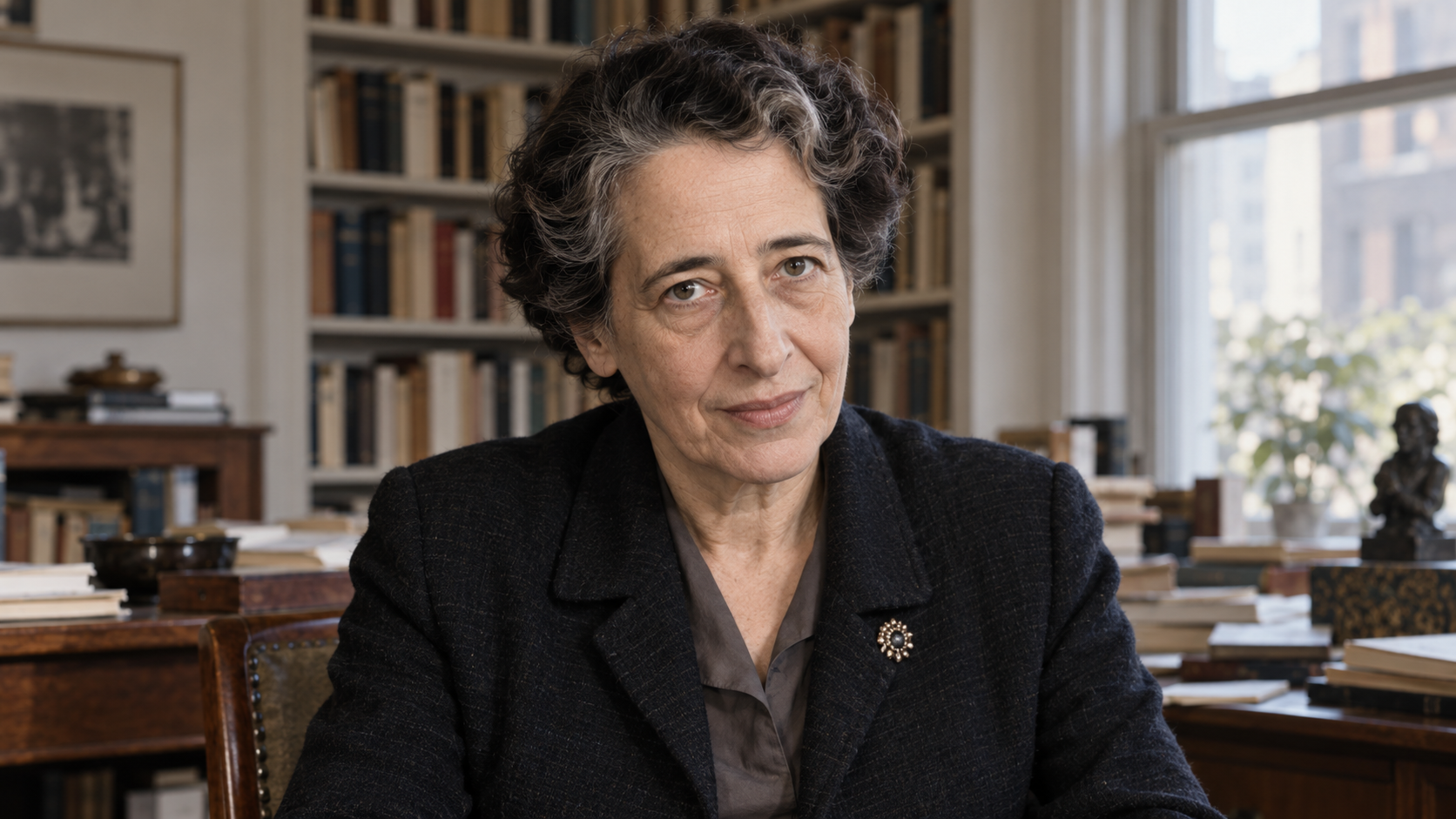
“Freedom of opinion is a farce unless factual information is guaranteed and the facts themselves are not in dispute.”
Hannah Arendt published this observation in her 1967 essay Truth and Politics. The essay examined a tension within public life: political discussion needs competing perspectives, but it also depends on accounts of events that people can check. Arendt distinguished factual information from the opinions people form about it. Her argument did not require everyone to reach the same political judgment. People could disagree over interests, priorities, and proposed responses while respecting what had occurred. The statement thus raises a question about the foundation of disagreement. When participants cannot establish a common account of events, debate may continue in form while losing its substance.
Consider a public decision about a school, a bridge, or a municipal budget. Residents can reasonably favor different priorities even when they agree on the costs and available resources. Their disagreement has something concrete to address. If the figures are concealed, constantly altered, or replaced by unsupported claims, that relationship changes. People may argue intensely while speaking about different imagined situations. More argument alone cannot repair the missing information. Documents, testimony, accessible records, and careful explanation become part of the conditions for meaningful choice. The freedom to express a view is more useful when people can also examine the world to which that view refers.
This emphasis on facts does not remove the difficulty of establishing them. Witnesses can be mistaken, records can be incomplete, and institutions can present information selectively. Calling something factual should therefore invite scrutiny rather than end it. There is also a danger when an authority treats every disputed interpretation as a falsehood. A shared account of an event does not settle whether it was justified, how much it matters, or what should happen next. Those are questions for judgment. The practical challenge is to distinguish an evidence-based disagreement about an event from an attempt to make inconvenient evidence disappear from the discussion entirely.
Arendt’s sentence remains a demanding standard for public communication because it connects expression with responsibility. A speaker can ask whether a claim is supported, whether important uncertainty has been acknowledged, and whether correction is possible. A listener can separate the accuracy of a description from agreement with its proposed solution. Institutions can make records easier to inspect and explain the basis of their decisions. None of these practices guarantees consensus. Their value is that disagreement can become more precise and accountable. Political freedom gains depth when participants know what they are arguing about and retain the ability to challenge both the evidence and the conclusions.
Truth and Politics appeared in 1967. Arendt explored the relationship between political judgment and the factual accounts on which people rely when forming opinions.
The surrounding argument allows legitimate differences of perspective and interest. Respect for factual information supplies a basis for those differences to be discussed.
The quote concerns the conditions of meaningful expression. A formal opportunity to speak offers less political value when crucial information cannot be examined.
Establishing facts still involves witnesses, documents, and possible error. The sentence should encourage verification without granting any authority unlimited power to define permissible opinion.
Its contemporary usefulness lies in distinguishing evidence from proposed action. People can agree that something happened and still disagree strongly over its meaning or the appropriate response.
Accessible records and willingness to correct mistakes support public judgment. They provide a firmer setting for debate without requiring a single approved political conclusion.
Explore more "Quotes of The Day"
Discover more notable quotes from influential voices across politics, science, business, technology, sports, and culture. Each quote offers insight into how ideas, beliefs, and decisions shape the world around us.