

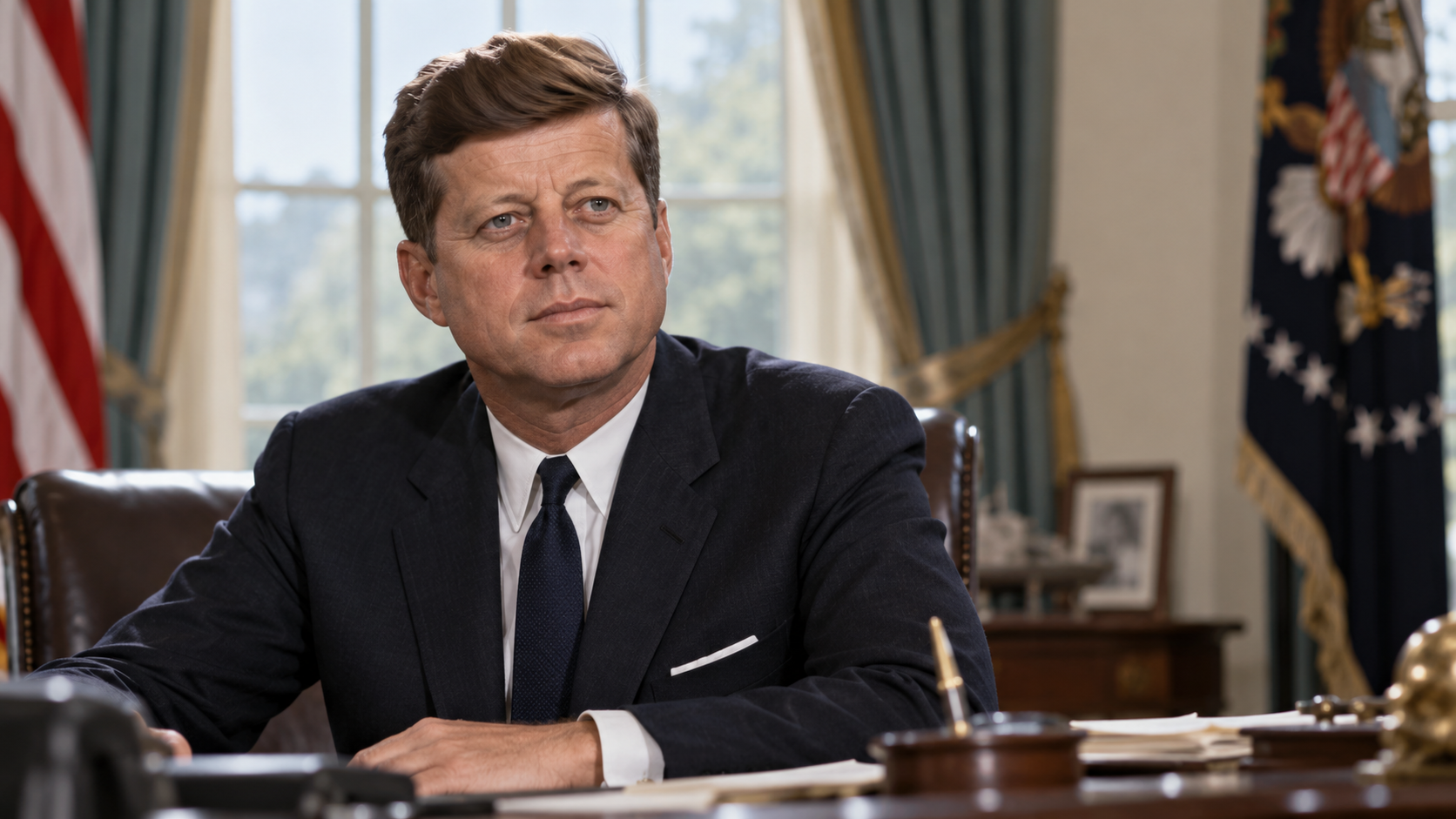
“Let us never negotiate out of fear. But let us never fear to negotiate.”
John F. Kennedy spoke these words in his inaugural address on January 20, 1961. Taking office during the Cold War, he addressed both the need for resolve and the possibility of cooperation between opposing powers. The balanced sentences resist two different forms of fear: the fear that pressures a country into abandoning its judgment, and the fear that keeps it from entering discussions at all. In the surrounding passage, Kennedy argued that civility need not mean weakness and that sincerity would need to be demonstrated. Negotiation was presented as work to undertake carefully, rather than either a surrender or a guarantee of agreement.
The address proposed looking for areas where the two sides might act together, including efforts concerning arms and other shared problems. These were ambitions voiced at the opening of an administration, not achievements already secured by the speech. That distinction matters because an inaugural statement can define a direction without resolving the difficult questions that follow. Kennedy’s formulation keeps firmness and engagement in the same frame. A government can consider its interests seriously while still testing whether discussion might produce a better outcome. The possibility of an unsuccessful negotiation does not make every attempt pointless; the possibility of agreement does not make every proposed agreement sound.
Beyond diplomacy, Kennedy’s paired sentences illuminate difficult public disagreements. People may avoid conversation because merely participating could be interpreted as conceding a principle. Others may enter a discussion with so little confidence that they cannot evaluate proposals independently. The paired sentences suggest a more disciplined approach: know the interests at stake, listen to what is actually proposed, and retain the ability to judge the result. This interpretation applies the passage to contemporary circumstances rather than advice Kennedy gave about every local dispute. It does not require agreement with a counterpart. It separates the decision to explore a possibility from the decision to accept particular terms.
That separation supports accountability. Leaders should be able to explain why talks are worth pursuing, what objectives guide them, and how any resulting proposal will be assessed. The public can then judge diplomacy through its purposes and outcomes rather than through a simple equation of talking with weakness. Kennedy’s words leave room for caution, disagreement, and evidence. They also challenge the assumption that courage is shown only by refusing contact. Sometimes resolve is expressed through the patience to test an alternative without surrendering judgment. The lasting value of the statement is its refusal to let fear alone decide either the terms of negotiation or whether negotiation can begin.
Kennedy delivered the quotation in his January 20, 1961 inaugural address during the Cold War. Its two sentences form a deliberate balance.
The surrounding passage connects civility with strength and calls for sincerity to be demonstrated.
The statement pairs independent judgment with willingness to engage. Entering talks and accepting terms are separate decisions.
The address proposed a direction for diplomacy; the words themselves did not establish that agreement would follow.
A difficult discussion can begin with clear objectives and a willingness to assess evidence. This is a contemporary application.
Citizens can ask leaders to explain why negotiations are worthwhile and how any proposed outcome will be judged.
Explore more "Quotes of The Day"
Discover more notable quotes from influential voices across politics, science, business, technology, sports, and culture. Each quote offers insight into how ideas, beliefs, and decisions shape the world around us.