

“It goes without saying that this encounter with Fred Sanger and Ieuan Harris transformed my scientific career.”
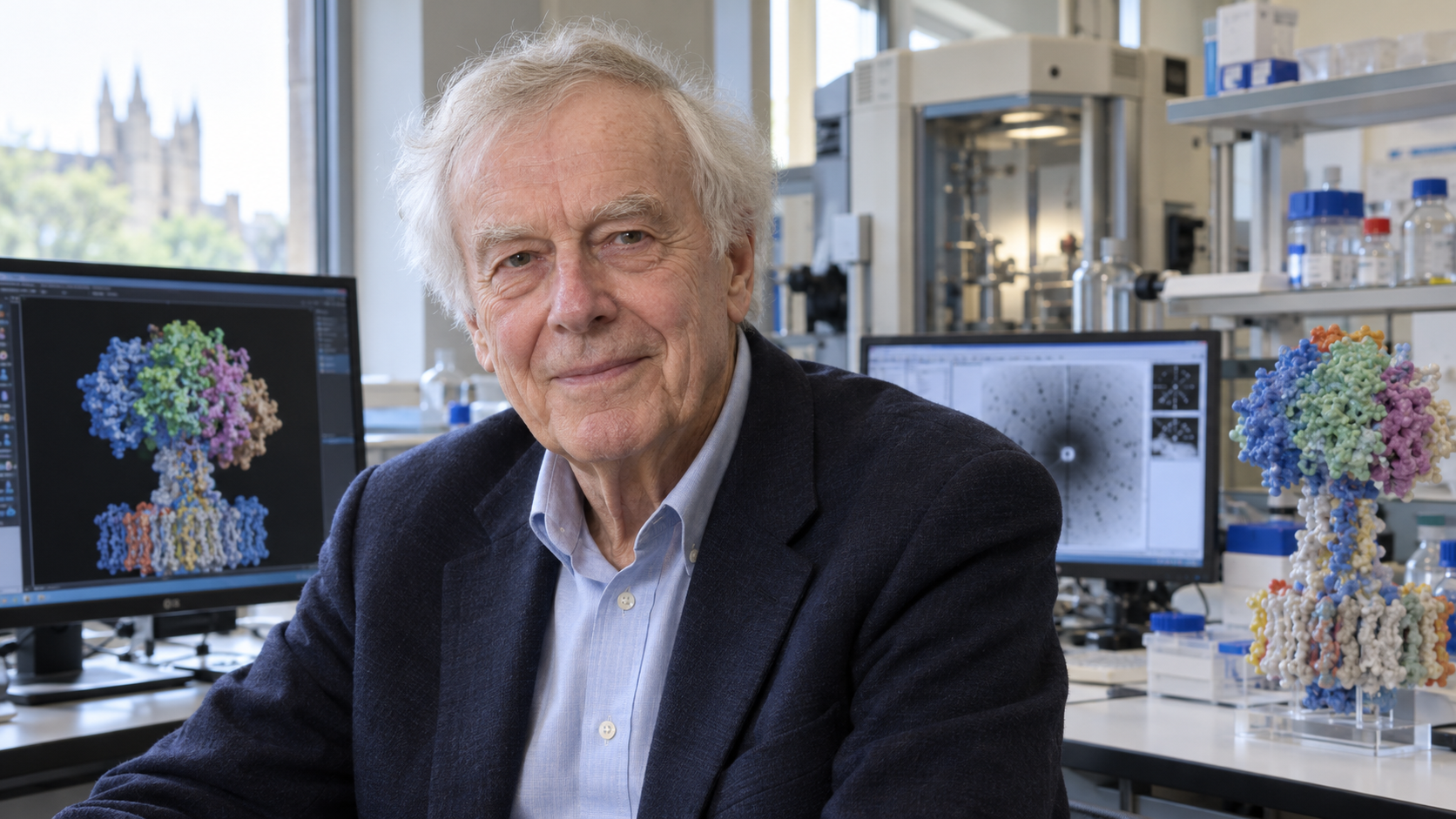
John E. Walker wrote, “It goes without saying that this encounter with Fred Sanger and Ieuan Harris transformed my scientific career.” in his Nobel biographical essay, describing the invitation that brought him into protein sequence analysis. Walker’s meeting with Sanger and Harris redirected him toward protein and mitochondrial sequence work. He later determined the structure and rotary mechanism of ATP synthase, the enzyme that makes the cell’s principal energy currency. Placed back inside that moment, the words become more specific than a slogan and more revealing than a quotation in isolation.
Discovery produces a visible conclusion, but it rarely reveals all the uncertainty and collaboration that preceded it. Reading the remark carefully means noticing both the stated result and the less visible system of work around it. In this case, the quotation belongs to structural biology and bioenergetics, but the record around it also shows how knowledge is shaped by instruments, collaborators, institutions, and the questions a researcher chooses to pursue. A source-first reading checks three connected layers: the exact wording, the occasion described as his Nobel biographical essay, describing the invitation that brought him into protein sequence analysis, and the later significance attached to the remark. Keeping those layers together protects John E. Walker from a cleaner or larger interpretation than the documented moment can support.
Transformative encounters matter because they change access to problems, methods, and communities, not because famous mentors confer certainty. Walker still had to learn techniques, choose difficult membrane proteins, and produce evidence that could withstand independent examination. Inspiration remains credible only when limits and unknowns are acknowledged. The sentence can encourage investigation while leaving room for competing explanations, collective expertise, and results no individual can guarantee. This is the difference between honoring a speaker’s insight and turning a vivid sentence into advice it was never designed to carry.
Structural studies of ATP synthase connected molecular architecture with energy conversion across living systems. The sentence acknowledges the career-changing force of an invitation while leaving the discovery itself rooted in years of collaborative experimental work. For readers, the practical value is modest but real: define the next answerable question, understand what evidence would matter, and resist converting one result into a complete theory. The enduring question is not whether another person can reproduce the same career. It is whether the underlying idea can improve observation, judgment, or explanation in the circumstances that actually exist now. That approach lets the quotation remain attached to John E. Walker and structural biology and bioenergetics while still inviting a reader to carry its most defensible lesson into another problem. Context narrows the claim, but that precision is what makes the lesson portable.
John E. Walker wrote these words in his Nobel biographical essay, describing the invitation that brought him into protein sequence analysis. Walker’s meeting with Sanger and Harris redirected him toward protein and mitochondrial sequence work. He later determined the structure and rotary mechanism of ATP synthase, the enzyme that makes the cell’s principal energy currency.
Transformative encounters matter because they change access to problems, methods, and communities, not because famous mentors confer certainty. Walker still had to learn techniques, choose difficult membrane proteins, and produce evidence that could withstand independent examination.
The quotation is most responsible when it prompts a testable question without allowing reputation, enthusiasm, or hindsight to replace evidence.
Structural studies of ATP synthase connected molecular architecture with energy conversion across living systems. The sentence acknowledges the career-changing force of an invitation while leaving the discovery itself rooted in years of collaborative experimental work.
Its present value lies in connecting the remembered sentence to the methods, limits, collaborators, and later results that made the work scientifically useful.
Explore more "Quotes of The Day"
Discover more notable quotes from influential voices across politics, science, business, technology, sports, and culture. Each quote offers insight into how ideas, beliefs, and decisions shape the world around us.