

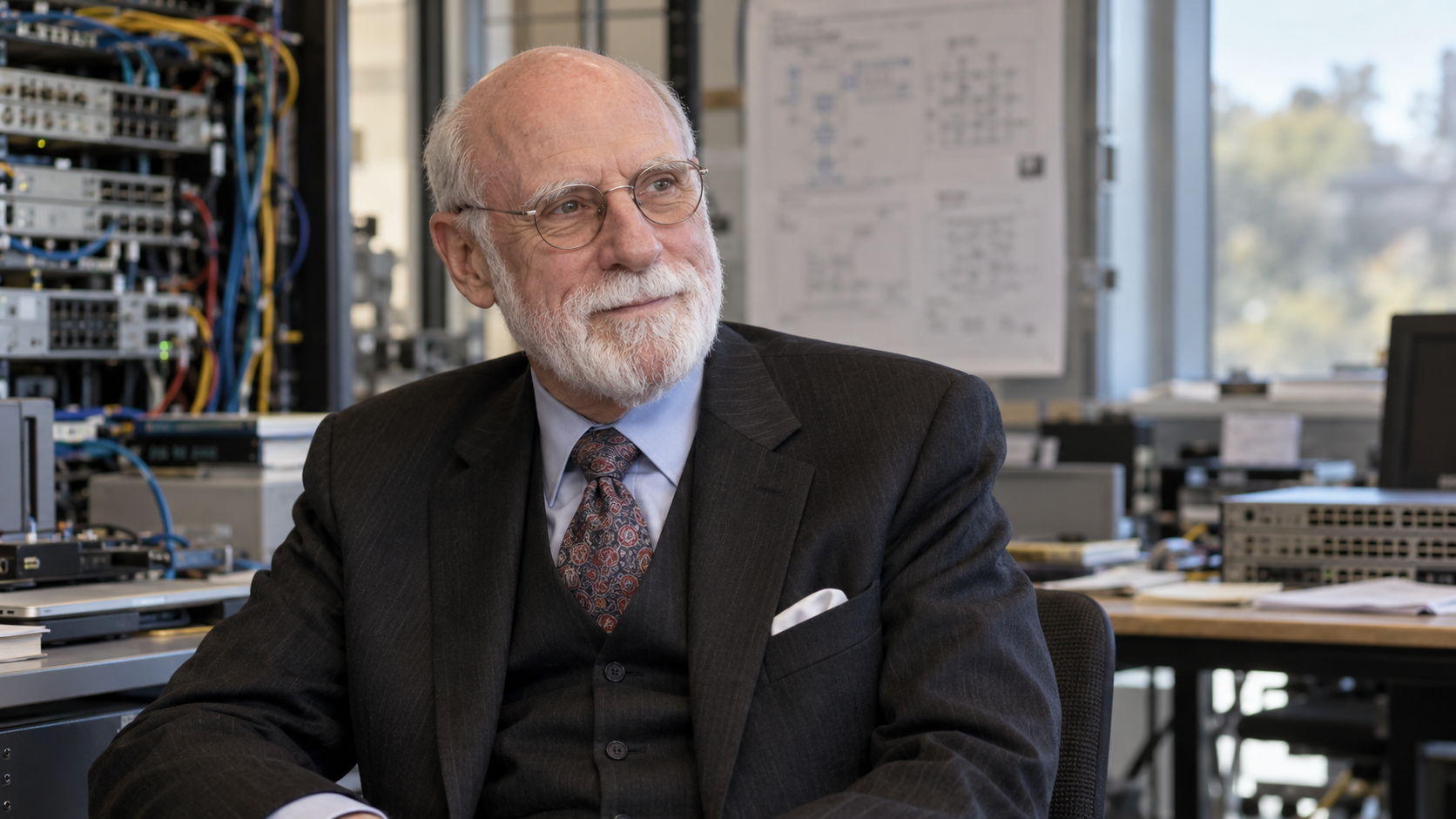
“The Internet is for everyone.”
Vint Cerf opened RFC 3271 with this compact declaration in April 2002. Cerf, one of the central designers of the Internet’s TCP/IP architecture, used the document to celebrate the network’s reach while cataloging the barriers that could keep it from fulfilling that promise. The sentence is memorable because it sounds unconditional. The rest of the essay makes clear that inclusion is not automatic. A network can be technically global while remaining inaccessible because of cost, language, disability, censorship, weak infrastructure, or a lack of useful local content.
The Internet’s basic architecture supports participation by allowing independently operated networks to interconnect through common protocols. That design encourages innovation at the edges: a new service can often be created without asking a central owner for permission. Cerf’s phrase captures the social possibility within that technical arrangement. But protocols alone do not provide devices, electricity, education, secure access, or freedom of expression. “For everyone” is therefore both a description of an open design goal and a demand for continuing work.
The quote is sometimes used as if universal access merely means placing more people online. Cerf’s RFC is more demanding. It considers affordability, accessibility for people with disabilities, multilingual communication, privacy, security, harmful behavior, and the responsibilities of governments and network operators. A meaningful connection must let people participate safely and productively, not simply count as a new subscriber. Inclusion also requires that users can create and share knowledge rather than remain passive consumers of information produced elsewhere.
Two decades later, the principle remains unfinished. Billions of people use the Internet, yet gaps persist in speed, reliability, price, digital skills, and political freedom. New layers of concentration in cloud infrastructure, app stores, identity systems, and online platforms can also narrow the practical openness that common protocols made possible. Cerf’s sentence gives technologists and policymakers a clear test: who is missing, what obstacle excludes them, and which design or policy choice could remove it? It also resists complacency. Every expansion of connectivity brings new duties to protect security, privacy, accessibility, and human agency. The Internet becomes “for everyone” not through a single invention, but through repeated decisions to keep standards interoperable, services understandable, access affordable, and participation open.
Cerf published the line in RFC 3271, an Internet Society document that surveys both the network’s achievements and its unresolved barriers.
Its context includes technical access, affordability, language, disability, safety, privacy, and the legal conditions needed for participation.
The word “for” expresses purpose, not a claim that equal access had already been achieved. Openness must be implemented in infrastructure, standards, products, and policy.
Universal connectivity is more than subscriber totals. People need reliable access, useful content, skills, security, and the freedom to communicate and create.
Modern platforms can expand access while also concentrating control. Interoperability and user choice remain essential to the Internet’s inclusive promise.
The quote offers a practical question for every new system: which people can participate, who is excluded, and what choices would reduce that exclusion?
Explore more "Quotes of The Day"
Discover more notable quotes from influential voices across politics, science, business, technology, sports, and culture. Each quote offers insight into how ideas, beliefs, and decisions shape the world around us.