

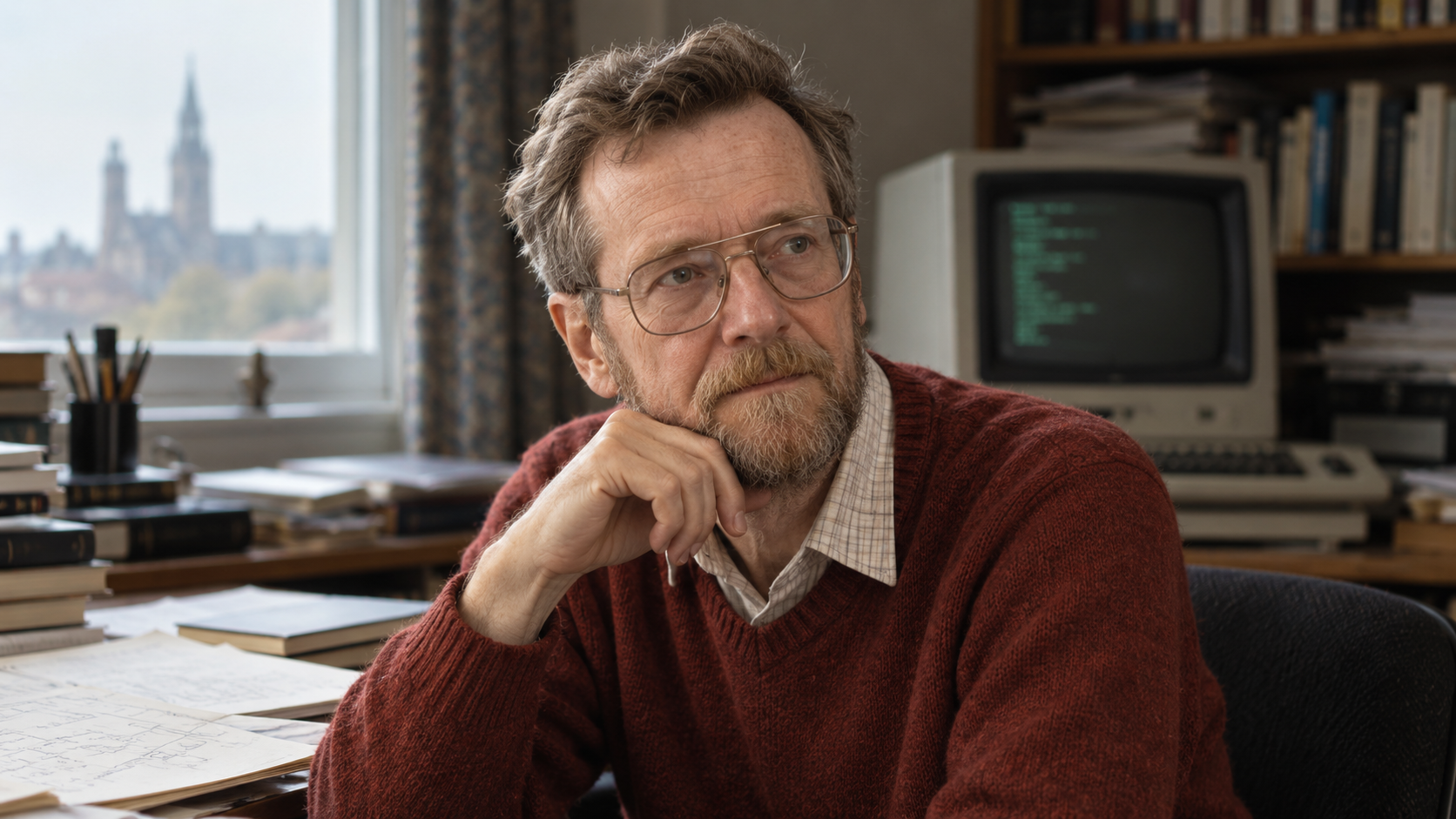
“Simplicity is a great virtue but it requires hard work to achieve it and education to appreciate it.”
Dijkstra’s observation reflects a career devoted to disciplined reasoning about programs and to resisting unnecessary complexity in software design. The original setting matters because memorable technology quotations are often flattened into slogans. Restoring the occasion shows what problem the speaker was addressing and keeps the words connected to evidence rather than mythology. The sentence became durable because it compresses a larger argument into language that can travel, while its responsible use still depends on remembering the argument around it.
Simplicity is not the absence of sophistication. It is the result of choosing precise abstractions, removing accidental complication, and making behavior understandable. This distinction turns inspiration into a working principle. Teams should ask which assumptions the quotation challenges, what evidence would support the claim, and where a simple reading might mislead. Technical progress rarely comes from confidence alone. It comes from combining imagination with disciplined experiments, criticism, and the willingness to change direction when real users or real conditions contradict a preferred story.
Modern systems accumulate layers, dependencies, configuration, and legacy assumptions; every addition can increase security risk and maintenance cost. That broader context makes the idea more urgent and more complicated today. Software can spread a benefit quickly, but it can also scale a weak assumption or unequal result. Responsible builders consider who gains, who bears the risk, and whether affected people can understand or challenge the system. Innovation earns trust when performance, security, accessibility, and accountability are treated as part of the product rather than obstacles added after launch.
Reward deletion, clear interfaces, documentation, and designs that future teams can reason about without heroic effort. For individuals, the quote can guide the next decision without pretending to provide a complete formula. For organizations, it can become a prompt for clearer goals, better measurements, and more honest tradeoffs. The lasting value is not admiration for a famous speaker; it is the habit of translating a memorable idea into careful practice. Technology changes quickly, but curiosity, judgment, and responsibility remain essential whenever people decide what to build, how to test it, and which future their work will make easier.
Dijkstra’s observation reflects a career devoted to disciplined reasoning about programs and to resisting unnecessary complexity in software design.
The setting clarifies the speaker’s purpose and prevents a compact phrase from becoming detached from the conditions that gave it meaning.
Simplicity is not the absence of sophistication. It is the result of choosing precise abstractions, removing accidental complication, and making behavior understandable.
The strongest interpretation balances ambition with evidence, revision, and an honest account of limits.
Modern systems accumulate layers, dependencies, configuration, and legacy assumptions; every addition can increase security risk and maintenance cost.
Reward deletion, clear interfaces, documentation, and designs that future teams can reason about without heroic effort.
Explore more "Quotes of The Day"
Discover more notable quotes from influential voices across politics, science, business, technology, sports, and culture. Each quote offers insight into how ideas, beliefs, and decisions shape the world around us.