

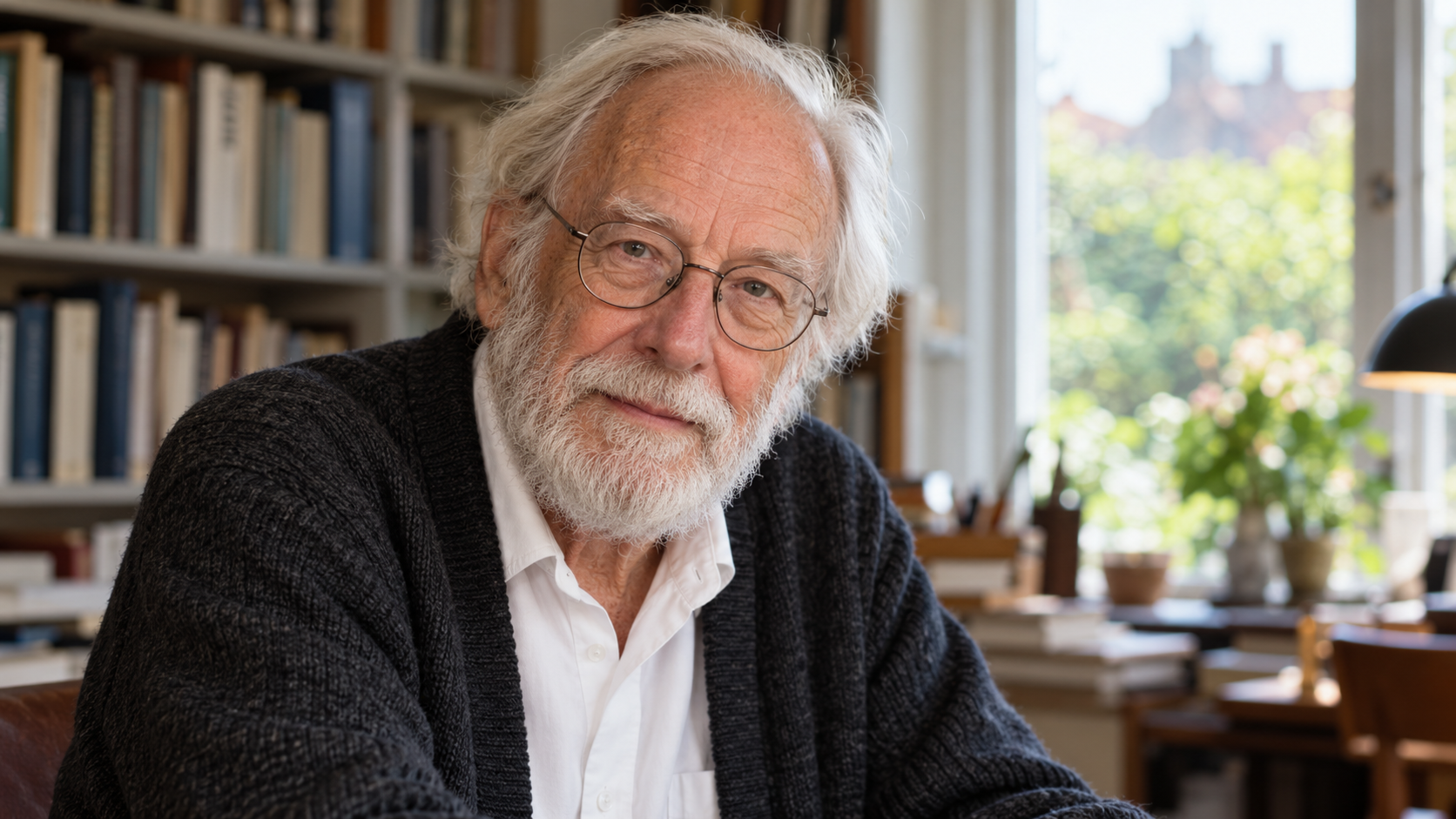
“Programming properly should be regarded as an activity by which the programmers form or achieve a certain kind of insight, a theory.”
Peter Naur advanced this view in “Programming as Theory Building,” delivered as a keynote at Euromicro 84 and published in 1985. He rejected the common picture of programming as the production of source code plus specifications and documentation. Those artifacts matter, but they are not the whole result. The deeper product is an understanding held by the programmers: how the software relates to the part of the world it serves, why its design choices make sense, and how it can be changed when circumstances no longer match the original plan. For Naur, successful development is therefore a continuing act of interpretation, not a one-time handoff from requirements to implementation.
Naur used “theory” in a practical sense. A programmer who possesses the theory can explain what each major part contributes, justify why it has its present form, and respond constructively to a new demand. Someone can read every line of a program without having that ability. Conversely, an experienced maintainer may understand the system well enough to predict the consequences of a change before tracing every detail. The theory joins code, domain knowledge, history, and judgment into a working mental model. It also explains why two technically correct patches can differ sharply in how well they preserve the purpose and future flexibility of the system.
The quotation is not an argument against documentation, tests, or formal descriptions. It explains why none of them automatically transfers understanding. Written artifacts preserve decisions and evidence, but readers must still connect them into a coherent view of the problem and solution. That process is social as well as technical. Design discussions, code review, shared debugging, and long-term responsibility help a team develop compatible theories. When knowledge is concentrated in one person or separated from daily work, a codebase can remain available while its practical ability to evolve declines. Onboarding succeeds only when newcomers learn the reasons behind important boundaries, not merely the procedures for changing files.
The idea is newly relevant in distributed teams and AI-assisted development. Code can be produced faster than the organization around it can understand the assumptions being introduced. A generated patch may pass tests yet weaken the team’s theory if nobody can explain its fit with the domain or its likely response to future change. Naur’s standard suggests measuring progress by more than output. Healthy teams preserve reasoning through clear names, architectural records, review conversations, operational feedback, and deliberate teaching. They also revisit their theory when real users and incidents contradict it. Software stays alive when people retain the understanding required to change it responsibly, and it becomes fragile when that understanding is replaced by confidence that the code can simply speak for itself.
Naur presented “Programming as Theory Building” at Euromicro 84; the essay was published in 1985 as a challenge to artifact-centered descriptions of software work.
He argued that code and documentation are products of development, while the durable capability is the programmers’ understanding of how the program fits its domain.
“Theory” means a practical mental model that lets programmers explain decisions, predict consequences, and adapt the system when its circumstances change.
The idea does not dismiss specifications, tests, or documentation; it explains why those records support understanding but cannot automatically transfer it.
Distributed teams and AI tools can produce changes faster than shared understanding grows, leaving systems that work today but are hard to change responsibly.
Naur’s standard favors review, teaching, operational feedback, and decision records that keep a team’s reasoning alive alongside the code.
Explore more "Quotes of The Day"
Discover more notable quotes from influential voices across politics, science, business, technology, sports, and culture. Each quote offers insight into how ideas, beliefs, and decisions shape the world around us.