

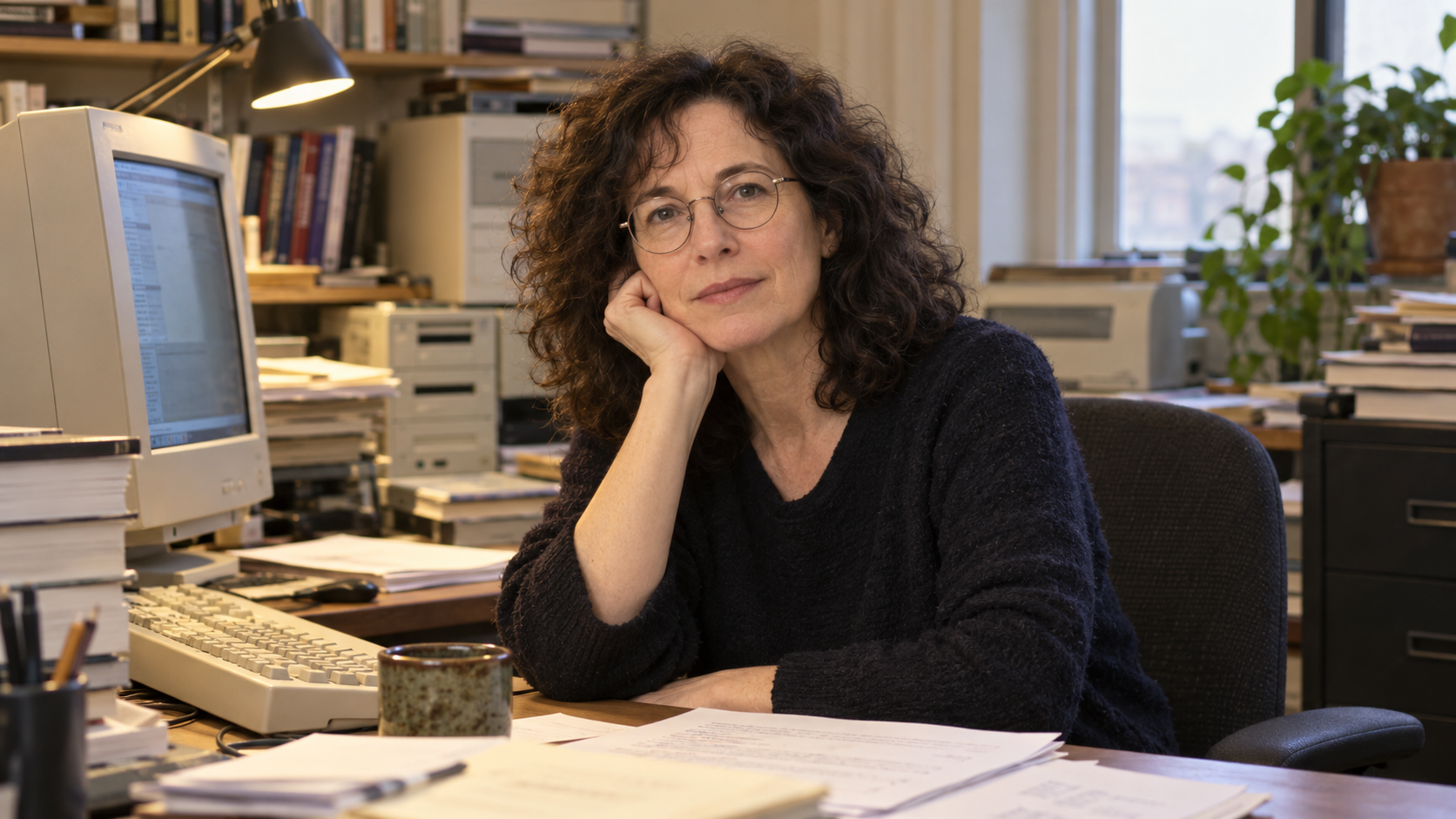
“We build our computers the way we build our cities—over time, without a plan, on top of ruins.”
Ellen Ullman reached this image during an act of “desktop archaeology” in her 1998 Salon essay “The Dumbing-Down of Programming.” Trying to make sense of a contemporary personal computer, she looked through layers of software and found traces of older systems still supporting the new. The experience suggested an urban excavation: streets follow earlier paths, buildings reuse foundations, and new utilities thread around structures that cannot simply disappear. Computers may be marketed as clean generations that replace what came before, but real machines accumulate. Operating systems, applications, protocols, data formats, and organizational habits remain connected to choices made under earlier constraints.
The comparison explains why software history is present tense. A mature system contains code written for customers who may have left, devices that are no longer sold, and business rules whose original authors are unavailable. Some layers survive because millions of people depend on them; others persist because the cost of removing them exceeds the visible benefit. Compatibility is not merely reluctance to modernize. It is often the mechanism that lets a platform change without abandoning its inhabitants. Like a city, a computer system must continue operating while it is rebuilt. The difficulty lies in distinguishing a valuable old foundation from a dangerous ruin that only appears stable because no one has disturbed it recently.
Ullman’s sentence does not imply that planning is useless or that technical debt should be romanticized. Cities have zoning, engineering standards, and maintenance programs precisely because uncoordinated growth can produce fragile infrastructure. Software teams likewise need tests, documentation, boundaries, and migration plans. Yet even a rigorous plan begins inside an inherited landscape. Requirements change, dependencies evolve, and users discover purposes the designers did not anticipate. A successful architecture therefore needs more than an ideal diagram. It needs seams where components can be replaced, records of why consequential decisions were made, and observability that reveals what depends on what before demolition begins.
The metaphor has become more relevant as software is assembled from cloud services, open-source packages, firmware, APIs, and data accumulated across decades. A polished interface can conceal a neighborhood of aging protocols and temporary fixes beneath it. Large rewrites sometimes fail because they reproduce the visible features while overlooking the tacit knowledge embedded in the old structure. Ullman offers a wiser posture: investigate before rebuilding. Map the dependencies, identify the load-bearing ruins, and improve the system in stages that preserve useful life. Technology advances not on an empty site but in a living place, where every clean new layer must coexist with history until a safer path forward has actually been built.
Ullman formed the metaphor while examining the accumulated software layers inside a late-1990s personal computer.
Her “desktop archaeology” revealed that apparently modern systems still depended on older code, formats, and assumptions beneath the interface.
Software evolves inside an inherited landscape, so compatibility can be both a constraint and the reason a platform can change without abandoning users.
The comparison does not excuse poor planning; it argues for understanding dependencies before removing structures that may still carry essential work.
Cloud services, packages, firmware, APIs, and decades of data now give even simple products many hidden historical layers.
Teams reduce rewrite risk by mapping those layers, preserving tacit knowledge, and replacing them through observable, reversible stages.
Explore more "Quotes of The Day"
Discover more notable quotes from influential voices across politics, science, business, technology, sports, and culture. Each quote offers insight into how ideas, beliefs, and decisions shape the world around us.