

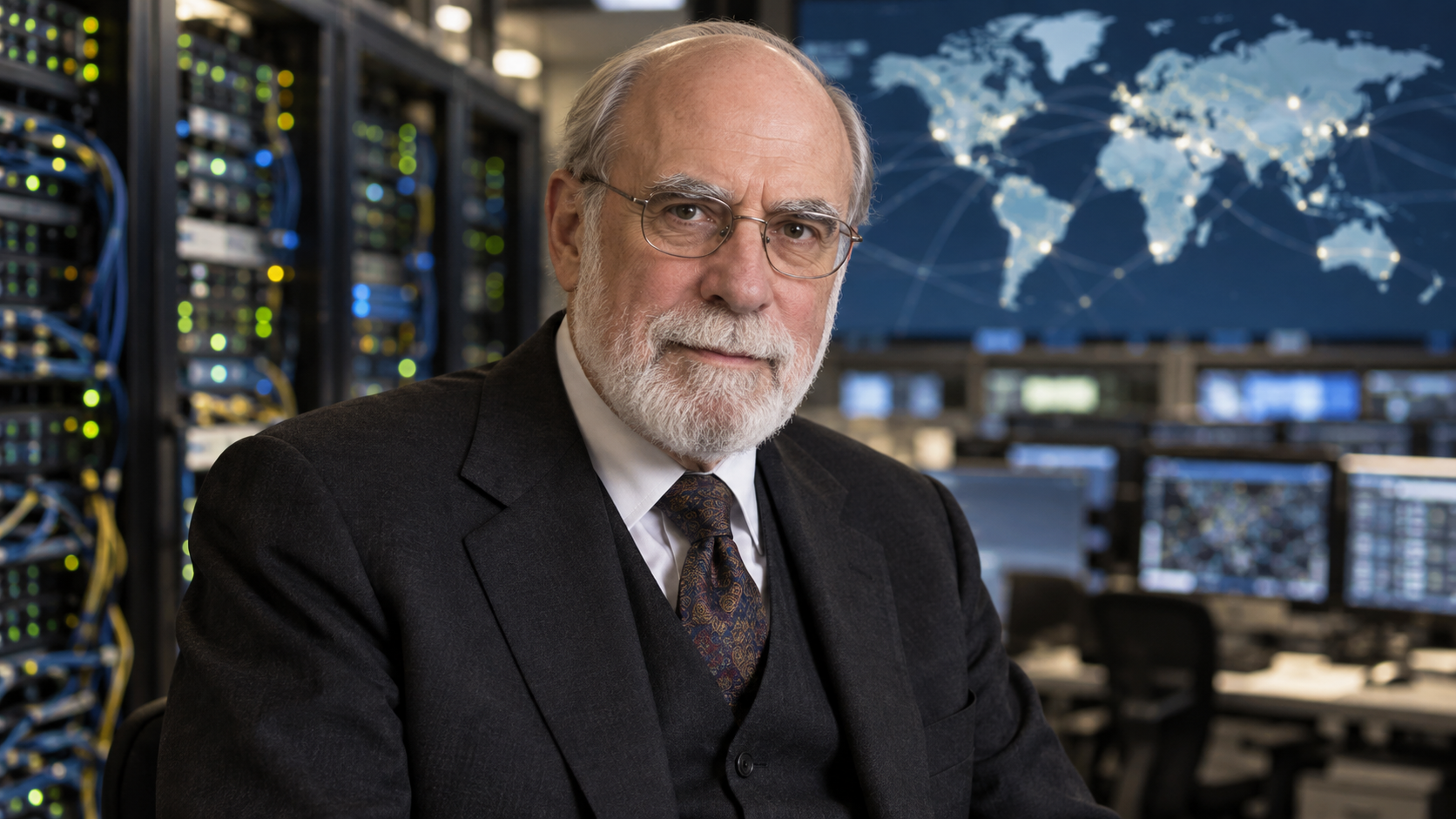
“Internet IS for everyone – but it won’t be unless WE make it so.”
Vint Cerf ended RFC 3271, “The Internet is for Everyone,” with this emphatic line in 2002. As a co-designer of TCP/IP and a founder of the Internet Society, he had helped establish the protocols that allowed unlike networks to exchange data. Yet the RFC does not treat technical interoperability as the finish line. It lists obstacles that could keep people from meaningful participation, including affordability, accessibility, language, security, privacy, complexity, and uneven infrastructure. The capitalized words turn a description into a responsibility: a network capable of connecting everyone will not actually serve everyone without sustained human choices. The Internet’s architecture supports broad participation because its common protocols do not require every connected network or device to be identical. That openness enabled extraordinary experimentation. Anyone with access and sufficient skill could publish information, build a service, or communicate across distance without asking a single central operator to redesign the network. But an open protocol cannot supply an affordable connection, accessible software, reliable electricity, relevant local content, or confidence that participation is safe. Cerf’s statement separates potential from outcome. Technical possibility creates an opportunity; institutions, markets, communities, and designers determine who can use it. The gaps remain visible. Rural and low-income communities may face high prices or limited service. People with disabilities encounter products that ignore assistive technology or basic accessibility practices. Language barriers can restrict information and tools, while surveillance, fraud, harassment, and censorship change the risks of going online. Even well-connected users can be excluded by interfaces that demand newer hardware, excessive bandwidth, or specialized knowledge. Efforts to close these gaps include infrastructure investment, competition, public access, accessibility standards, digital literacy, multilingual design, and security protections that do not make ordinary use impossibly complex. Cerf’s closing sentence resists technological inevitability. The Internet is not inclusive merely because its creators intended it to be open, and progress in one area can coexist with exclusion in another. Making it “for everyone” is an ongoing test applied to policy, product decisions, standards, and business models. It asks who remains unable to connect, who can connect but not participate fully, and whose safety or autonomy is treated as optional. Each new platform and connection creates another opportunity to apply that test rather than assume the work is finished. The quote’s optimism therefore comes with work attached. Networks can extend knowledge and opportunity across borders, but only when people keep widening access and designing for the variety of human needs that the word everyone contains.Cerf published RFC 3271 in April 2002 as an informational statement about the Internet Society’s ideal of an Internet open to everyone.
The document names technical and social barriers, including affordability, accessibility, language, privacy, security, and complexity.
Common protocols make universal connection possible, but protocols alone cannot create infrastructure, trust, relevant content, or usable interfaces.
“Everyone” includes people separated by income, geography, language, disability, hardware, skills, and political conditions.
Broadband gaps, inaccessible products, surveillance, fraud, censorship, and costly devices still shape who can participate safely and fully.
The quote turns inclusion into a continuing design and policy obligation rather than an automatic result of technological growth.
Explore more "Quotes of The Day"
Discover more notable quotes from influential voices across politics, science, business, technology, sports, and culture. Each quote offers insight into how ideas, beliefs, and decisions shape the world around us.