

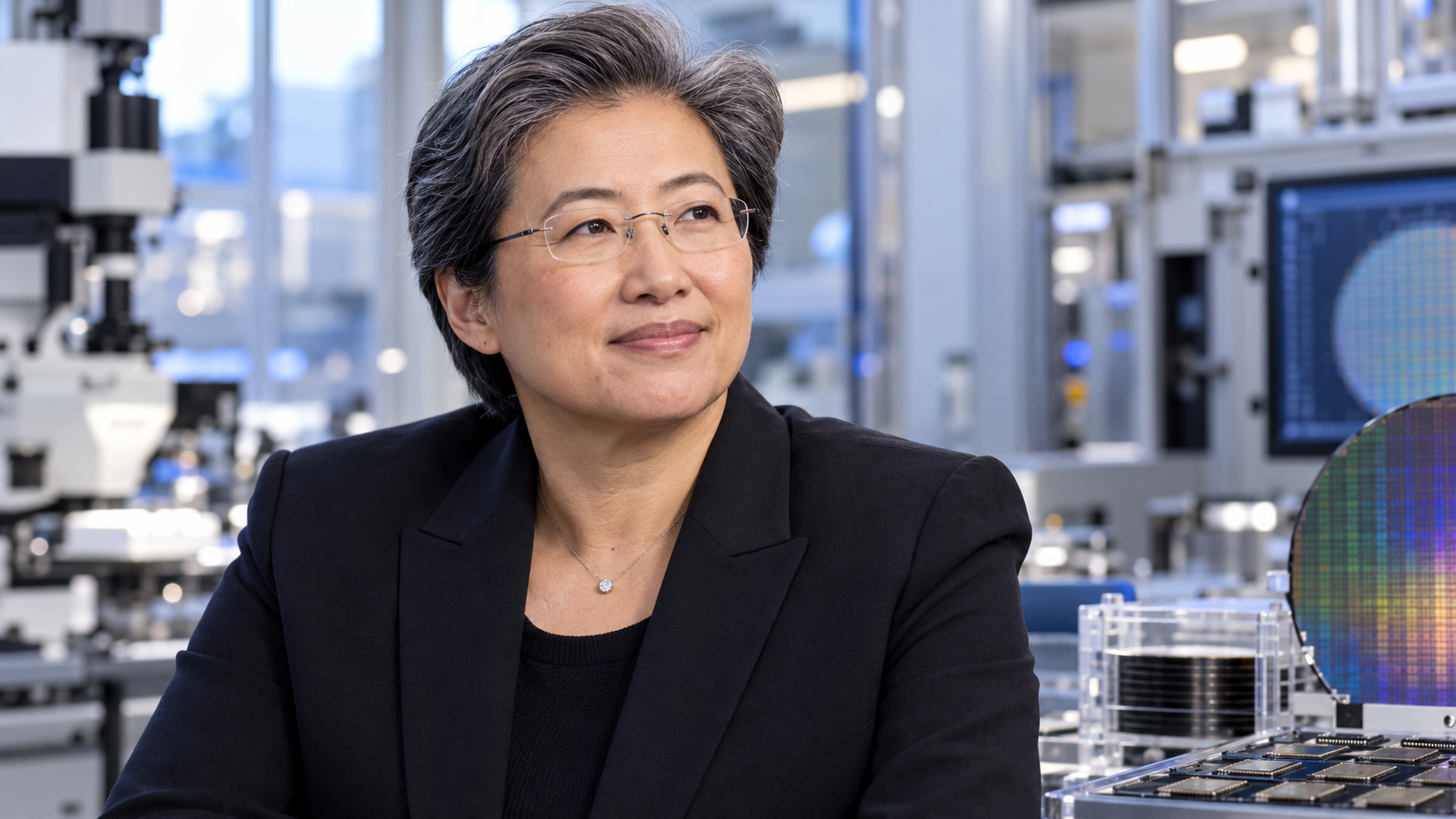
“Technology itself does not decide what the future looks like. People do.”
Lisa Su delivered this line in her 2026 MIT commencement address, speaking to graduates entering a period of rapid change in artificial intelligence, computing, energy, medicine, and other technical fields. As an MIT-trained electrical engineer and the chief executive of AMD, Su has spent her career turning semiconductor research into products used at enormous scale. Her statement pushes against a familiar story in which technology advances along an independent path and society merely adapts. Chips, models, networks, and machines create possibilities, but they do not choose which problems deserve attention, who receives the benefits, or what tradeoffs are acceptable. Those decisions remain human.
The distinction matters because technological momentum can feel inevitable after the fact. Once a product succeeds, its design choices may appear to have been the only practical route. In reality, development is full of forks: performance versus energy use, openness versus control, speed versus testing, convenience versus privacy, and short-term demand versus long-term resilience. Engineers and leaders choose among them under economic and social pressure. Governments, customers, workers, and communities shape the incentives as well. Saying that people decide the future does not mean any person has complete control. It means the eventual direction emerges from many accountable choices rather than from technology acting as an autonomous force.
Semiconductors make the point concrete. Greater computing power can help researchers model proteins, forecast weather, design cleaner energy systems, or make digital services accessible. The same capacity can support invasive surveillance, deceptive media, wasteful consumption, or concentrated power. Hardware is not indifferent in the sense that every architecture enables some actions more easily than others, yet its social role is never contained in a specification sheet. People determine what is funded, built, deployed, regulated, and measured. They can also revise course when consequences become visible. Innovation includes the work of asking what a system is for and whose experience counts as evidence of success.
Su’s sentence gives optimism a demanding foundation. The future is not guaranteed to improve because processors get faster or models become more capable. Progress depends on judgment, collaboration, and the willingness to connect technical excellence with public purpose. For new graduates, that is an invitation rather than a burden: their expertise gives them leverage over decisions that might otherwise be treated as fixed. For established organizations, it is a reminder that “the technology made us do it” is not a responsible explanation. Tools widen the field of possible action, while people set priorities and accept consequences. The quote endures as a concise standard for leadership: build boldly, but remember that direction is a choice.
Su made the statement in her 2026 commencement address at MIT, where she earned three degrees in electrical engineering.
She addressed graduates entering fields being reshaped by AI, advanced computing, energy, medicine, and other fast-moving technologies.
Technology creates possibilities and constraints, but people choose goals, designs, incentives, rules, and measures of success.
No single person controls the outcome; responsibility is distributed across engineers, leaders, institutions, customers, and communities.
The same computing capacity can support public benefit or deepen surveillance, exclusion, waste, and concentrated power.
Treating direction as a human choice makes it possible to demand accountability and change course when harms become visible.
Explore more "Quotes of The Day"
Discover more notable quotes from influential voices across politics, science, business, technology, sports, and culture. Each quote offers insight into how ideas, beliefs, and decisions shape the world around us.