

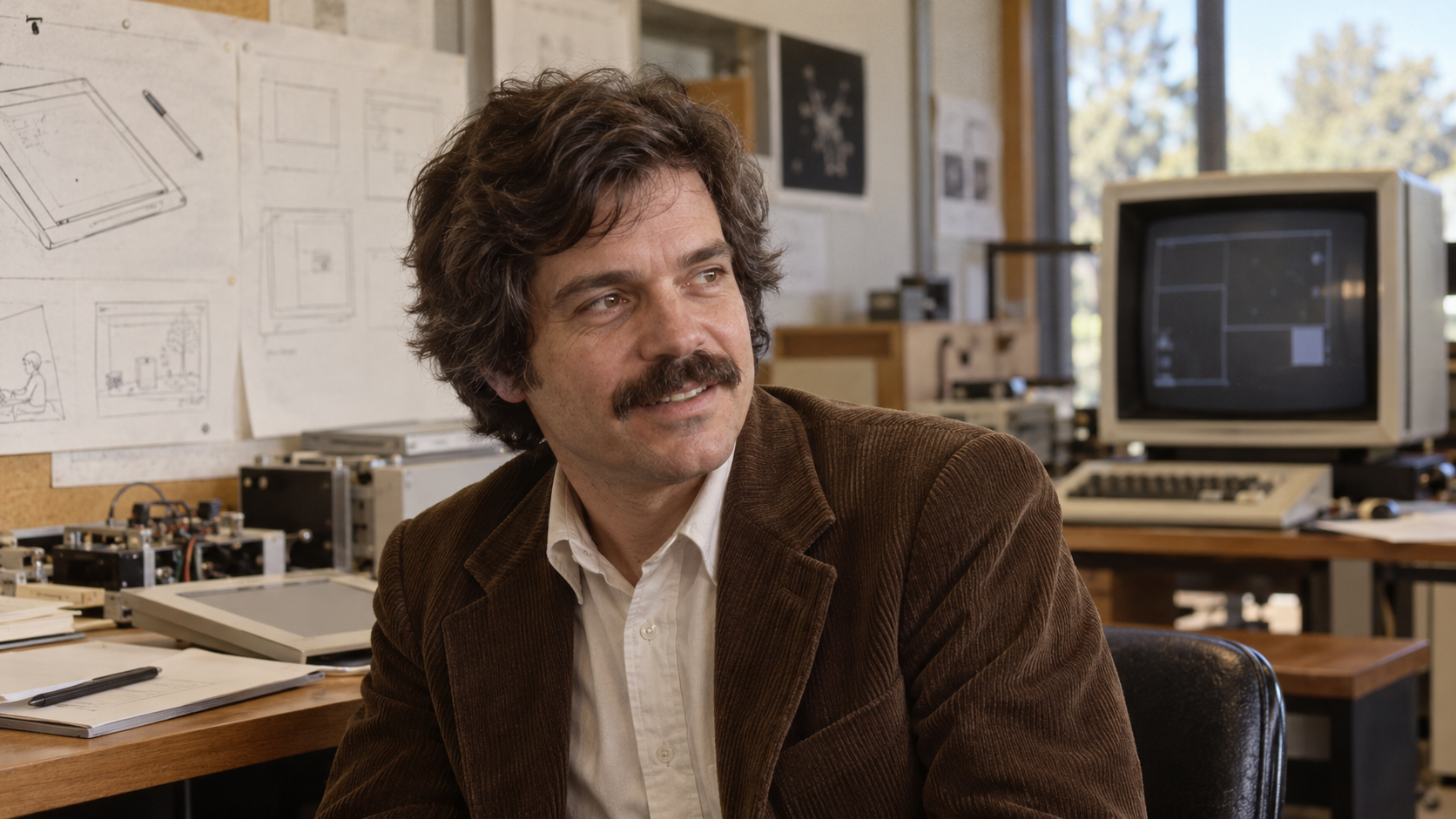
“The best way to predict the future is to invent it.”
Alan Kay offered this line in a Xerox PARC planning discussion later documented in his history of Smalltalk. Kay remembered pushing back against planning based mainly on trends and competitive defense. His group was exploring personal computing, graphical interfaces, and the Dynabook concept at a time when those ideas were far from ordinary products. The original setting matters because it keeps the sentence tied to a specific problem rather than turning it into a floating slogan.
The quote argues that forecasts are partly shaped by prototypes. Building a credible alternative can reveal possibilities that trend lines miss and can give other people something concrete to test, criticize, and improve. That interpretation makes the quotation useful as a decision rule, not merely as inspiration. It directs attention to the work between an appealing idea and a dependable result: defining the problem clearly, exposing assumptions, and learning from evidence instead of relying on reputation or momentum. In practice, that means asking what changed, who gained new capability, and how the result would be checked by someone who did not share the builder’s expectations.
Invention does not grant control over the future. Markets, institutions, infrastructure, and social consequences determine which ideas spread and whom they benefit. A prototype is evidence that something can exist, not proof that it should dominate or will arrive unchanged. Keeping that boundary visible prevents a memorable sentence from becoming an excuse for simplistic policy or design. Strong technology reporting must preserve this nuance, because the same words can support very different choices when the original constraints disappear. A responsible reading also separates the speaker’s documented claim from broader promises that admirers may attach to it later. That protects both the historical record and the reader’s ability to disagree intelligently.
Today’s teams can apply Kay’s principle by turning claims into testable artifacts while treating downstream effects as part of the invention. The future becomes more useful when technical imagination is paired with access, safety, maintenance, and public scrutiny. The enduring lesson is to connect technical ambition with evidence, participation, and responsibility for outcomes. For readers, builders, and institutions, the practical question is not whether the quotation sounds true in isolation, but whether current decisions honor the conditions and responsibilities it identifies. Teams can make that test concrete through review, accessible documentation, independent feedback, and measures that include failures as well as successes. Those habits turn a memorable insight into work that others can examine and improve.
Alan Kay offered this line in a Xerox PARC planning discussion later documented in his history of Smalltalk. Kay remembered pushing back against planning based mainly on trends and competitive defense. His group was exploring personal computing, graphical interfaces, and the Dynabook concept at a time when those ideas were far from ordinary products. The original setting matters because it keeps the sentence tied to a specific problem rather than turning it into a floating slogan.
The source record connects the wording to a Xerox PARC planning discussion later documented in his history of Smalltalk, which is the context used for this post.
The quote argues that forecasts are partly shaped by prototypes. Building a credible alternative can reveal possibilities that trend lines miss and can give other people something concrete to test, criticize, and improve. That interpretation makes the quotation useful as a decision rule, not merely as inspiration. It directs attention to the work between an appealing idea and a dependable result: defining the problem clearly, exposing assumptions, and learning from evidence instead of relying on reputation or momentum. In practice, that means asking what changed, who gained new capability, and how the result would be checked by someone who did not share the builder’s expectations.
The interpretation focuses on a decision or design principle that readers can test against actual systems.
Invention does not grant control over the future. Markets, institutions, infrastructure, and social consequences determine which ideas spread and whom they benefit. A prototype is evidence that something can exist, not proof that it should dominate or will arrive unchanged. Keeping that boundary visible prevents a memorable sentence from becoming an excuse for simplistic policy or design. Strong technology reporting must preserve this nuance, because the same words can support very different choices when the original constraints disappear. A responsible reading also separates the speaker’s documented claim from broader promises that admirers may attach to it later. That protects both the historical record and the reader’s ability to disagree intelligently.
Today’s teams can apply Kay’s principle by turning claims into testable artifacts while treating downstream effects as part of the invention. The future becomes more useful when technical imagination is paired with access, safety, maintenance, and public scrutiny. The enduring lesson is to connect technical ambition with evidence, participation, and responsibility for outcomes. For readers, builders, and institutions, the practical question is not whether the quotation sounds true in isolation, but whether current decisions honor the conditions and responsibilities it identifies. Teams can make that test concrete through review, accessible documentation, independent feedback, and measures that include failures as well as successes. Those habits turn a memorable insight into work that others can examine and improve.
Explore more "Quotes of The Day"
Discover more notable quotes from influential voices across politics, science, business, technology, sports, and culture. Each quote offers insight into how ideas, beliefs, and decisions shape the world around us.