

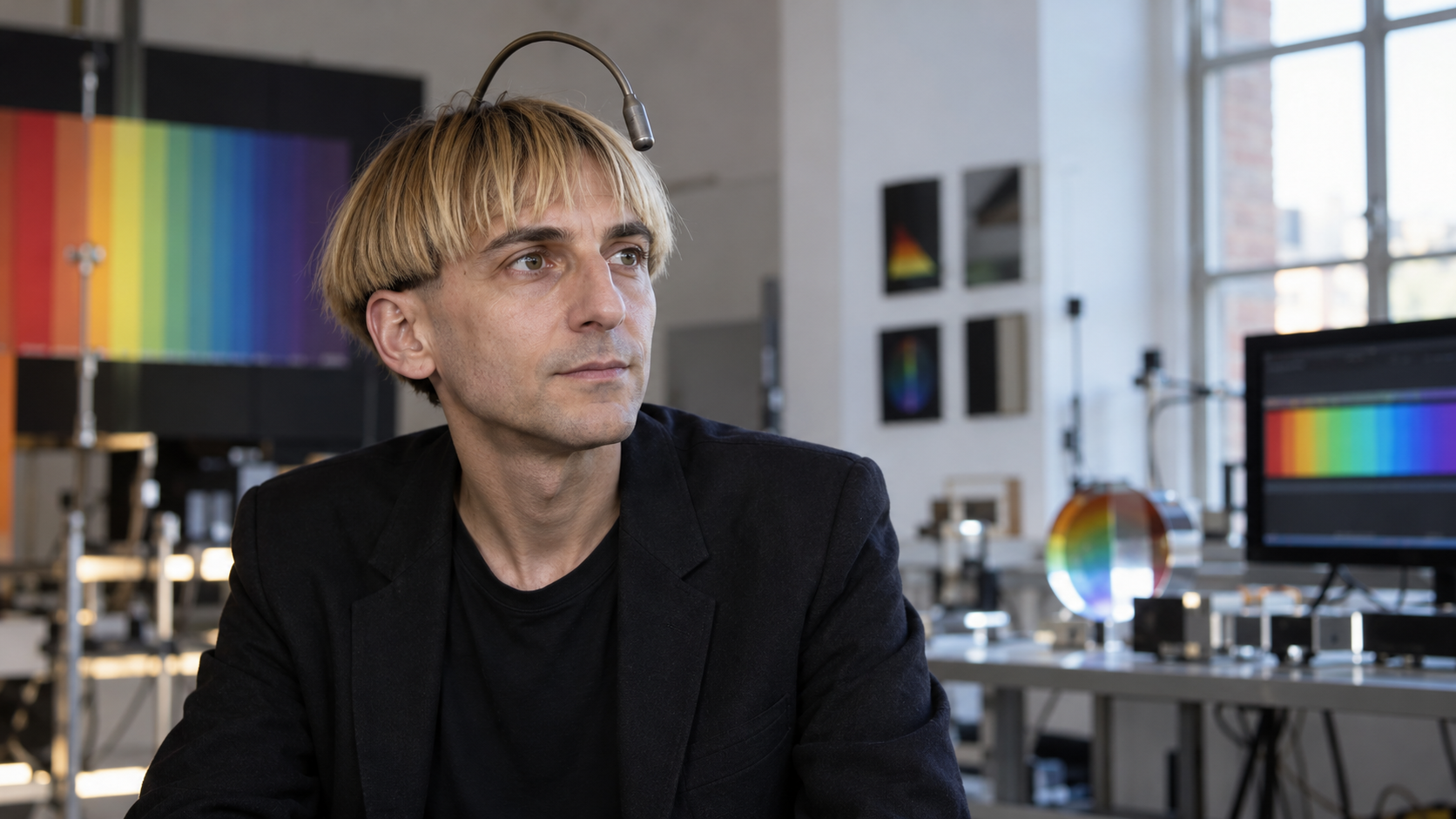
“I don’t feel that I’m wearing technology, I feel that I am technology.”
Neil Harbisson offered this line in his TEDGlobal talk and essay about hearing color through an implanted antenna. Harbisson, who was born unable to perceive color, described an antenna that translates colors into sound frequencies. Over time the device became integrated into his perception, memory, dreams, and sense of identity rather than remaining an external gadget. The original setting matters because it keeps the sentence tied to a specific problem rather than turning it into a floating slogan.
The line challenges a clean boundary between user and tool. Technologies that continuously shape perception or action can become embodied habits, altering how a person experiences the world and how the world responds to that person. That interpretation makes the quotation useful as a decision rule, not merely as inspiration. It directs attention to the work between an appealing idea and a dependable result: defining the problem clearly, exposing assumptions, and learning from evidence instead of relying on reputation or momentum. In practice, that means asking what changed, who gained new capability, and how the result would be checked by someone who did not share the builder’s expectations.
One individual’s identification with a device does not define every user’s experience. Access, maintenance, consent, and the right to remove or repair technology remain important. Integration can be empowering without making dependence or corporate control invisible. Keeping that boundary visible prevents a memorable sentence from becoming an excuse for simplistic policy or design. Strong technology reporting must preserve this nuance, because the same words can support very different choices when the original constraints disappear. A responsible reading also separates the speaker’s documented claim from broader promises that admirers may attach to it later. That protects both the historical record and the reader’s ability to disagree intelligently.
Wearables, neural interfaces, medical implants, and adaptive systems increasingly blur the same boundary. Harbisson’s experience suggests that designers should treat identity, autonomy, long-term support, and bodily rights as core product requirements. The enduring lesson is to connect technical ambition with evidence, participation, and responsibility for outcomes. For readers, builders, and institutions, the practical question is not whether the quotation sounds true in isolation, but whether current decisions honor the conditions and responsibilities it identifies. Teams can make that test concrete through review, accessible documentation, independent feedback, and measures that include failures as well as successes. Those habits turn a memorable insight into work that others can examine and improve.
Neil Harbisson offered this line in his TEDGlobal talk and essay about hearing color through an implanted antenna. Harbisson, who was born unable to perceive color, described an antenna that translates colors into sound frequencies. Over time the device became integrated into his perception, memory, dreams, and sense of identity rather than remaining an external gadget. The original setting matters because it keeps the sentence tied to a specific problem rather than turning it into a floating slogan.
The source record connects the wording to his TEDGlobal talk and essay about hearing color through an implanted antenna, which is the context used for this post.
The line challenges a clean boundary between user and tool. Technologies that continuously shape perception or action can become embodied habits, altering how a person experiences the world and how the world responds to that person. That interpretation makes the quotation useful as a decision rule, not merely as inspiration. It directs attention to the work between an appealing idea and a dependable result: defining the problem clearly, exposing assumptions, and learning from evidence instead of relying on reputation or momentum. In practice, that means asking what changed, who gained new capability, and how the result would be checked by someone who did not share the builder’s expectations.
The interpretation focuses on a decision or design principle that readers can test against actual systems.
One individual’s identification with a device does not define every user’s experience. Access, maintenance, consent, and the right to remove or repair technology remain important. Integration can be empowering without making dependence or corporate control invisible. Keeping that boundary visible prevents a memorable sentence from becoming an excuse for simplistic policy or design. Strong technology reporting must preserve this nuance, because the same words can support very different choices when the original constraints disappear. A responsible reading also separates the speaker’s documented claim from broader promises that admirers may attach to it later. That protects both the historical record and the reader’s ability to disagree intelligently.
Wearables, neural interfaces, medical implants, and adaptive systems increasingly blur the same boundary. Harbisson’s experience suggests that designers should treat identity, autonomy, long-term support, and bodily rights as core product requirements. The enduring lesson is to connect technical ambition with evidence, participation, and responsibility for outcomes. For readers, builders, and institutions, the practical question is not whether the quotation sounds true in isolation, but whether current decisions honor the conditions and responsibilities it identifies. Teams can make that test concrete through review, accessible documentation, independent feedback, and measures that include failures as well as successes. Those habits turn a memorable insight into work that others can examine and improve.
Explore more "Quotes of The Day"
Discover more notable quotes from influential voices across politics, science, business, technology, sports, and culture. Each quote offers insight into how ideas, beliefs, and decisions shape the world around us.