

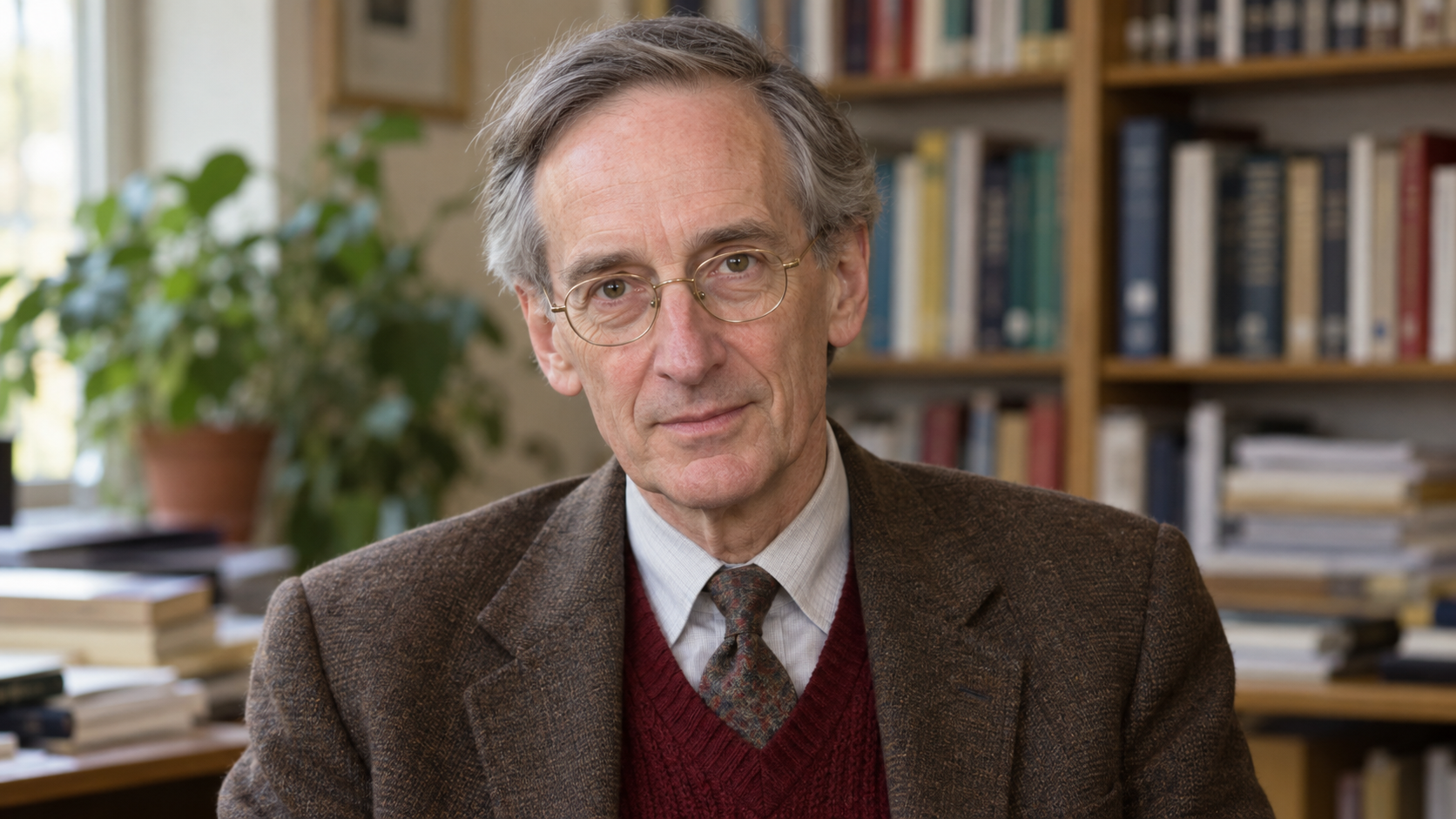
“The primary determinants of disease are mainly economic and social, and therefore its remedies must also be economic and social.”
Geoffrey Rose’s 1992 book The Strategy of Preventive Medicine asks readers to consider the circumstances that make illness common in a population. This sentence, preserved in the SAGE Handbook of Health Psychology and a hypertension report issued by the United States Surgeon General, connects that question with the kinds of remedies society should examine. Rose was an epidemiologist whose work helped distinguish the causes of an individual case from the causes of a population’s pattern of disease. A consultation can investigate why one person became unwell, while a broader inquiry asks why a condition occurs more often in one setting than another. These inquiries can inform each other, but they are not interchangeable. The quotation gives particular weight to economic and social arrangements. It should be understood as a forceful argument about prevention, rather than as a claim that biology is irrelevant or that professional treatment has no place.
The distinction becomes clearer when a choice is considered alongside the conditions that make it possible. Advice about an everyday habit may be understandable, yet acting on it can depend on working hours, available space, household resources or local services. Those circumstances are neither a complete explanation of every illness nor a reason to disregard a person’s own priorities. They are part of the setting in which choices occur. Rose’s sentence asks whether the proposed response operates at a level capable of changing the relevant cause. If a problem is shared across a population, repeatedly directing instructions at isolated individuals may leave the common circumstances untouched. Conversely, a population measure may not meet the immediate needs of someone already ill. A useful reading therefore allows several kinds of action to coexist. It invites inquiry into what each can accomplish, who it reaches and how its effects will be assessed, rather than announcing that one approach must replace all the others.
Consider a hypothetical town where residents want to walk more often but frequently encounter missing pavements and unsafe crossings. An information leaflet and a change to the street environment would address different parts of that situation. This example illustrates a question about prevention; it is not a measured intervention from Rose’s research or a promise about a particular health outcome. Deciding what to change would require local knowledge, public discussion and evidence about the consequences. The principle is still useful before those answers are known: examine the surroundings as well as the individual. Readers can bring that habit of inquiry to debates about housing, work, transport or access to food without assuming that a policy’s good intentions establish its effectiveness. Rose’s words enlarge the field of responsibility. They ask whether an account of health has looked far enough beyond the clinic door to notice the shared circumstances that people must navigate before they arrive there.
The sentence is attributed to Rose’s 1992 book The Strategy of Preventive Medicine. The SAGE handbook cites page 129, and the Surgeon General’s hypertension report preserves the wording.
The year identifies the book used for attribution. The April date is the entry’s place in this collection, without a claimed anniversary connection.
A population’s pattern of disease and an individual person’s immediate needs are different questions. They can require complementary responses.
The article interprets Rose’s emphasis on social conditions without treating it as a reason to dismiss biology, clinical care or the evidence needed to assess a proposed remedy.
The imagined town illustrates how advice and the environment can address different obstacles. It is not a documented result from Rose’s work.
Local evidence and public priorities remain necessary when deciding whether a particular change will help, whom it will serve and how it should be evaluated.
Explore more "Quotes of The Day"
Discover more notable quotes from influential voices across politics, science, business, technology, sports, and culture. Each quote offers insight into how ideas, beliefs, and decisions shape the world around us.