

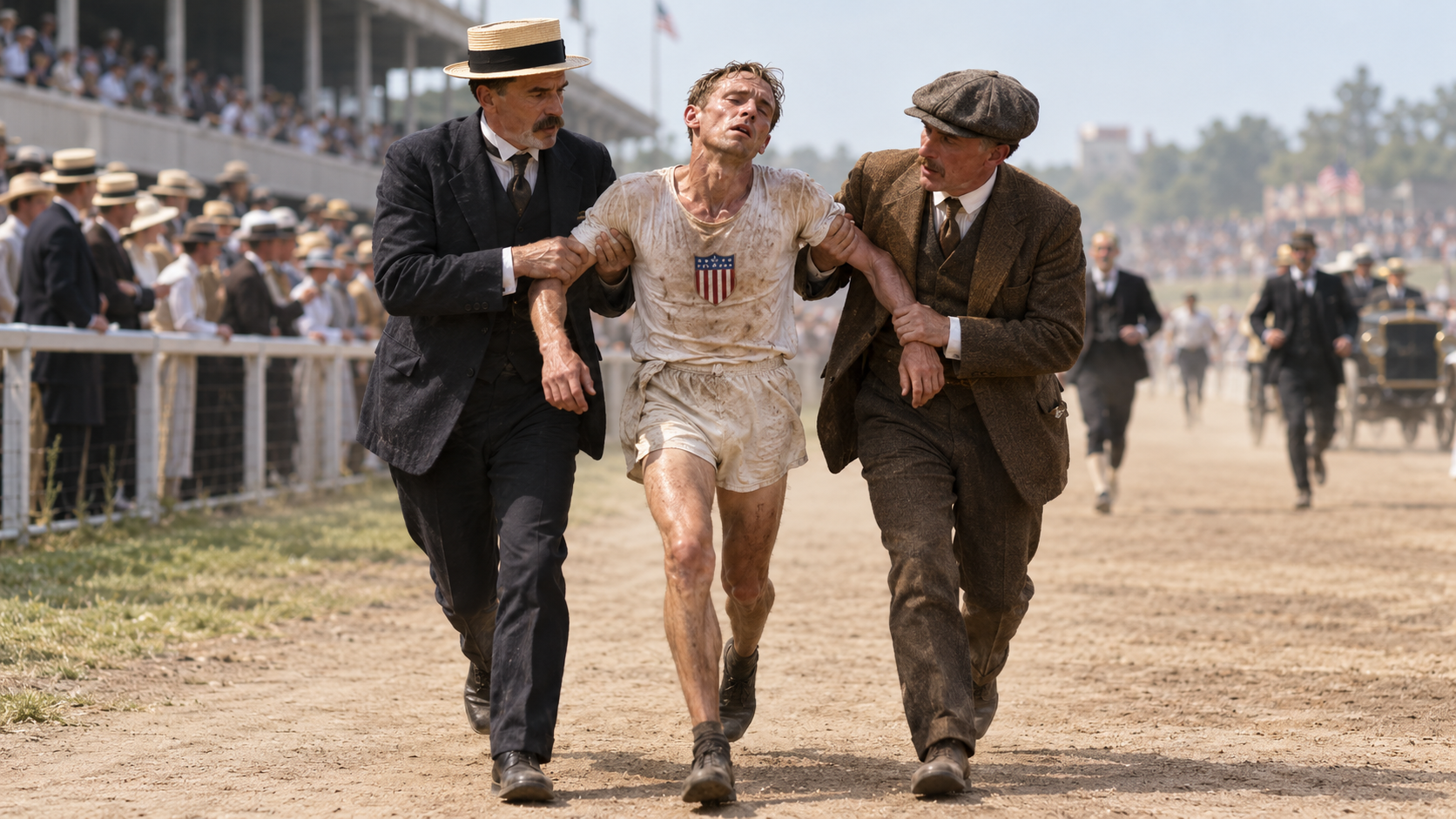
On This Day in Sports: August 30, 1904
On August 30, 1904, Thomas Hicks was declared winner of the St. Louis Olympic marathon after one of the strangest races in Games history. Extreme heat, dust and a single water station forced most runners to abandon the course. Fred Lorz crossed first after riding in a car for part of the route and was disqualified. The public record fixes the central details with unusual clarity: The race was held in temperatures above 90 degrees. Only one water station was provided. Together, those facts explain why August 30, 1904 stands apart from the ordinary flow of a season and deserves to be remembered as a distinct historical moment.
The marathon was run on hilly roads shared with vehicles during the Louisiana Purchase Exposition. Organizers believed limiting water would test athletes, an idea that magnified dehydration in temperatures above 90 degrees Fahrenheit. Two further details help reconstruct how the achievement unfolded: Fred Lorz was disqualified after riding in a car. Thomas Hicks received strychnine and brandy. They move the story beyond a headline by showing the pressure, setting and competitive choices that shaped the decisive action in real time.
Hicks struggled through the final miles while attendants gave him egg whites, brandy and small doses of strychnine, then supported him near the finish. Fourteen of 32 starters completed the race after other runners encountered cramps, dust and even stray dogs. The wider context is equally important. Fourteen of 32 starters finished. Hicks won in 3:28:53. Those points connect one day’s performance to a longer career, institution or rivalry and clarify why the event continued to matter after the immediate celebration had ended.
The chaos nearly led officials to remove the marathon from the Olympic program and helped demonstrate the need for water, medical supervision and anti-doping rules. The event survives as a warning about poor organization as much as an endurance contest. Seen from today, the milestone remains compelling because it joins a measurable result with the uncertainty of live competition. Nothing about the outcome was guaranteed beforehand. That combination of preparation, opportunity and execution transformed the date from another entry on the schedule into lasting sports history. It also reveals how records and championships depend on teammates, opponents, officials, venues and rules that shape the opportunity. Preserving those surrounding details helps explain both the achievement itself and the reason later generations still discuss it. The date therefore offers a useful window into how sporting excellence is created, witnessed and remembered. Its clearest lessons still reach beyond the final score, connecting preparation and opportunity with the people who preserved the event’s meaning for future audiences.
The race was held in temperatures above 90 degrees.
Only one water station was provided.
Fred Lorz was disqualified after riding in a car.
Thomas Hicks received strychnine and brandy.
Fourteen of 32 starters finished.
Hicks won in 3:28:53.
Explore more "On This Day in Sports"
Discover more landmark games, records, championships, and turning points from sports history. Each day revisits the athletes, teams, and moments that shaped competition and culture.