

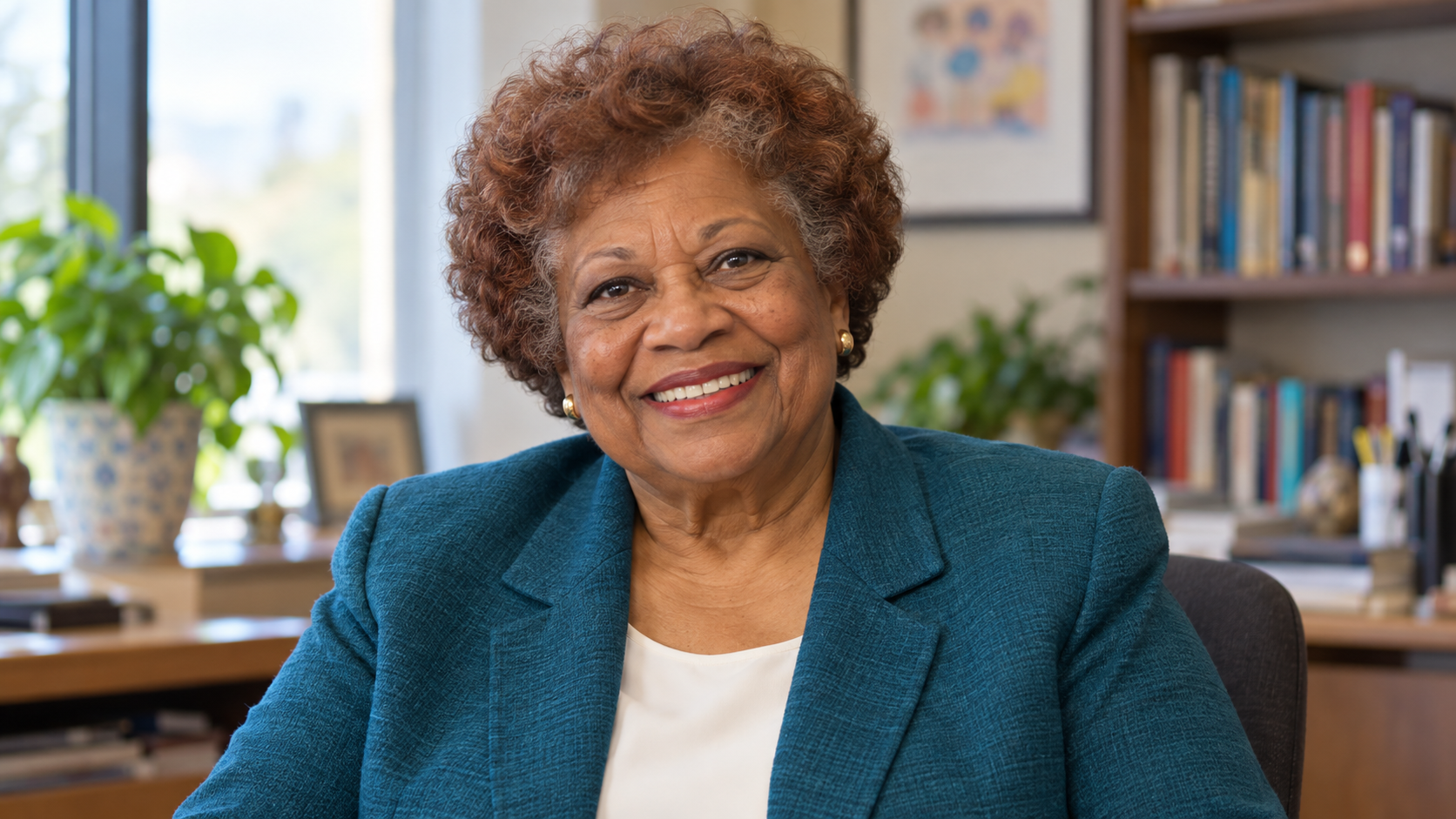
“You can’t educate a child who isn’t healthy, and you can’t keep a child healthy who isn’t educated.”
A child arrives at school as a whole person, carrying needs that do not fit neatly inside a lesson plan. Joycelyn Elders’s quotation brings those needs into view by joining health and education in a single, reciprocal statement. The Arizona Department of Education preserves this wording in an interview with school nurse Lee Ann Harter, who uses it to explain why her work matters. A California Assembly committee report, published in 2002 and archived by the federal education repository ERIC, also includes the sentence. These records establish its circulation and attribution, without establishing the first occasion on which Elders said it. The physician served as United States surgeon general in 1993–1994 and trained in pediatric endocrinology. Her concern with health education makes the relationship she describes more than an abstract slogan. It asks readers to consider what happens when institutions divide a child’s learning from the conditions that allow that child to participate.
The two halves of the sentence perform different jobs. The first points toward the effects of illness, discomfort or unmet needs on a child’s experience of learning. The second recognizes that understanding, communication and access to knowledge also matter in caring for health. Read together, they challenge a division of responsibility in which each service assumes another will handle the connection. They should not be read as an absolute rule that children with illnesses cannot learn, or that education guarantees freedom from disease. Students with disabilities and chronic conditions can flourish with suitable support, and even knowledgeable people encounter illness. Elders’s forceful phrasing serves a broader argument for cooperation. It also raises a practical question about whose difficulties become visible. A child who cannot concentrate may need more than a repeated instruction; the circumstances deserve attention before a judgment about effort is made.
Consider an illustrative meeting between a family, a teacher and a school nurse about a student who has begun missing lessons. This is an invented example, not a documented incident from Elders’s career. The participants might begin with attendance, then discover that appointments, transport or difficulty obtaining suitable support shape the problem. None can solve every obstacle alone, but sharing relevant information could change the questions they ask and the help they arrange. The example gives concrete meaning to the quotation’s reciprocal structure: education and care meet in the child’s actual day. It also makes room for the family’s knowledge rather than treating them as an afterthought. A useful response respects privacy and the student’s own experience while bringing appropriate adults into conversation. Elders’s words encourage that wider view of responsibility. The measure of cooperation is whether it helps a child take part in learning and receive care, with attention to individual needs rather than a promise that every difficulty will disappear.
The Arizona Department of Education attributes these words to Joycelyn Elders in a school nurse interview. A California Assembly report archived by ERIC independently preserves the same sentence.
The report’s publication date verifies that record, not the first year the quotation was spoken. The title therefore gives no originating year.
The article treats the statement as an argument for cooperation, rather than an absolute claim about a child’s capacity. Students with illnesses or disabilities can thrive with appropriate support.
Its emphasis is on recognizing needs that may shape participation and avoiding assumptions about a student’s effort. Education itself does not guarantee good health.
An illustrative family, teacher and nurse conversation shows how different kinds of knowledge can help clarify a difficulty. The example is imagined, not an event attributed to Elders.
Useful cooperation considers the student’s experience, protects privacy and connects people with suitable support. No single institution can remove every obstacle by itself.
Explore more "Quotes of The Day"
Discover more notable quotes from influential voices across politics, science, business, technology, sports, and culture. Each quote offers insight into how ideas, beliefs, and decisions shape the world around us.