

On This Day in Pop: August 12, 1970
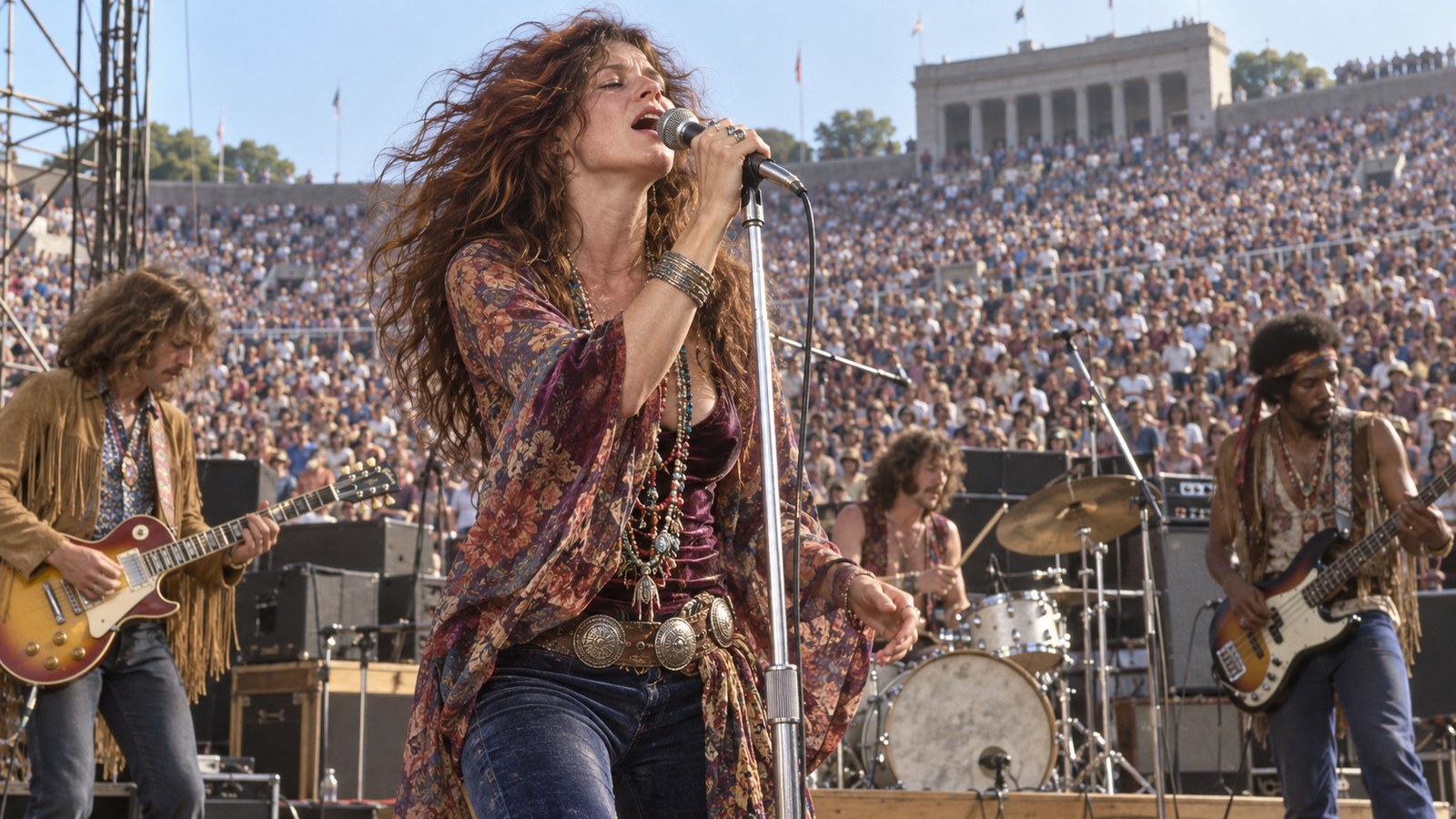
On August 12, 1970, Janis Joplin performed her final public concert at Harvard Stadium. Joplin appeared with the Full Tilt Boogie Band before a crowd estimated near forty thousand in Cambridge, Massachusetts. The outdoor show brought her raw, blues-rooted voice into a large stadium setting while photographers and audience members documented a performance no one knew would be her last. The new band gave Joplin a more flexible soul-and-rock framework than some of her earlier arrangements, and she was preparing material that would become the album Pearl. The set included familiar songs alongside newer work, presenting an artist moving forward rather than staging a farewell. The date is a useful point of entry because it captures the event before later reputation made its consequences appear inevitable. Contemporary audiences encountered a new release, performance or public loss in real time, with incomplete information and expectations shaped by the media and institutions of the period.
Calling the concert ‘final’ can distort the event by reading later tragedy backward into an ordinary tour date. On August 12 the significance lay in the immediate exchange between a forceful singer, a practiced ensemble and a huge audience gathered in a venue more associated with athletics. Popular culture is created through more than the famous person at the center: producers, technicians, exhibitors, broadcasters, audiences and physical venues all affect what survives. Looking closely at those conditions prevents an anniversary from becoming a list of familiar names and restores the choices, limitations and competing interests that surrounded the moment.
Joplin continued recording in Los Angeles and died on October 4, before Pearl was completed and released. The album reached number one, and surviving photographs from Harvard later became important evidence of her late-stage confidence and the scale of her audience. That later history matters because influence is not a straight line. Works are rediscovered, technologies change, communities attach new meanings and commercial owners repackage the past. The most durable pop events remain open to argument, allowing admiration for creative achievement to exist beside criticism of exclusion, labor, power or representation.
The anniversary is most useful when it centers the performance rather than the death that followed. It preserves Joplin at work—improvising, directing energy and testing a new band—while reminding listeners how quickly an unfinished career can harden into legend. Anniversaries can flatten history into celebration, but they can also reopen it. Returning to this August date means separating what participants knew then from what later audiences added, and noticing how recordings, photographs, broadcasts and personal memories keep the event active. That distance between the immediate moment and its long afterlife is what makes this episode worth revisiting as part of popular culture.
Janis Joplin performed at Harvard Stadium on August 12, 1970.
On August 12, 1970, Janis Joplin performed her final public concert at Harvard Stadium. Joplin appeared with the Full Tilt Boogie Band before a crowd estimated near forty thousand in Cambridge, Massachusetts.
The concert with the Full Tilt Boogie Band drew an estimated crowd of about forty thousand.
Calling the concert 'final' can distort the event by reading later tragedy backward into an ordinary tour date. On August 12 the significance lay in the immediate exchange between a forceful singer, a practiced ensemble and a huge audience gathered in a venue more associated with athletics.
It became her last public concert, though she continued recording afterward.
Joplin continued recording in Los Angeles and died on October 4, before Pearl was completed and released. The album reached number one, and surviving photographs from Harvard later became important evidence of her late-stage confidence and the scale of her audience.
Explore more of "On This Day ..."
Discover more events from the same date across news, politics, technology, sports, and other fields. Each link highlights significant moments that shaped history on different fronts.