

On This Day in Pop: August 15, 1969
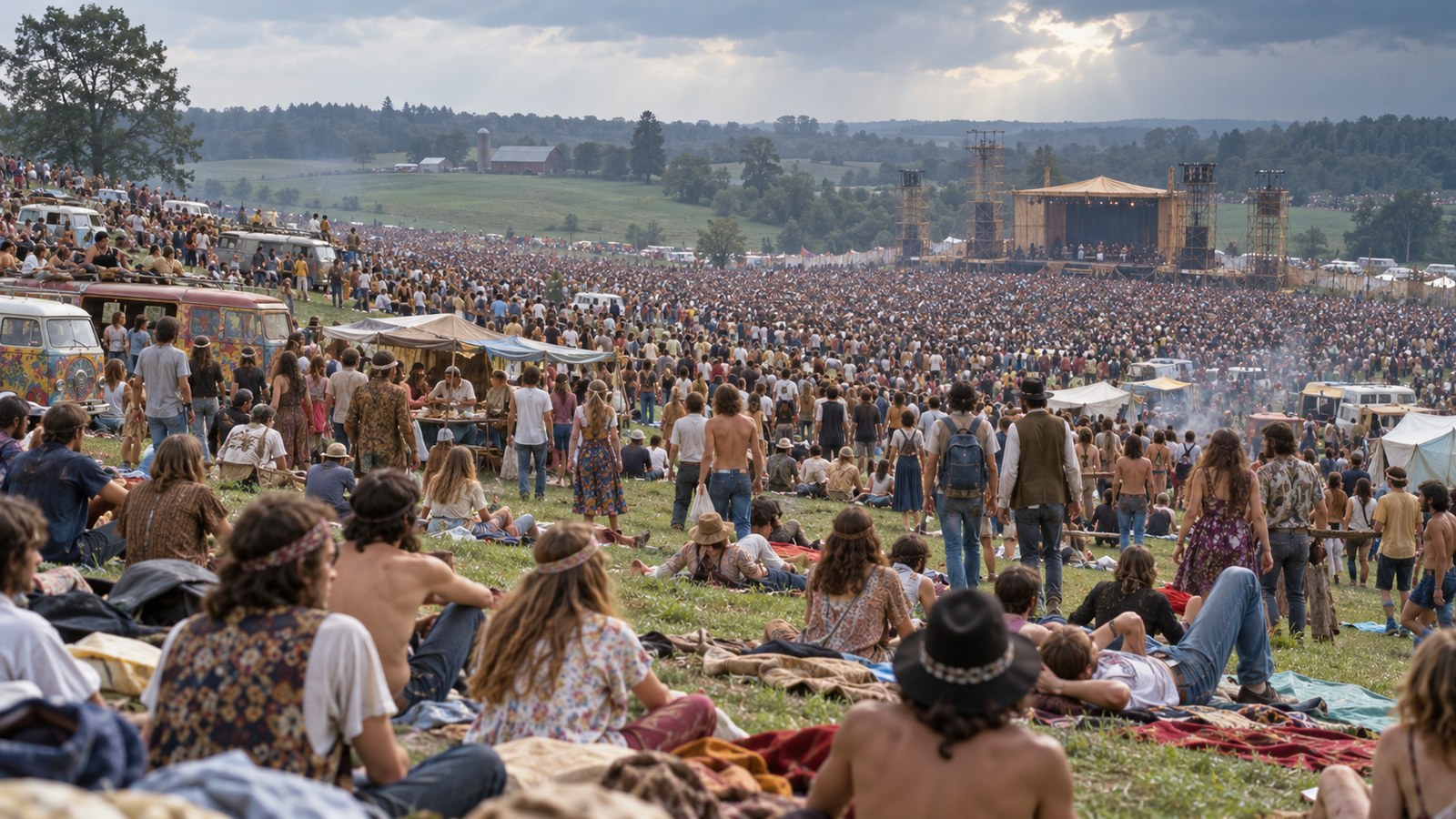
On August 15, 1969, the Woodstock Music and Art Fair opened in Bethel, New York. Thousands poured onto Max Yasgur’s dairy farm for what had been advertised as three days of peace and music. Traffic overwhelmed surrounding roads, fences and ticket plans collapsed, and Richie Havens opened a program that would stretch through rain, delays and Monday morning. Organizers had moved the festival after losing earlier sites and were still building essential infrastructure as the crowd arrived. The lineup joined folk, blues, rock, soul and emerging heavy music, while volunteers and local residents improvised food, medical care and transportation. The date is a useful point of entry because it captures the event before later reputation made its consequences appear inevitable. Contemporary audiences encountered a new release, performance or public loss in real time, with incomplete information and expectations shaped by the media and institutions of the period.
Woodstock became a test of whether a temporary city of young people could survive logistical failure without descending into the violence many observers expected. The reality included mud, hunger, drug emergencies and overcrowding, but it also produced powerful examples of cooperation and musical concentration. Popular culture is created through more than the famous person at the center: producers, technicians, exhibitors, broadcasters, audiences and physical venues all affect what survives. Looking closely at those conditions prevents an anniversary from becoming a list of familiar names and restores the choices, limitations and competing interests that surrounded the moment.
A documentary film and bestselling soundtrack shaped public memory more decisively than most people at the site could see from the distant stage. The festival became shorthand for the counterculture, then a brand whose later revivals exposed the difficulty of reproducing an event created partly by accident. That later history matters because influence is not a straight line. Works are rediscovered, technologies change, communities attach new meanings and commercial owners repackage the past. The most durable pop events remain open to argument, allowing admiration for creative achievement to exist beside criticism of exclusion, labor, power or representation.
August 15 is the beginning of both a real, difficult gathering and an edited national myth. Remembering the labor, weather and uncertainty alongside the famous performances keeps Woodstock human while explaining why its promise of collective possibility still resonates. Anniversaries can flatten history into celebration, but they can also reopen it. Returning to this August date means separating what participants knew then from what later audiences added, and noticing how recordings, photographs, broadcasts and personal memories keep the event active. That distance between the immediate moment and its long afterlife is what makes this episode worth revisiting as part of popular culture.
Woodstock opened on August 15, 1969, at Max Yasgur's farm near Bethel, New York.
On August 15, 1969, the Woodstock Music and Art Fair opened in Bethel, New York. Thousands poured onto Max Yasgur's dairy farm for what had been advertised as three days of peace and music.
Crowds overwhelmed roads and ticket controls, turning the event into a free festival.
Woodstock became a test of whether a temporary city of young people could survive logistical failure without descending into the violence many observers expected. The reality included mud, hunger, drug emergencies and overcrowding, but it also produced powerful examples of cooperation and musical concentration.
Film and recordings transformed the chaotic gathering into a lasting symbol of the counterculture.
A documentary film and bestselling soundtrack shaped public memory more decisively than most people at the site could see from the distant stage. The festival became shorthand for the counterculture, then a brand whose later revivals exposed the difficulty of reproducing an event created partly by accident.
Explore more of "On This Day ..."
Discover more events from the same date across news, politics, technology, sports, and other fields. Each link highlights significant moments that shaped history on different fronts.