

On This Day in Pop: September 21, 1937
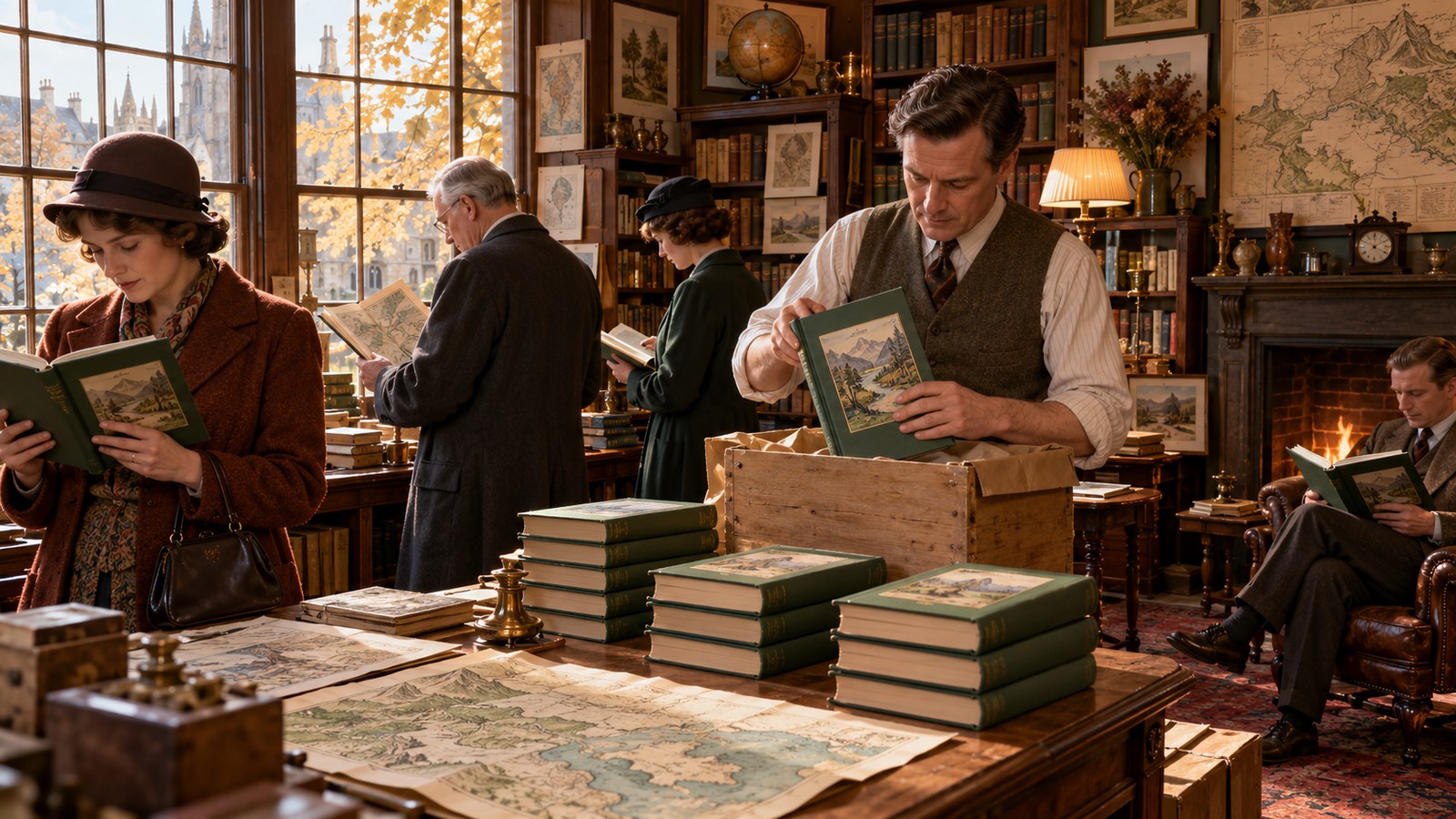
On September 21, 1937, J. R. R. Tolkien’s The Hobbit was published in Britain. George Allen & Unwin issued the children’s fantasy about Bilbo Baggins, a reluctant traveler drawn into a quest with dwarves and the wizard Gandalf. Tolkien supplied maps and illustrations that helped establish Middle-earth as a place extending beyond the immediate story. The book grew from tales Tolkien told his children and from his scholarly fascination with languages, myth and medieval literature. Publisher Stanley Unwin sought the judgment of his young son Rayner, whose favorable report helped move the manuscript toward publication. The date captures the event before later reputation made its consequences look inevitable, when audiences encountered a new release, performance, institution or public loss with only the expectations available at the time.
Bilbo’s adventure treated courage as something developed through choices rather than inherited from a warrior identity. Riddles, songs, invented names and a narrator speaking directly to readers made an elaborate secondary world accessible without flattening its mystery. Popular culture is never made by a famous name alone. Writers, producers, technicians, broadcasters, retailers, venues and audiences shape what becomes visible and what survives. Looking at those conditions turns an anniversary from a list entry into a record of choices, limits and competing interests.
The book’s success led the publisher to request a sequel, beginning the long process that produced The Lord of the Rings. Tolkien revised parts of The Hobbit, especially the encounter with Gollum, so the earlier story would align with the darker mythology that followed. That afterlife matters because influence does not move in a straight line. Reruns, reissues, new technology, criticism and community memory can change the meaning of a work long after its first appearance. Durable pop history therefore holds creative achievement beside questions of labor, access, power and representation.
September 21 marks the quiet arrival of a work that reshaped modern fantasy publishing. Its influence comes from making a deeply imagined world feel both ancient and welcoming, with an ordinary home-loving hero at the doorway. Returning to this September date means separating what participants knew then from what later audiences added. Recordings, photographs, broadcasts and recollections keep the moment active, but they also select and reshape it. That distinction protects against hindsight: a chart position, premiere, publication, concert or memorial may become a neat milestone later, but the people present still faced uncertainty. Reading the moment in both directions—through its original conditions and its accumulated meanings—keeps celebration from replacing history. The distance between the immediate event and its continuing interpretation is what makes this episode worth revisiting.
The Hobbit was first published on September 21, 1937.
On September 21, 1937, J. R.
George Allen & Unwin issued the book in Britain.
Bilbo's adventure treated courage as something developed through choices rather than inherited from a warrior identity. Riddles, songs, invented names and a narrator speaking directly to readers made an elaborate secondary world accessible without flattening its mystery.
Its success prompted the request that eventually led Tolkien to The Lord of the Rings.
The book's success led the publisher to request a sequel, beginning the long process that produced The Lord of the Rings. Tolkien revised parts of The Hobbit, especially the encounter with Gollum, so the earlier story would align with the darker mythology that followed.
Explore more of "On This Day ..."
Discover more events from the same date across news, politics, technology, sports, and other fields. Each link highlights significant moments that shaped history on different fronts.