

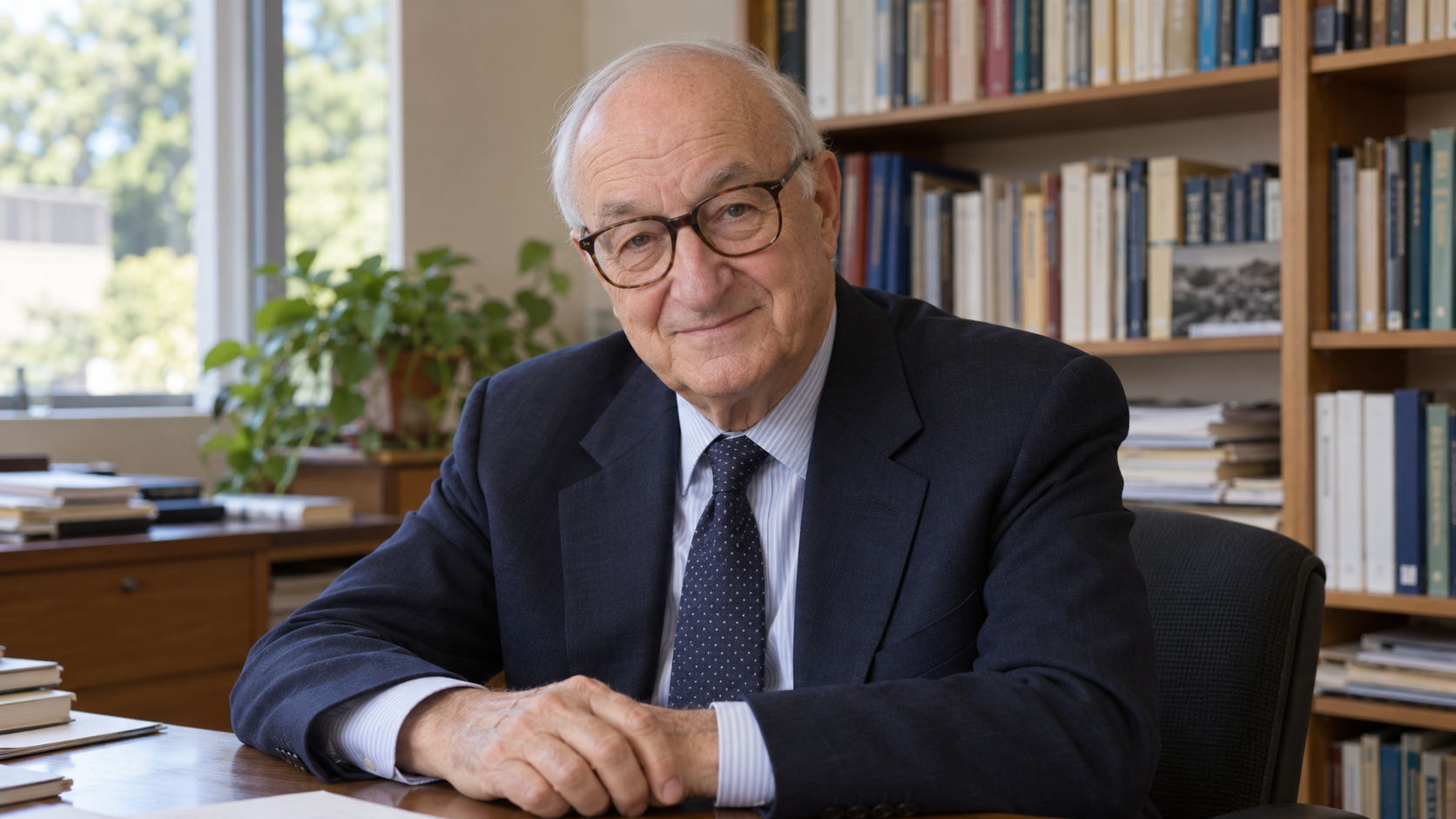
“Human health is a social matter, not just an individual one.”
A person can understand a health recommendation perfectly and still struggle to act on it. The walk home may pass an unsafe crossing. An appointment may require time away from work that cannot be taken. Albert Bandura’s sentence places those ordinary circumstances inside the discussion of health, rather than treating them as excuses outside it. The quotation appears in his 2004 paper Health Promotion by Social Cognitive Means, whose abstract is preserved by the National Library of Medicine. Bandura explains health promotion through interacting influences: beliefs about personal capability, goals, expectations, and conditions that help or obstruct action. His argument gives personal agency a serious place without pretending that agency operates in empty space. Reading the sentence in that context changes its emphasis. Society does not replace the individual; social arrangements help determine what an individual can realistically do with knowledge, intention and effort.
The same wording appears in the Healthy Warrnambool 2021–25 plan, included in the Australian city council’s October 2021 meeting papers. There it introduces a discussion of enabling environments, with a footnote pointing to Bandura’s 2004 work. That application makes a useful bridge between psychology and public planning. The private decision to use a service is connected to the public decision about where it is located, what it costs to reach, and whether people can understand its instructions. The broader lesson is to examine a difficulty before prescribing greater determination. For example, a missed appointment might reflect confusion over a letter, inaccessible transport, or competing care responsibilities. Those are possibilities to investigate, not conclusions to impose. Asking what prevented attendance can produce a more useful response than assuming indifference. It also leaves room for the person’s own account of what happened.
Bandura’s language offers a way to support confidence without turning confidence into a moral test. A manageable first step, a clear explanation, or reliable assistance may make participation easier; none guarantees recovery or makes a patient responsible for every outcome. Disease, disability and uncertainty cannot be reduced to a person’s attitude. The sentence instead invites attention to the connection between a person and the opportunities around them. At home, in a clinic, or in a community service, that might mean checking whether advice is usable before repeating it more forcefully. It might mean involving the people who face a barrier in designing a solution. These are interpretations of the quotation’s practical meaning, rather than additional claims of treatment effectiveness. Health promotion becomes more credible when it combines respect for choice with an honest account of constraints. Helping someone act and improving the conditions for action belong in the same conversation.
The sentence appears in the abstract of Bandura’s 2004 paper Health Promotion by Social Cognitive Means. The National Library of Medicine preserves the author, publication details and wording.
A Warrnambool council health plan repeats it while discussing enabling environments, explicitly citing Bandura’s paper. The series date is not a historical anniversary.
Bandura’s framework considers beliefs about capability alongside goals, expectations and environmental influences. Personal agency and social conditions interact in his account.
Confidence is not a guarantee of health or a measure of a patient’s worth. The article treats it as one consideration within a much broader setting.
Before interpreting a difficulty as lack of motivation, ask whether instructions, transport, cost or other conditions are creating a barrier. Listen to the affected person.
The article’s examples illustrate the quotation. They do not diagnose an individual situation or claim that one intervention will solve every problem.
Explore more "Quotes of The Day"
Discover more notable quotes from influential voices across politics, science, business, technology, sports, and culture. Each quote offers insight into how ideas, beliefs, and decisions shape the world around us.