

On This Day in Pop: October 6, 1927
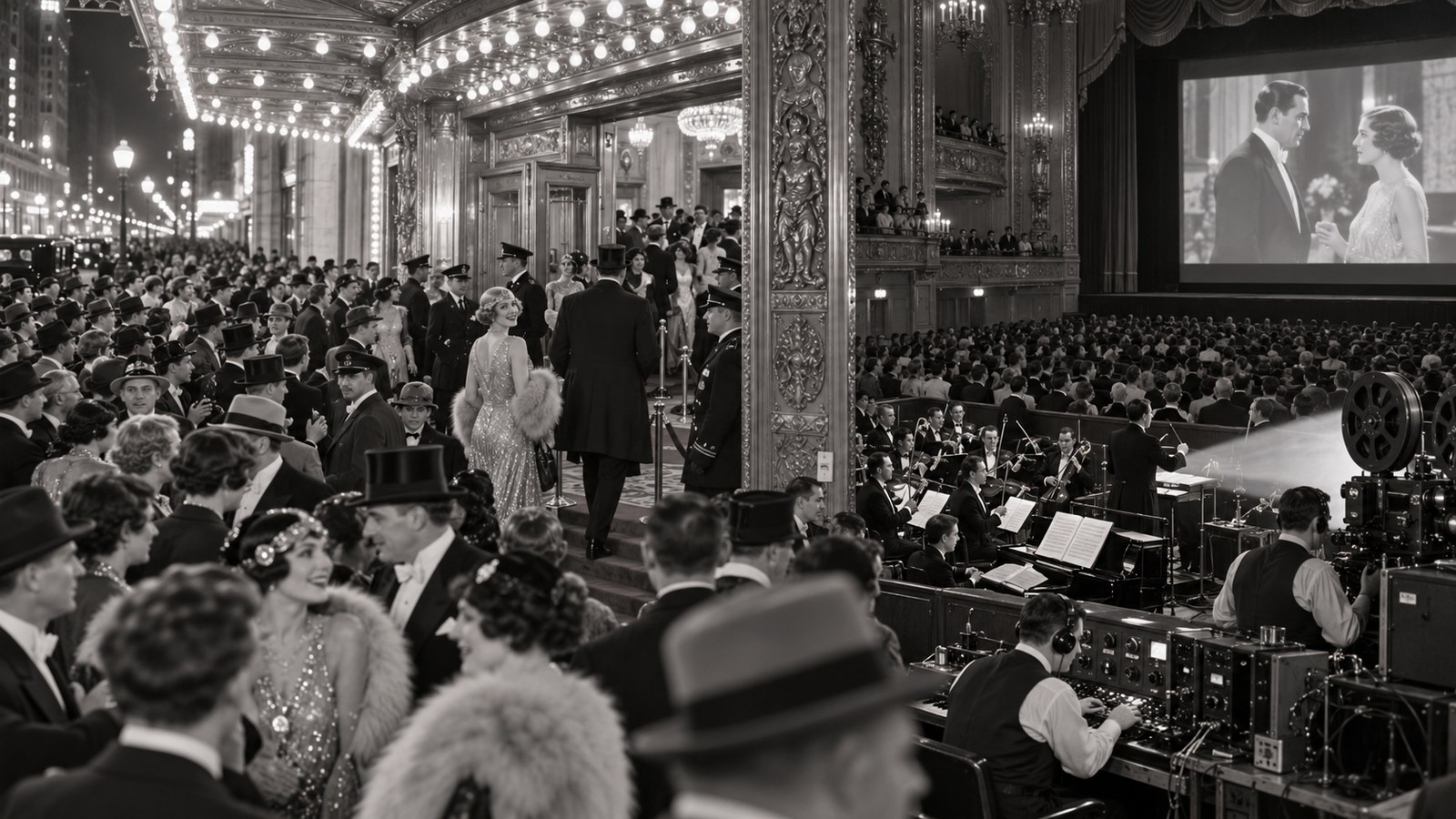
On October 6, 1927, The Jazz Singer premiered at New York’s Warner Theatre. Most of the feature used silent-film conventions, but synchronized musical performances and brief spoken lines gave audiences a startling sense of direct presence. Al Jolson starred as a cantor’s son pursuing a career on the popular stage. Warner Bros. used the Vitaphone sound-on-disc system after earlier experiments with recorded music and effects. The production joined technical risk to a familiar conflict between family tradition and show-business ambition. The date captures the event before later reputation made its consequences look inevitable, when audiences encountered a new release, performance or institution with only the expectations available at the time.
The film accelerated the industry’s conversion to synchronized sound, changing acting, theater wiring, production practice and studio economics. Its historical importance also requires confronting Jolson’s blackface performance and the racial conventions embedded in American entertainment. Popular culture is never made by a famous name alone. Writers, performers, producers, technicians, broadcasters, retailers, venues and audiences shape what becomes visible and what survives. Their collaboration also determines which experiments reach the public and which disappear before they can build momentum. Looking at those conditions turns an anniversary from a list entry into a record of choices, limits and competing interests.
Other studios rushed sound features into production, and silent stars, musicians and theater owners faced abrupt new demands. The movie received a special Academy Award for helping revolutionize the industry. That afterlife matters because influence does not move in a straight line. Reruns, reissues, new technology, criticism and community memory can change the meaning of a work long after its first appearance. Durable pop history therefore holds creative achievement beside questions of labor, access, power and representation.
The premiere was not the first motion picture to contain sound, but it became the decisive commercial demonstration. Its legacy is therefore both technological and cultural: an advance in form carried within material that exposes the period’s exclusions. Returning to this October date means separating what participants knew then from what later audiences added. Recordings, photographs, broadcasts and recollections keep the moment active, but they also select and reshape it. That distinction protects against hindsight: a chart position, premiere, publication, concert or opening may become a neat milestone later, but the people present still faced uncertainty. Reading the moment in both directions—through its original conditions and its accumulated meanings—keeps celebration from replacing history. The distance between the immediate event and its continuing interpretation is what makes this episode worth revisiting.
The Jazz Singer premiered on October 6, 1927.
On October 6, 1927, The Jazz Singer premiered at New York's Warner Theatre. Most of the feature used silent-film conventions, but synchronized musical performances and brief spoken lines gave audiences a startling sense of direct presence.
It used the Vitaphone synchronized-sound system.
The film accelerated the industry's conversion to synchronized sound, changing acting, theater wiring, production practice and studio economics. Its historical importance also requires confronting Jolson's blackface performance and the racial conventions embedded in American entertainment.
Its success hastened Hollywood's transition from silent movies to talkies.
Other studios rushed sound features into production, and silent stars, musicians and theater owners faced abrupt new demands. The movie received a special Academy Award for helping revolutionize the industry.
Explore more of "On This Day ..."
Discover more events from the same date across news, politics, technology, sports, and other fields. Each link highlights significant moments that shaped history on different fronts.