

On This Day in Pop: October 11, 1975
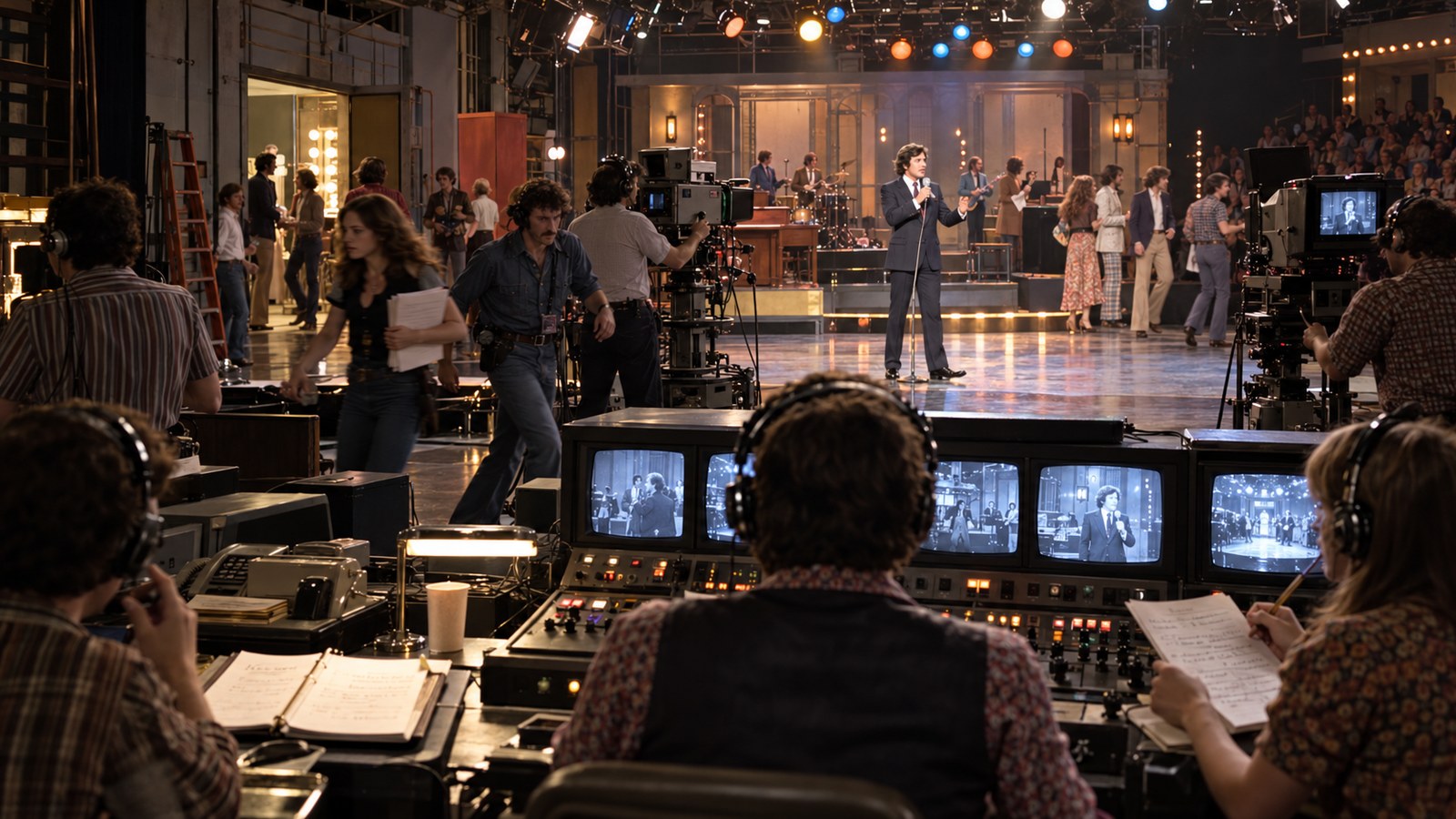
On October 11, 1975, NBC’s live late-night comedy series debuted under the title NBC’s Saturday Night. George Carlin hosted an unruly ninety-minute mix of sketches, music, short films and stand-up, with Billy Preston and Janis Ian as musical guests. A young ensemble later called the Not Ready for Prime Time Players moved between recurring characters and deliberately contemporary satire. Lorne Michaels developed the program for a late-night slot opened by NBC’s changed relationship with Johnny Carson reruns. Studio 8H, live transmission and a writing schedule built around the week’s events made risk part of the format. The date captures the event before later reputation made its consequences look inevitable, when audiences encountered a new release, performance or institution with only the expectations available at the time.
The show aimed at younger viewers who did not see themselves in established variety television. Live performance created the possibility of surprise and failure, while the ensemble model allowed different comic voices to compete inside one institution. Popular culture is never made by a famous name alone. Writers, performers, producers, technicians, broadcasters, retailers, venues and audiences shape what becomes visible and what survives. Their collaboration also determines which experiments reach the public and which disappear before they can build momentum. Looking at those conditions turns an anniversary from a list entry into a record of choices, limits and competing interests.
Cast changes, cancellations narrowly avoided and major cultural shifts repeatedly remade the series. It became a route into film, television and comedy careers while turning political impressions and catchphrases into weekly public conversation. That afterlife matters because influence does not move in a straight line. Reruns, reissues, new technology, criticism and community memory can change the meaning of a work long after its first appearance. Durable pop history therefore holds creative achievement beside questions of labor, access, power and representation.
The first broadcast looks rough beside the institution it launched, and that is precisely its value. The series survived by treating incompleteness, turnover and topical pressure as renewable creative resources. Returning to this October date means separating what participants knew then from what later audiences added. Recordings, photographs, broadcasts and recollections keep the moment active, but they also select and reshape it. That distinction protects against hindsight: a chart position, premiere, publication, concert or opening may become a neat milestone later, but the people present still faced uncertainty. Reading the moment in both directions—through its original conditions and its accumulated meanings—keeps celebration from replacing history. The distance between the immediate event and its continuing interpretation is what makes this episode worth revisiting.
The program debuted on October 11, 1975.
On October 11, 1975, NBC's live late-night comedy series debuted under the title NBC's Saturday Night. George Carlin hosted an unruly ninety-minute mix of sketches, music, short films and stand-up, with Billy Preston and Janis Ian as musical guests.
George Carlin hosted the first episode.
The show aimed at younger viewers who did not see themselves in established variety television. Live performance created the possibility of surprise and failure, while the ensemble model allowed different comic voices to compete inside one institution.
Lorne Michaels created the live NBC series.
Cast changes, cancellations narrowly avoided and major cultural shifts repeatedly remade the series. It became a route into film, television and comedy careers while turning political impressions and catchphrases into weekly public conversation.
Explore more of "On This Day ..."
Discover more events from the same date across news, politics, technology, sports, and other fields. Each link highlights significant moments that shaped history on different fronts.