

On This Day in Pop: October 14, 1926
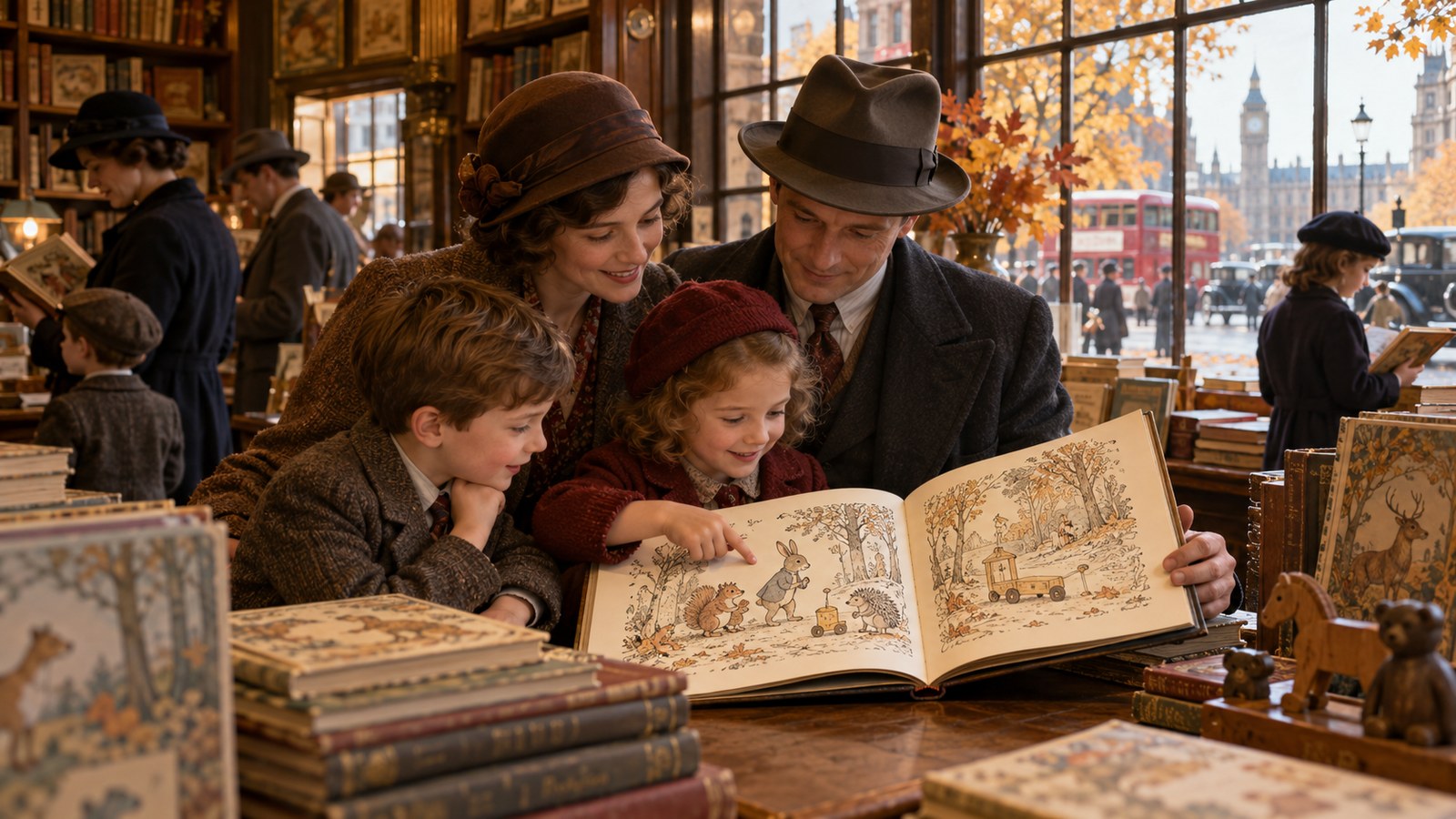
On October 14, 1926, A. A. Milne’s Winnie-the-Pooh was first published in London. The volume gathered stories about Christopher Robin, Pooh, Piglet, Eeyore and their companions in the Hundred Acre Wood. Ernest H. Shepard’s line illustrations gave the animals a visual identity closely tied to Milne’s conversational humor. Milne drew inspiration from his son Christopher Robin Milne and a collection of toys, while Ashdown Forest helped shape the imagined landscape. The book followed poems and an earlier newspaper story that had introduced parts of the world. The date captures the event before later reputation made its consequences look inevitable, when audiences encountered a new release, performance or institution with only the expectations available at the time.
The stories respect childhood logic without making it simple. Questions about friendship, fear, appetite and misunderstanding unfold through wordplay and small expeditions, allowing adults and children to hear different shades in the same exchange. Popular culture is never made by a famous name alone. Writers, performers, producers, technicians, broadcasters, retailers, venues and audiences shape what becomes visible and what survives. Their collaboration also determines which experiments reach the public and which disappear before they can build momentum. Looking at those conditions turns an anniversary from a list entry into a record of choices, limits and competing interests.
The House at Pooh Corner expanded the world in 1928, and the books became international classics. Stage, audio and screen adaptations later transformed the characters into a major commercial franchise, sometimes overshadowing the original prose. That afterlife matters because influence does not move in a straight line. Reruns, reissues, new technology, criticism and community memory can change the meaning of a work long after its first appearance. Durable pop history therefore holds creative achievement beside questions of labor, access, power and representation.
Publication fixed a private family mythology in print but did not keep it private. The book endures because its scale remains gentle while its observations about loyalty, worry and self-importance are exact. Returning to this October date means separating what participants knew then from what later audiences added. Recordings, photographs, broadcasts and recollections keep the moment active, but they also select and reshape it. That distinction protects against hindsight: a chart position, premiere, publication, concert or opening may become a neat milestone later, but the people present still faced uncertainty. Reading the moment in both directions—through its original conditions and its accumulated meanings—keeps celebration from replacing history. The distance between the immediate event and its continuing interpretation is what makes this episode worth revisiting.
Winnie-the-Pooh was published on October 14, 1926.
On October 14, 1926, A. A.
A. A. Milne wrote the stories.
The stories respect childhood logic without making it simple. Questions about friendship, fear, appetite and misunderstanding unfold through wordplay and small expeditions, allowing adults and children to hear different shades in the same exchange.
Ernest H. Shepard created the original illustrations.
The House at Pooh Corner expanded the world in 1928, and the books became international classics. Stage, audio and screen adaptations later transformed the characters into a major commercial franchise, sometimes overshadowing the original prose.
Explore more of "On This Day ..."
Discover more events from the same date across news, politics, technology, sports, and other fields. Each link highlights significant moments that shaped history on different fronts.