

On This Day in Pop: October 13, 1962
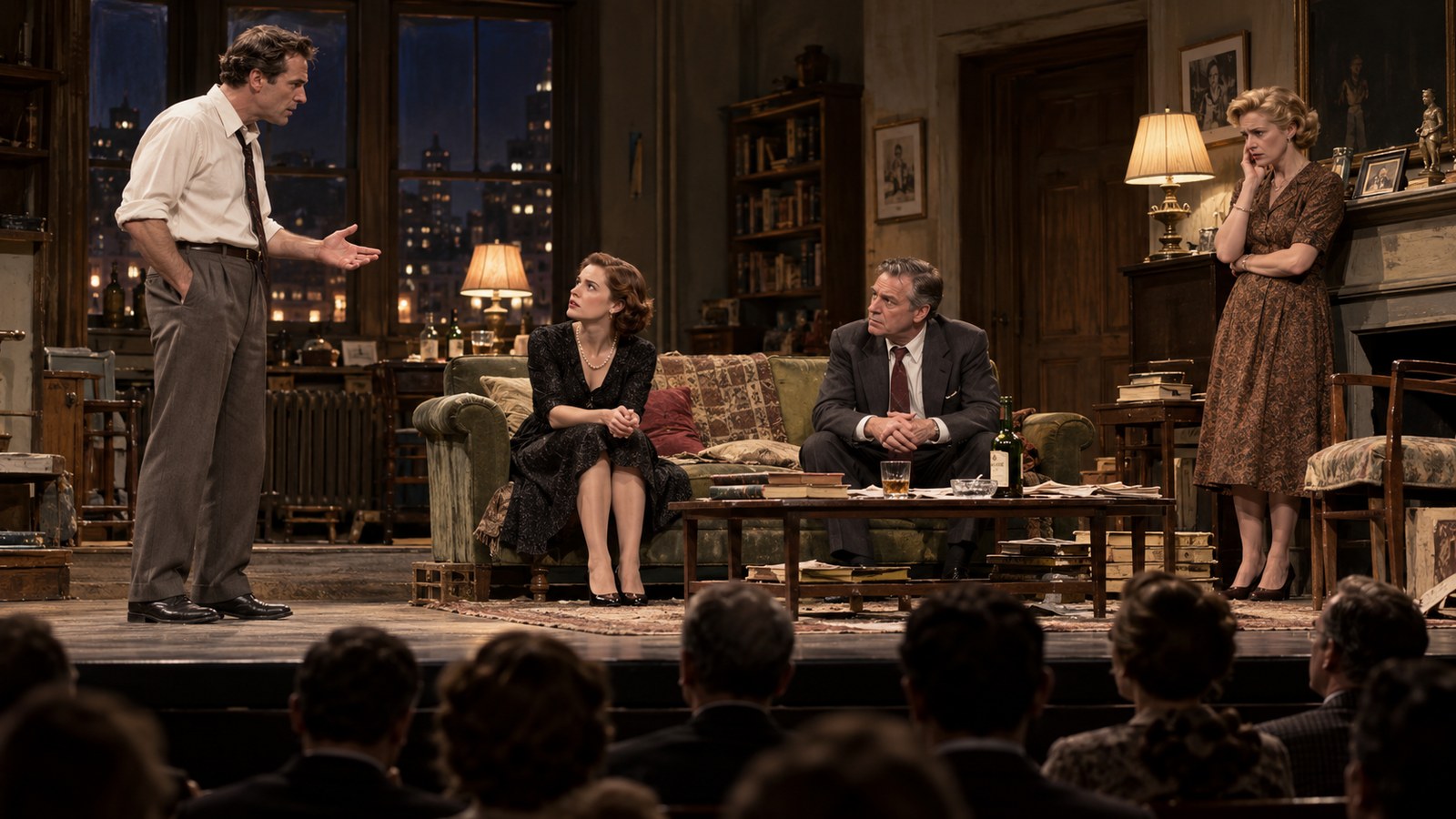
On October 13, 1962, Edward Albee’s Who’s Afraid of Virginia Woolf? opened on Broadway. Uta Hagen and Arthur Hill played Martha and George, a married couple who draw younger guests into an all-night contest of stories, humiliation and dependence. The three-act drama used a living room as an emotional arena rather than a place of safety. Producer Richard Barr and director Alan Schneider brought Albee’s long, verbally aggressive play to the Billy Rose Theatre. Its language and subject matter challenged expectations about what a commercial Broadway audience would accept. The date captures the event before later reputation made its consequences look inevitable, when audiences encountered a new release, performance or institution with only the expectations available at the time.
The play stripped away reassuring images of marriage, education and social success. Its battles can be cruel, but the invented worlds shared by George and Martha also reveal how illusion may function as both weapon and shelter. Popular culture is never made by a famous name alone. Writers, performers, producers, technicians, broadcasters, retailers, venues and audiences shape what becomes visible and what survives. Their collaboration also determines which experiments reach the public and which disappear before they can build momentum. Looking at those conditions turns an anniversary from a list entry into a record of choices, limits and competing interests.
The production won Tony Awards including best play, and Hagen’s performance became legendary. A celebrated 1966 film adaptation carried the material to a wider audience and tested Hollywood censorship boundaries. That afterlife matters because influence does not move in a straight line. Reruns, reissues, new technology, criticism and community memory can change the meaning of a work long after its first appearance. Durable pop history therefore holds creative achievement beside questions of labor, access, power and representation.
The opening established Albee as a central American dramatist and demonstrated that difficult, lengthy drama could become a popular event. Its title still signals a confrontation with truths that ordinary conversation avoids. Returning to this October date means separating what participants knew then from what later audiences added. Recordings, photographs, broadcasts and recollections keep the moment active, but they also select and reshape it. That distinction protects against hindsight: a chart position, premiere, publication, concert or opening may become a neat milestone later, but the people present still faced uncertainty. Reading the moment in both directions—through its original conditions and its accumulated meanings—keeps celebration from replacing history. The distance between the immediate event and its continuing interpretation is what makes this episode worth revisiting.
The play opened on October 13, 1962.
On October 13, 1962, Edward Albee's Who's Afraid of Virginia Woolf? opened on Broadway.
Uta Hagen and Arthur Hill led the original Broadway cast.
The play stripped away reassuring images of marriage, education and social success. Its battles can be cruel, but the invented worlds shared by George and Martha also reveal how illusion may function as both weapon and shelter.
It won the 1963 Tony Award for best play.
The production won Tony Awards including best play, and Hagen's performance became legendary. A celebrated 1966 film adaptation carried the material to a wider audience and tested Hollywood censorship boundaries.
Explore more of "On This Day ..."
Discover more events from the same date across news, politics, technology, sports, and other fields. Each link highlights significant moments that shaped history on different fronts.