

On This Day in Pop: November 14, 1943
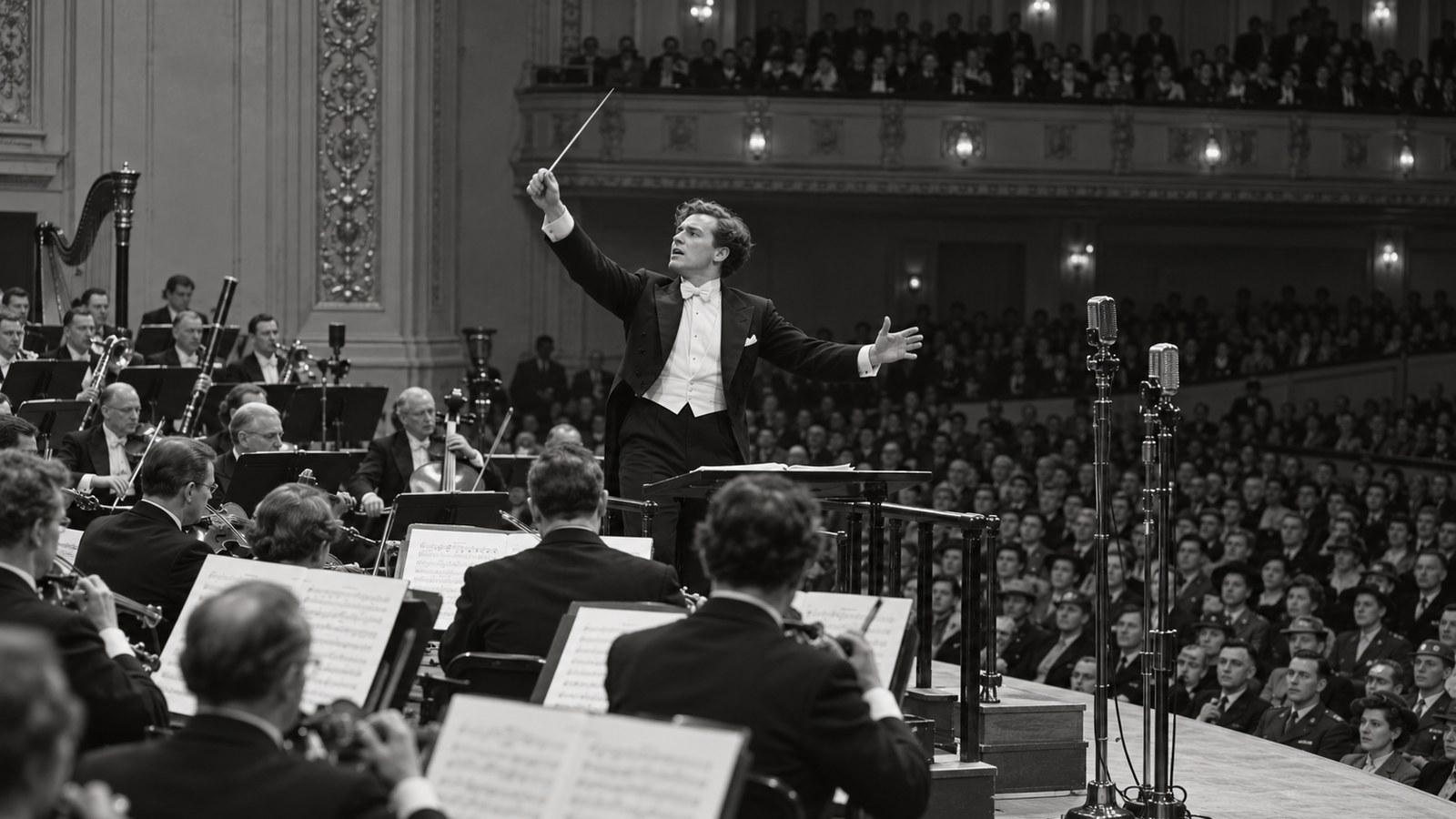
On November 14, 1943, Leonard Bernstein made his historic New York Philharmonic conducting debut at Carnegie Hall. The twenty-five-year-old assistant conductor stepped in for an ill Bruno Walter with no rehearsal and led music by Schumann, Miklós Rózsa, Wagner and Richard Strauss. CBS carried the Sunday afternoon concert nationally on radio. Artur Rodziński had appointed Bernstein as the Philharmonic’s assistant conductor earlier that year. He had studied at Harvard, Curtis and Tanglewood but remained little known to the mass audience that heard the emergency substitution. The date captures the event before later reputation made its consequences look inevitable, when audiences encountered a new release, performance or institution with only the expectations available at the time.
The performance placed an American-born conductor before a major orchestra at a moment when European traditions dominated the field. Radio turned a local risk into a national audition, making interpretation, composure and charisma instantly public. Popular culture is never made by a famous name alone. Writers, performers, producers, technicians, broadcasters, retailers, venues and audiences shape what becomes visible and what survives. Their collaboration also determines which experiments reach the public and which disappear before they can build momentum. Looking at those conditions turns an anniversary from a list entry into a record of choices, limits and competing interests.
Reviews made Bernstein famous by the next morning. He developed a career as conductor, composer, educator and broadcaster, eventually becoming the Philharmonic’s music director and using television to explain classical music to broad audiences. That afterlife matters because influence does not move in a straight line. Reruns, reissues, new technology, criticism and community memory can change the meaning of a work long after its first appearance. Durable pop history therefore holds creative achievement beside questions of labor, access, power and representation.
The debut endures because preparation met chance in full view. Bernstein did not become important through one emergency, but the event revealed his ability to convert scholarship and theatrical energy into communication at scale. Returning to this November date means separating what participants knew then from what later audiences added. Recordings, photographs, broadcasts and recollections keep the moment active, but they also select and reshape it. That distinction protects against hindsight: a chart position, premiere, publication, concert or opening may become a neat milestone later, but the people present still faced uncertainty. Reading the moment in both directions—through its original conditions and its accumulated meanings—keeps celebration from replacing history. The distance between the immediate event and its continuing interpretation is what makes this episode worth revisiting.
The debut occurred on November 14, 1943.
On November 14, 1943, Leonard Bernstein made his historic New York Philharmonic conducting debut at Carnegie Hall. The twenty-five-year-old assistant conductor stepped in for an ill Bruno Walter with no rehearsal and led music by Schumann, Miklós Rózsa, Wagner and Richard Strauss.
Bernstein substituted for Bruno Walter without rehearsal.
The performance placed an American-born conductor before a major orchestra at a moment when European traditions dominated the field. Radio turned a local risk into a national audition, making interpretation, composure and charisma instantly public.
CBS radio broadcast the concert nationally.
Reviews made Bernstein famous by the next morning. He developed a career as conductor, composer, educator and broadcaster, eventually becoming the Philharmonic's music director and using television to explain classical music to broad audiences.
Explore more of "On This Day ..."
Discover more events from the same date across news, politics, technology, sports, and other fields. Each link highlights significant moments that shaped history on different fronts.