

On This Day in Pop: November 18, 1928
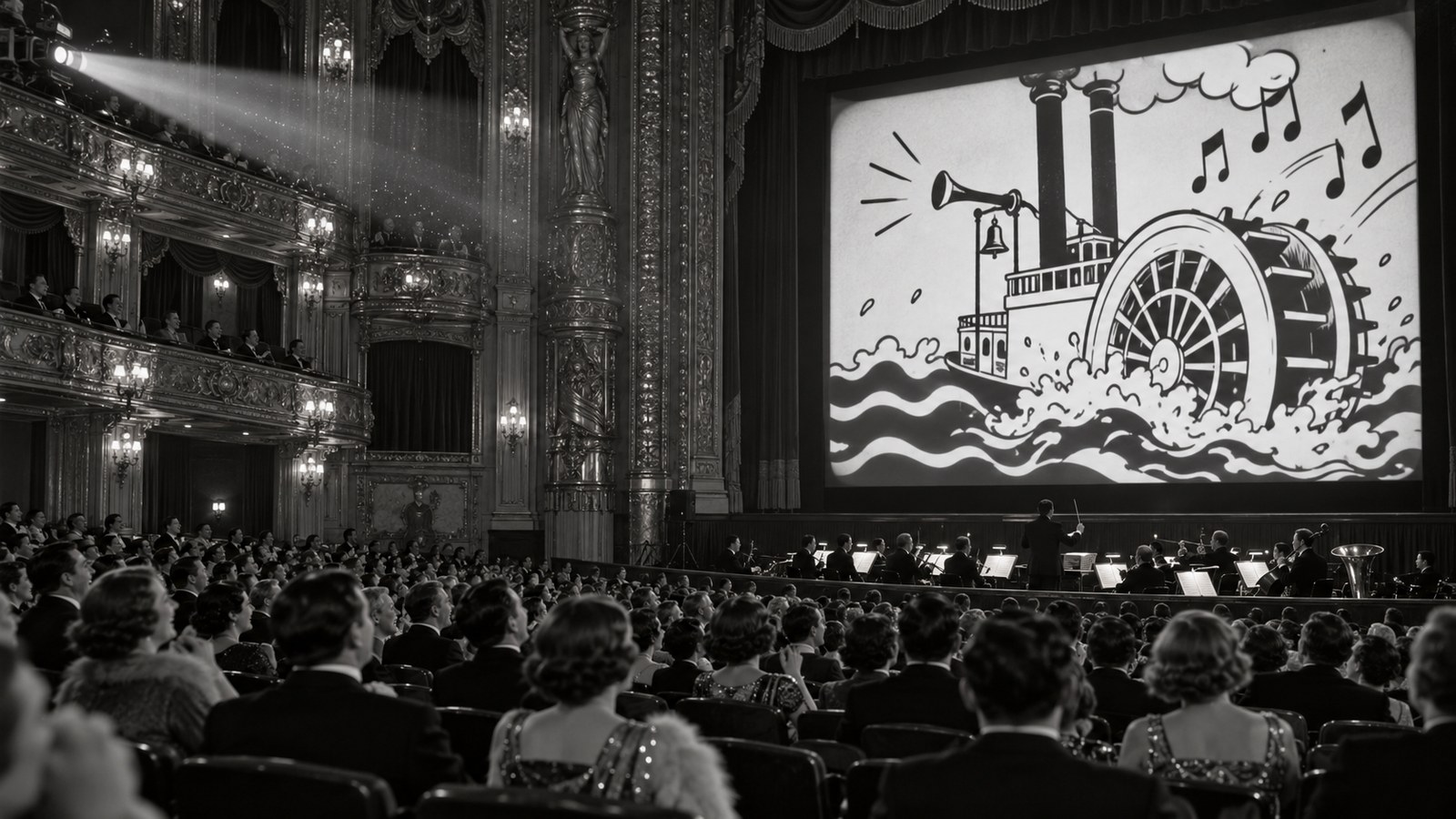
On November 18, 1928, Steamboat Willie opened at New York’s Colony Theatre. The animated short synchronized action, music and sound effects around a mischievous mouse deckhand on a riverboat. Walt Disney supplied vocal effects, Ub Iwerks led animation and a fifteen-piece band recorded the final soundtrack. Disney had already produced two silent shorts with the character but could not secure distribution. Sound films were transforming the industry, and an unsuccessful first recording session forced the small studio to attempt a more carefully organized second one. The date captures the event before later reputation made its consequences look inevitable, when audiences encountered a new release, performance or institution with only the expectations available at the time.
Audiences did not simply hear accompaniment; they experienced sound timed to gesture and personality. The technical precision made the character feel present while giving an undercapitalized studio a distinctive advantage. Popular culture is never made by a famous name alone. Writers, performers, producers, technicians, broadcasters, retailers, venues and audiences shape what becomes visible and what survives. Their collaboration also determines which experiments reach the public and which disappear before they can build momentum. Looking at those conditions turns an anniversary from a list entry into a record of choices, limits and competing interests.
The successful engagement launched a rapid series of sound cartoons and established Mickey Mouse as the company’s central figure. Other animation producers accelerated their own synchronized-sound work. That afterlife matters because influence does not move in a straight line. Reruns, reissues, new technology, criticism and community memory can change the meaning of a work long after its first appearance. Durable pop history therefore holds creative achievement beside questions of labor, access, power and representation.
The premiere is used as Mickey’s official birthday because it joined character, technology and public distribution. Its importance rests less on being first in every technical sense than on showing how sound could organize animated performance. Returning to this November date means separating what participants knew then from what later audiences added. Recordings, photographs, broadcasts and recollections keep the moment active, but they also select and reshape it. That distinction protects against hindsight: a chart position, premiere, publication, concert or opening may become a neat milestone later, but the people present still faced uncertainty. Reading the moment in both directions—through its original conditions and its accumulated meanings—keeps celebration from replacing history. The distance between the immediate event and its continuing interpretation is what makes this episode worth revisiting.
The short opened on November 18, 1928.
On November 18, 1928, Steamboat Willie opened at New York's Colony Theatre. The animated short synchronized action, music and sound effects around a mischievous mouse deckhand on a riverboat.
The Colony Theatre presented it in New York.
Audiences did not simply hear accompaniment; they experienced sound timed to gesture and personality. The technical precision made the character feel present while giving an undercapitalized studio a distinctive advantage.
Its synchronized soundtrack helped establish Mickey Mouse.
The successful engagement launched a rapid series of sound cartoons and established Mickey Mouse as the company's central figure. Other animation producers accelerated their own synchronized-sound work.
Explore more of "On This Day ..."
Discover more events from the same date across news, politics, technology, sports, and other fields. Each link highlights significant moments that shaped history on different fronts.