

On This Day in Pop: November 17, 1989
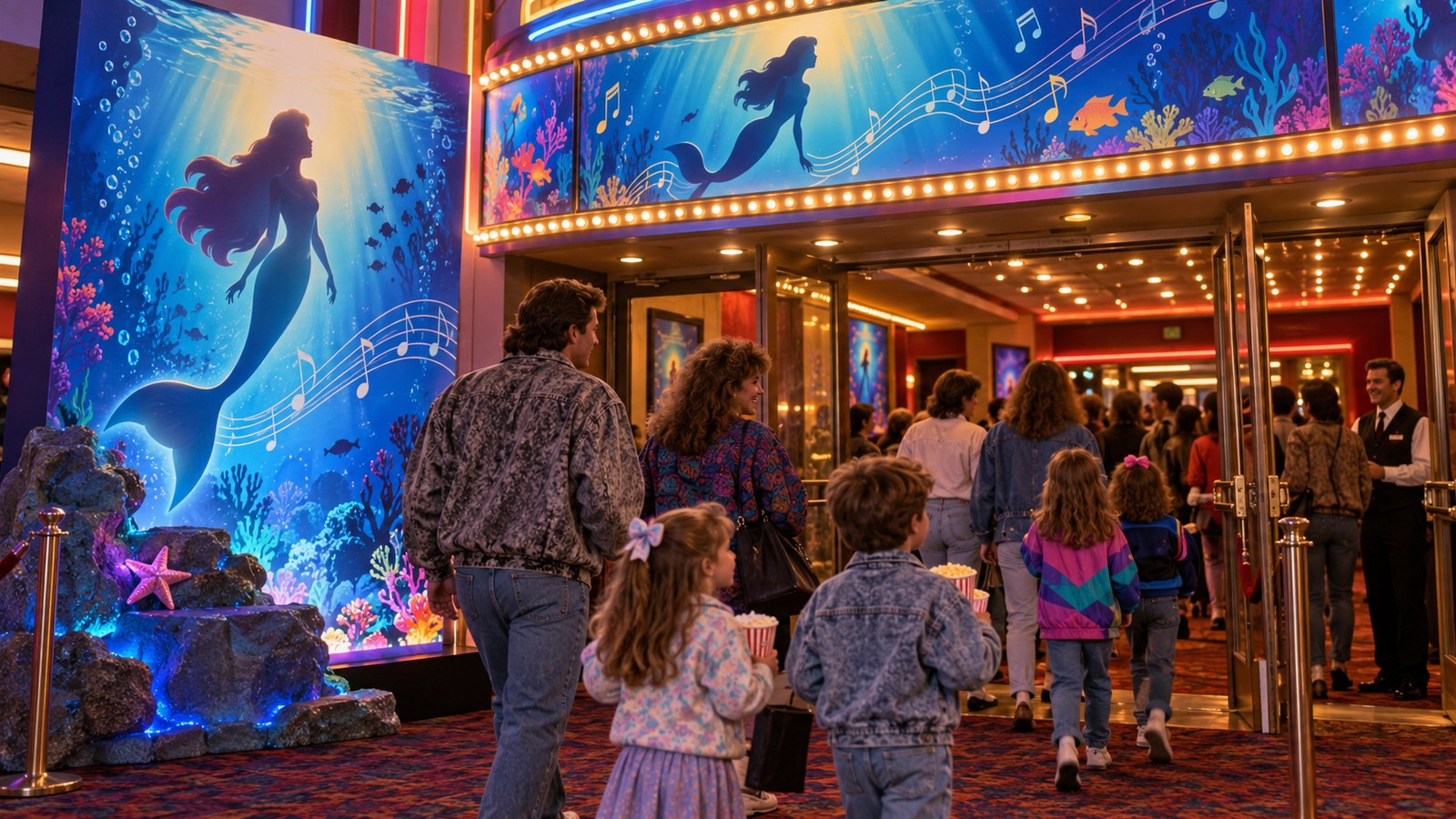
On November 17, 1989, Disney’s The Little Mermaid entered general theatrical release in the United States. The hand-drawn musical followed a young mermaid fascinated by the human world, with songs by Alan Menken and Howard Ashman advancing character and story in a Broadway-influenced form. John Musker and Ron Clements directed. Disney animation had endured years of uncertainty and had not made a fairy-tale feature since Sleeping Beauty. Ashman’s close work with writers and animators helped restore the integrated musical storytelling associated with the studio’s earlier classics. The date captures the event before later reputation made its consequences look inevitable, when audiences encountered a new release, performance or institution with only the expectations available at the time.
The release tested whether traditional character animation could regain event status as computer imagery and new competitors approached. Its heroine’s desire for another life carried emotional force, while debates about voice, romance and agency followed the film’s success. Popular culture is never made by a famous name alone. Writers, performers, producers, technicians, broadcasters, retailers, venues and audiences shape what becomes visible and what survives. Their collaboration also determines which experiments reach the public and which disappear before they can build momentum. Looking at those conditions turns an anniversary from a list entry into a record of choices, limits and competing interests.
The picture won Academy Awards for score and the song Under the Sea and began the period commonly called the Disney Renaissance. Stage productions, television stories, products and a live-action adaptation extended the property. That afterlife matters because influence does not move in a straight line. Reruns, reissues, new technology, criticism and community memory can change the meaning of a work long after its first appearance. Durable pop history therefore holds creative achievement beside questions of labor, access, power and representation.
The general release revived a studio and a model of animated musical storytelling. Songs function as dramatic decisions rather than pauses, a lesson that shaped major family films well beyond Disney. Returning to this November date means separating what participants knew then from what later audiences added. Recordings, photographs, broadcasts and recollections keep the moment active, but they also select and reshape it. That distinction protects against hindsight: a chart position, premiere, publication, concert or opening may become a neat milestone later, but the people present still faced uncertainty. Reading the moment in both directions—through its original conditions and its accumulated meanings—keeps celebration from replacing history. The distance between the immediate event and its continuing interpretation is what makes this episode worth revisiting.
The film entered general release on November 17, 1989.
On November 17, 1989, Disney's The Little Mermaid entered general theatrical release in the United States. The hand-drawn musical followed a young mermaid fascinated by the human world, with songs by Alan Menken and Howard Ashman advancing character and story in a Broadway-influenced form.
John Musker and Ron Clements directed.
The release tested whether traditional character animation could regain event status as computer imagery and new competitors approached. Its heroine's desire for another life carried emotional force, while debates about voice, romance and agency followed the film's success.
Alan Menken and Howard Ashman wrote the songs.
The picture won Academy Awards for score and the song Under the Sea and began the period commonly called the Disney Renaissance. Stage productions, television stories, products and a live-action adaptation extended the property.
Explore more of "On This Day ..."
Discover more events from the same date across news, politics, technology, sports, and other fields. Each link highlights significant moments that shaped history on different fronts.