

On This Day in Pop: November 26, 1942
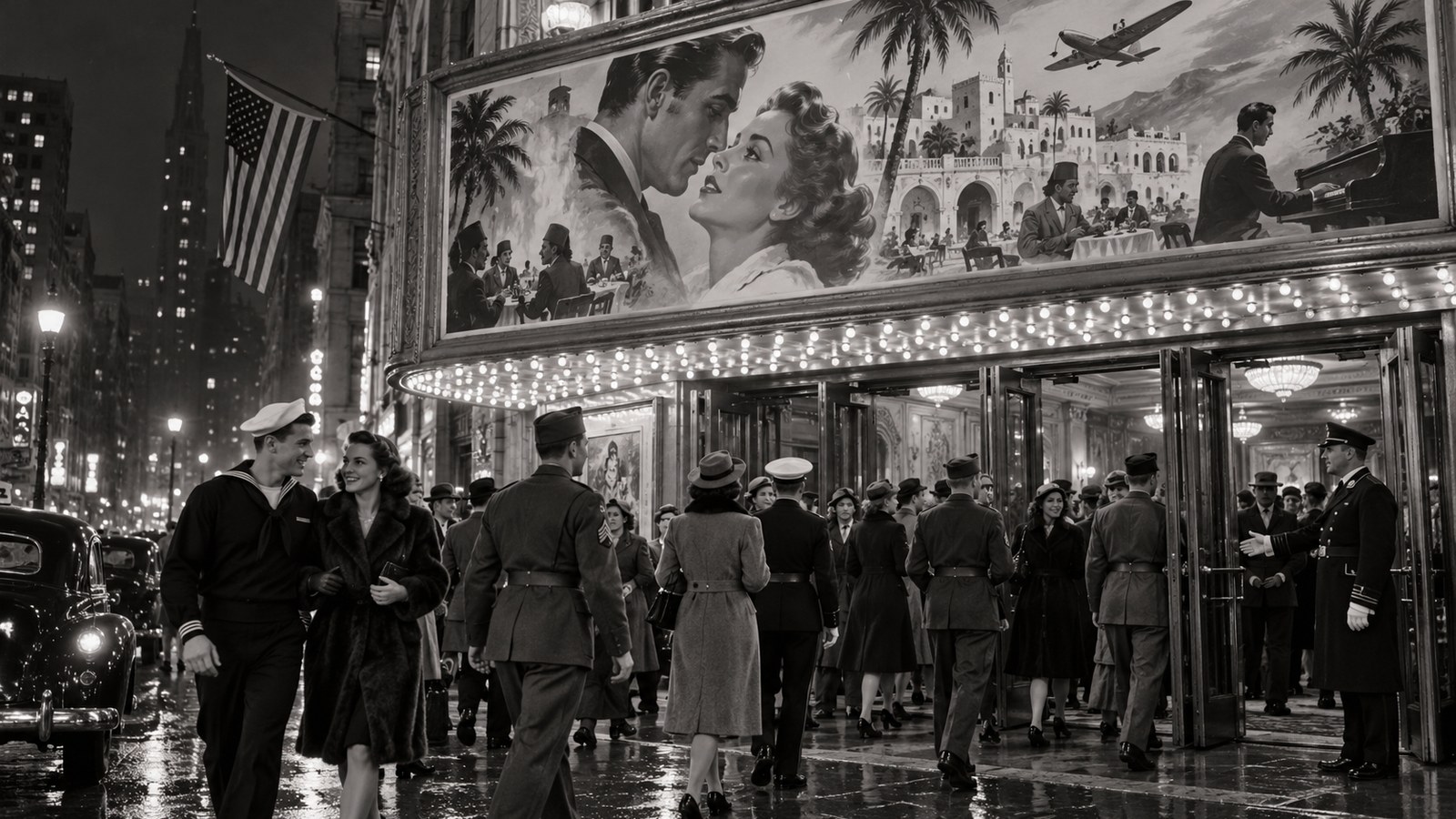
On November 26, 1942, Casablanca premiered at the Hollywood Theatre in New York City. Michael Curtiz’s drama placed a cynical American café owner, a former lover and a resistance leader amid refugees and officials in Vichy-controlled Morocco. Humphrey Bogart, Ingrid Bergman and Paul Henreid led a large international cast. Warner Bros. adapted the unproduced play Everybody Comes to Rick’s while the war changed daily headlines. The New York opening was moved forward after Allied forces landed in North Africa and Casablanca became newly prominent. The date captures the event before later reputation made its consequences look inevitable, when audiences encountered a new release, performance or institution with only the expectations available at the time.
The film transformed private romantic conflict into a decision about political responsibility. Its production also drew on émigré performers whose own displacement gave the fictional transit city an added historical weight. Popular culture is never made by a famous name alone. Writers, performers, producers, technicians, broadcasters, retailers, venues and audiences shape what becomes visible and what survives. Their collaboration also determines which experiments reach the public and which disappear before they can build momentum. Looking at those conditions turns an anniversary from a list entry into a record of choices, limits and competing interests.
National release followed in January 1943 near the time of the Casablanca Conference. The film won Academy Awards for picture, director and screenplay, then grew through reissues and television into a central Hollywood reference point. That afterlife matters because influence does not move in a straight line. Reruns, reissues, new technology, criticism and community memory can change the meaning of a work long after its first appearance. Durable pop history therefore holds creative achievement beside questions of labor, access, power and representation.
The premiere introduced a work whose famous lines can obscure its moral architecture. Rick’s final choice matters because neutrality is shown as a performance that history eventually makes impossible to maintain. Returning to this November date means separating what participants knew then from what later audiences added. Recordings, photographs, broadcasts and recollections keep the moment active, but they also select and reshape it. That distinction protects against hindsight: a chart position, premiere, publication, concert or opening may become a neat milestone later, but the people present still faced uncertainty. Reading the moment in both directions—through its original conditions and its accumulated meanings—keeps celebration from replacing history. The distance between the immediate event and its continuing interpretation is what makes this episode worth revisiting.
The New York premiere was November 26, 1942.
On November 26, 1942, Casablanca premiered at the Hollywood Theatre in New York City. Michael Curtiz's drama placed a cynical American café owner, a former lover and a resistance leader amid refugees and officials in Vichy-controlled Morocco.
Michael Curtiz directed the film.
The film transformed private romantic conflict into a decision about political responsibility. Its production also drew on émigré performers whose own displacement gave the fictional transit city an added historical weight.
The opening was advanced after Allied landings in North Africa.
National release followed in January 1943 near the time of the Casablanca Conference. The film won Academy Awards for picture, director and screenplay, then grew through reissues and television into a central Hollywood reference point.
Explore more of "On This Day ..."
Discover more events from the same date across news, politics, technology, sports, and other fields. Each link highlights significant moments that shaped history on different fronts.