

On This Day in Pop: November 25, 1952
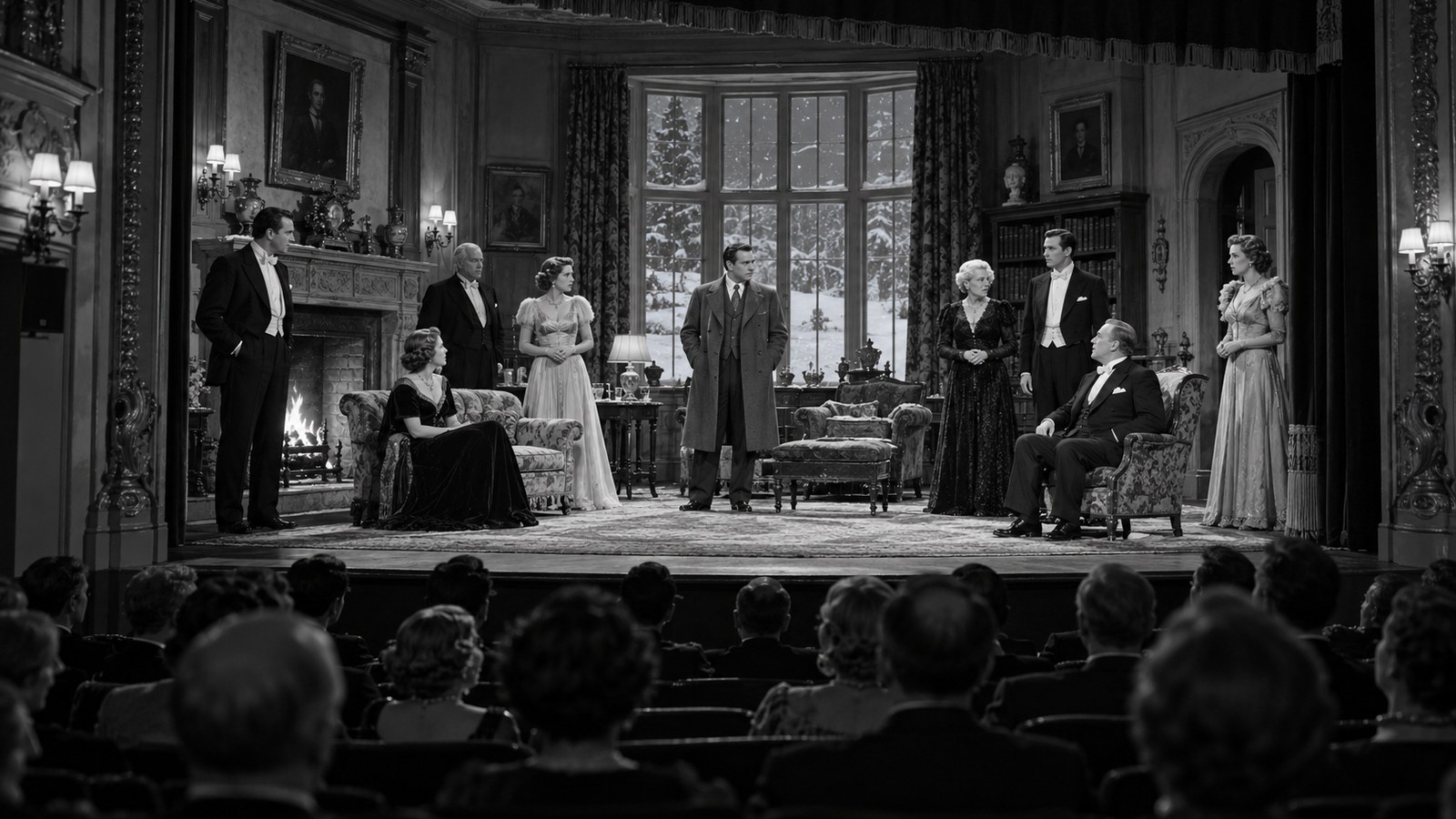
On November 25, 1952, Agatha Christie’s The Mousetrap opened in London’s West End at the Ambassadors Theatre. Richard Attenborough and Sheila Sim led the ensemble in a snowbound country-house mystery where a detective investigates guests trapped with a murderer. Producer Peter Saunders brought the play to London after a short regional tour. Christie adapted the story from her radio play Three Blind Mice, written for Queen Mary’s eightieth birthday. The intimate Ambassadors Theatre suited a tightly constructed work that depended on suspicion more than spectacle. The date captures the event before later reputation made its consequences look inevitable, when audiences encountered a new release, performance or institution with only the expectations available at the time.
Opening night offered a conventional whodunit whose durability no one predicted. The request that audiences keep the culprit secret turned discretion into part of the performance and made every new crowd responsible for future surprise. Popular culture is never made by a famous name alone. Writers, performers, producers, technicians, broadcasters, retailers, venues and audiences shape what becomes visible and what survives. Their collaboration also determines which experiments reach the public and which disappear before they can build momentum. Looking at those conditions turns an anniversary from a list entry into a record of choices, limits and competing interests.
The production transferred next door to St Martin’s Theatre in 1974 and continued until the pandemic interruption, reopening in 2021. It became the longest-running play in theatrical history. That afterlife matters because influence does not move in a straight line. Reruns, reissues, new technology, criticism and community memory can change the meaning of a work long after its first appearance. Durable pop history therefore holds creative achievement beside questions of labor, access, power and representation.
The first London performance launched an institution built on repetition without mechanical sameness. New actors inherit precise cues and rhythms while the audience’s lack of knowledge renews the story each night. Returning to this November date means separating what participants knew then from what later audiences added. Recordings, photographs, broadcasts and recollections keep the moment active, but they also select and reshape it. That distinction protects against hindsight: a chart position, premiere, publication, concert or opening may become a neat milestone later, but the people present still faced uncertainty. Reading the moment in both directions—through its original conditions and its accumulated meanings—keeps celebration from replacing history. The distance between the immediate event and its continuing interpretation is what makes this episode worth revisiting.
The West End run began on November 25, 1952.
On November 25, 1952, Agatha Christie's The Mousetrap opened in London's West End at the Ambassadors Theatre. Richard Attenborough and Sheila Sim led the ensemble in a snowbound country-house mystery where a detective investigates guests trapped with a murderer.
The Ambassadors Theatre was its first London home.
Opening night offered a conventional whodunit whose durability no one predicted. The request that audiences keep the culprit secret turned discretion into part of the performance and made every new crowd responsible for future surprise.
Richard Attenborough and Sheila Sim led the original cast.
The production transferred next door to St Martin's Theatre in 1974 and continued until the pandemic interruption, reopening in 2021. It became the longest-running play in theatrical history.
Explore more of "On This Day ..."
Discover more events from the same date across news, politics, technology, sports, and other fields. Each link highlights significant moments that shaped history on different fronts.