

How Chemical Bonds Store and Release Energy Explainer
Atoms bond when the combined arrangement of electrons and nuclei has lower energy than separated atoms under the same conditions. The word stored is useful shorthand, but it can create a misconception: breaking a chemical bond always requires an input of energy. Energy is released when new, more stable bonds and interactions form. A reaction’s net energy change depends on both sides of that ledger.
During a reaction, existing bonds stretch or break and atoms rearrange through high-energy transition states. Forming product bonds lowers the system’s potential energy. If bond formation releases more energy than bond breaking consumes, the reaction is exothermic and transfers energy to its surroundings, often as heat. If the reverse is true, the reaction is endothermic and absorbs net energy.
Combustion illustrates the balance. Fuel molecules contain carbon-carbon and carbon-hydrogen bonds, and oxygen contains an oxygen-oxygen bond. Breaking those bonds costs energy. Forming strong carbon-oxygen bonds in carbon dioxide and oxygen-hydrogen bonds in water releases even more, producing a net output. The fuel is useful because reactants and products differ in total chemical energy, not because its bonds release energy when snapped.
A favorable energy difference does not guarantee a fast reaction. Reactants must still cross an activation-energy barrier, which is why fuel and oxygen can coexist until a spark begins combustion. Catalysts lower the kinetic barrier by providing another route but do not change the energy difference between starting materials and products. Rate and thermodynamic favorability answer different questions.
Cells couple reactions so energy released by one process drives another. ATP hydrolysis is commonly described as breaking a high-energy bond, yet bond breaking itself costs energy. The overall reaction releases usable free energy because the products are stabilized by new bonds, resonance, hydration, and increased disorder. Cells harness that difference through enzyme-controlled transfer and mechanical cycles.
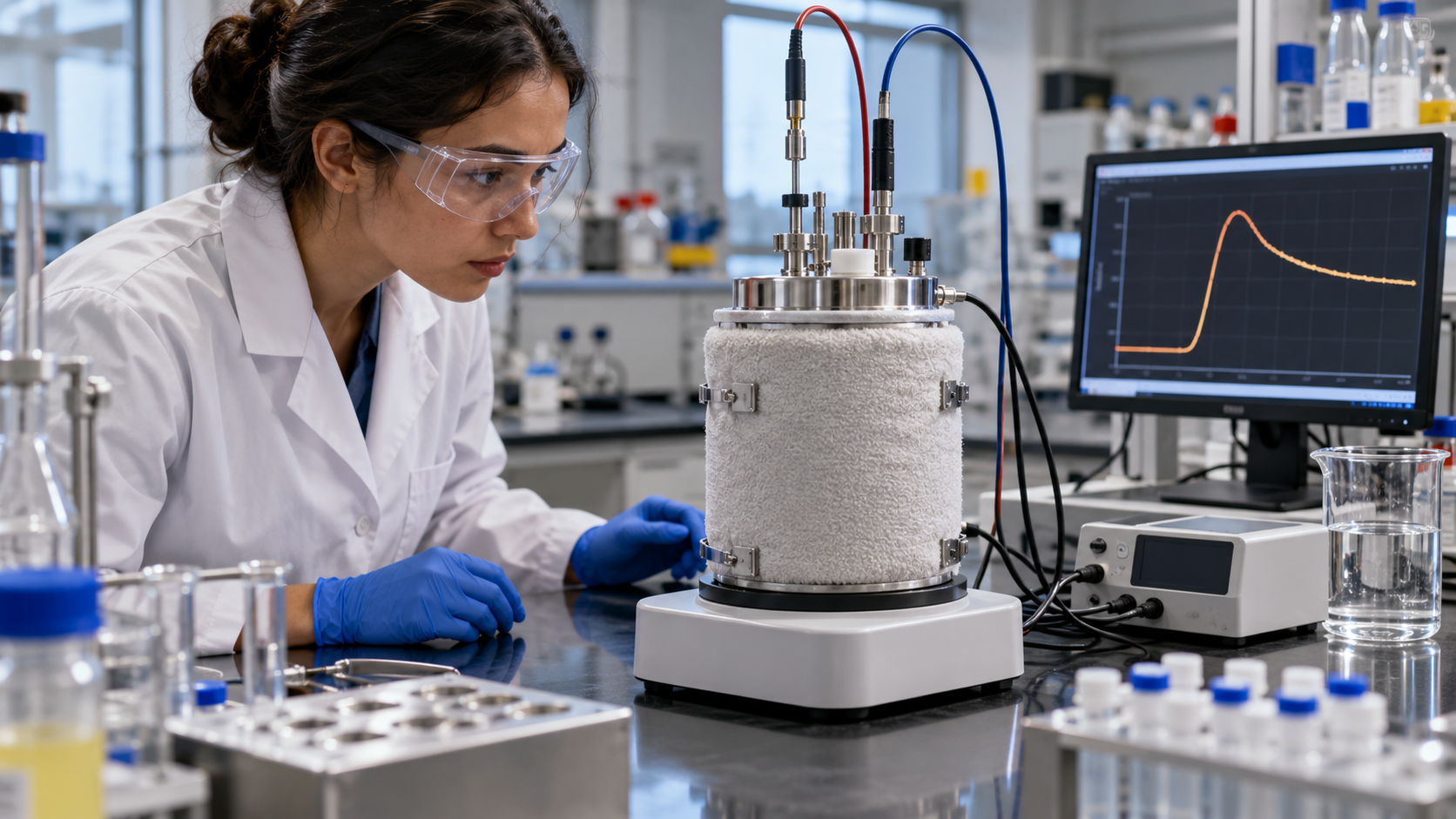
Calorimeters measure heat exchanged with known surroundings, while thermodynamic calculations track enthalpy, entropy, and free energy. Energy is conserved; a reaction converts chemical potential into heat, light, electrical work, motion, or other forms. Accurate explanations compare entire reactant and product systems, including the solvent and environment, instead of assigning energy to one isolated bond alone.
Breaking a bond requires energy. Forming a bond releases energy. The net reaction depends on the difference between all bonds and interactions changed.
Products lower in energy than reactants can release heat or do work, while higher-energy products require a net input.
Exothermic and endothermic describe net heat flow. Activation energy controls how readily the pathway begins.
A catalyst lowers the activation barrier but does not change the overall energy difference or create energy.
Combustion releases energy because strong bonds form in carbon dioxide and water. Fuel bonds do not simply burst and give energy away.
ATP hydrolysis is favorable because the entire product state is more stable, not because breaking one phosphate bond is intrinsically energy releasing.
Explore more "Explainers"
Discover additional explainers across politics, science, business, technology, and other fields. Each explainer breaks down a complex idea into clear, everyday language—helping you better understand how major concepts, systems, and debates shape the world around us.