

On This Day in Science: March 27, 1964
At 5:36 p.m. local time on March 27, 1964, a magnitude 9.2 earthquake began beneath Prince William Sound, Alaska. The shaking lasted about four and a half minutes, making it the largest earthquake recorded in United States history and the second largest measured globally with modern instruments. Ground failure and tsunamis caused severe damage across south-central Alaska, while waves killed people as far away as coastal Oregon and California.
The earthquake occurred where the Pacific Plate descends beneath the North American Plate along the Aleutian megathrust. A huge section of the locked boundary ruptured, shifting portions of the coast vertically and horizontally. Some land rose by several meters while other areas subsided. Underwater landslides generated damaging local waves within minutes, and the broader seafloor displacement launched a Pacific-wide tsunami.
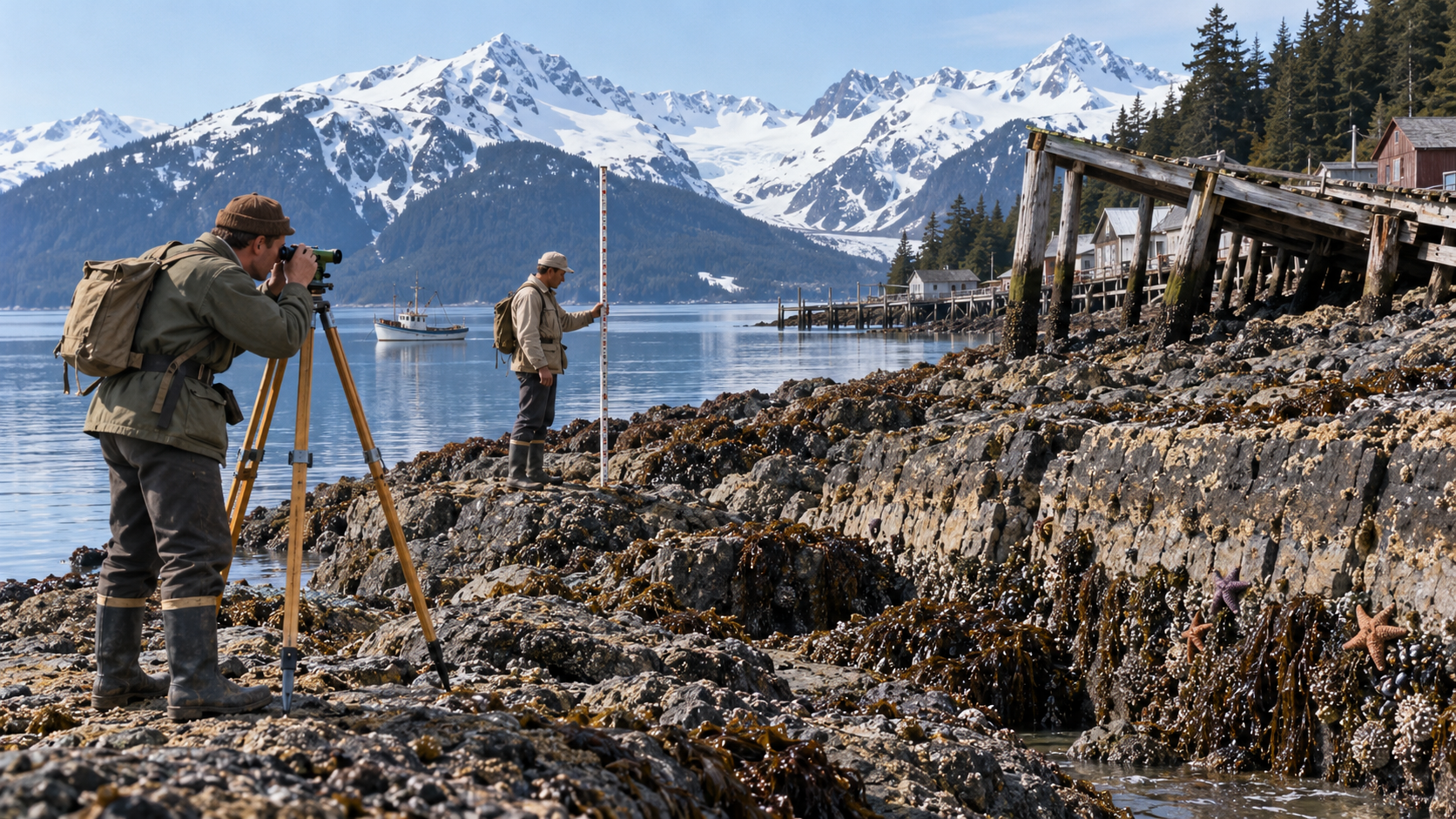
Field teams mapped uplift, subsidence, fissures, landslides, and damaged infrastructure. Their observations arrived while plate tectonics was becoming a unifying theory, and the event supplied powerful evidence for subduction. Geologists connected patterns of deformation with elastic rebound on a dipping fault. Sediment deposits left by earlier tsunamis later helped extend the regional earthquake record beyond written history.
The disaster changed building practice, tsunami warning, coastal planning, and scientific monitoring. It also demonstrated that earthquake magnitude alone does not determine loss: local geology, landslides, water depth, construction, and time available to evacuate all shape consequences. Remembering the date means honoring affected communities while using the unusually rich record to prepare for future megathrust earthquakes around the Pacific. The anniversary also highlights the difference between a first result and a finished understanding. A successful observation can settle one question while opening several harder ones, and even a failed objective can return measurements that reshape later designs. Preserved data, specimens, photographs, and hardware allow new generations to revisit the work with better tools. Science advances through that continuity, where a specific date marks progress without pretending that inquiry stopped there. Its place on the calendar is therefore useful as an entry point, not an endpoint. The people involved worked with the instruments, assumptions, and social conditions of their time, and later research has both extended and corrected their conclusions. Reconstructing the event carefully means separating what was known that day from what became clear afterward. That distinction protects the history from myth while showing how cumulative evidence turns a memorable episode into lasting scientific knowledge. For science history, the episode is also a case study in how evidence moves from an observation or engineered test into a durable body of knowledge. Instruments supplied measurements, specialists debated interpretation, and later work refined what the first result could mean. Archives preserve the early record while new methods let researchers ask different questions of it. That continuing revision is not a weakness in the original achievement; it is the process through which a dated milestone remains scientifically useful.
The magnitude 9.2 rupture shook south-central Alaska and permanently changed large areas of coastline.
It remains the most powerful earthquake recorded in United States history.
The Pacific Plate lurched beneath North America along a vast section of the Aleutian megathrust.
Seafloor motion and underwater landslides generated both distant and local tsunamis.
Mapped uplift, subsidence, and fault motion helped confirm the mechanics of subduction and elastic rebound.
The findings influenced warnings, engineering, coastal planning, and paleotsunami research.
Explore more of "On This Day ..."
Discover more events from the same date across news, politics, technology, sports, and other fields. Each link highlights significant moments that shaped history on different fronts.