

On This Day in Science: April 26, 1986
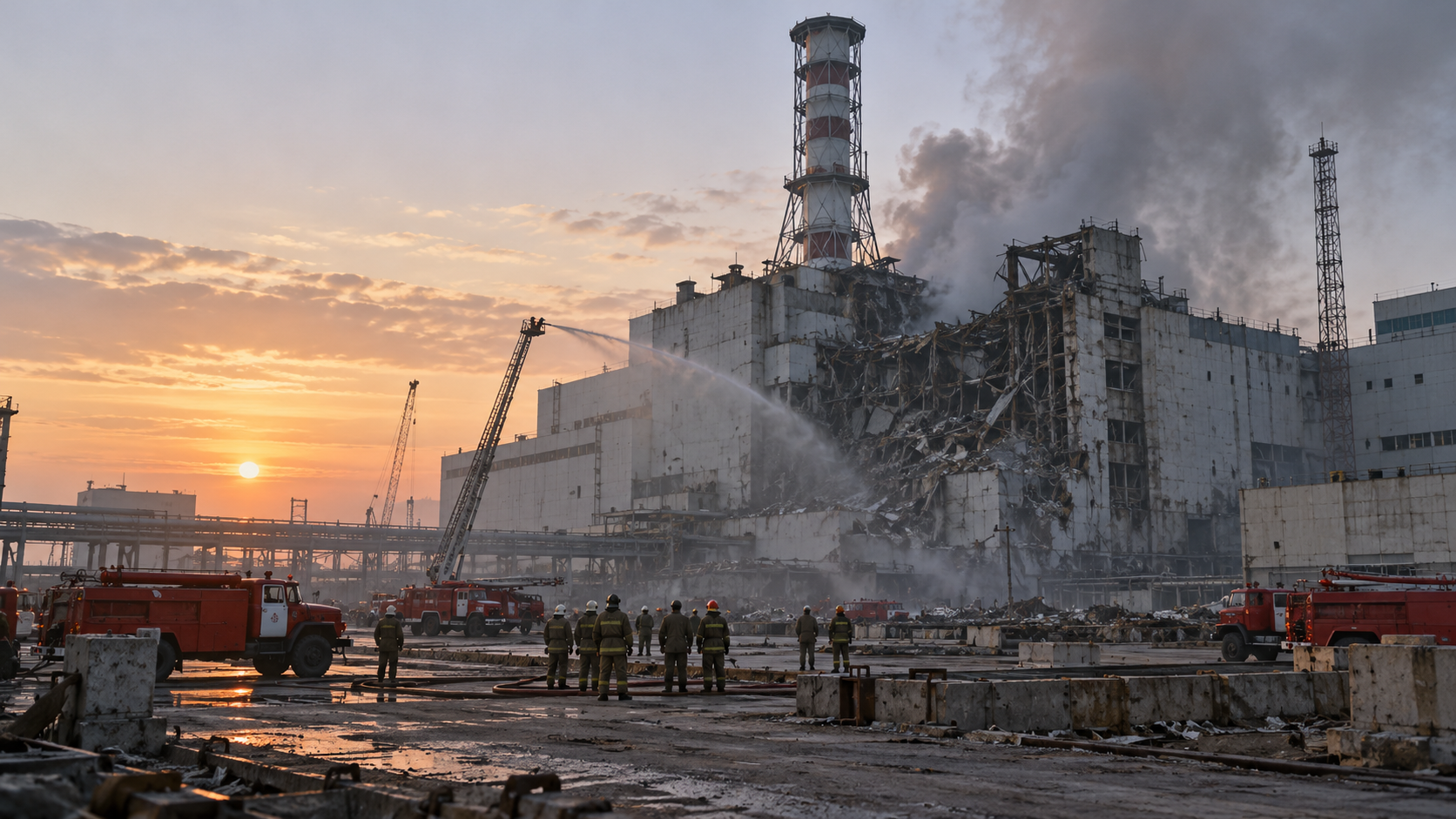
At 1:23 a.m. on April 26, 1986, reactor number four at the Chernobyl Nuclear Power Plant in Soviet Ukraine went out of control during a low-power safety test. A rapid power surge destroyed the RBMK reactor core, caused explosions, and started a graphite fire. Radioactive material escaped into the atmosphere and spread across Ukraine, Belarus, Russia, and much of Europe.
The RBMK design had dangerous behavior at low power and control-rod features that could briefly increase reactivity during insertion. Operators also disabled or bypassed protections while trying to complete a test under unstable conditions. The accident emerged from the interaction of design flaws, operating decisions, inadequate safety culture, and a system that did not communicate risk openly.
Two workers died from the initial event, and emergency responders faced intense radiation while fighting fires and limiting further releases. Many developed acute radiation syndrome; deaths followed in the next weeks. Authorities evacuated Pripyat the next day and later established a broad exclusion zone. Long-term health and environmental consequences have been studied extensively, with thyroid cancer among exposed children a clear radiation-related effect.
Chernobyl changed reactor design, emergency planning, international reporting, and nuclear-safety cooperation. It should be described without sensational imagery or false precision about disputed totals. The event shows why technical systems cannot be separated from training, institutions, transparency, and the protection of workers and communities. Seen across a longer timeline, scientific milestones are junctions rather than isolated beginnings. Earlier experiments, tools, and institutions made the work possible, while later teams tested its limits and carried the result into new settings. What survives is a traceable chain of evidence, correction, and application that allows one moment to remain relevant as knowledge and technology continue to change. The anniversary highlights the difference between a first result and a finished understanding. A successful observation can settle one question while opening several harder ones, and even a failed objective can reshape later designs. Preserved data, specimens, photographs, and hardware allow new generations to revisit the work with better tools. Science advances through that continuity rather than stopping on a memorable date. Its calendar date is an entry point, not an endpoint. The people involved worked with the instruments, assumptions, and social conditions of their time, and later research has both extended and corrected their conclusions. Separating what was known that day from what became clear afterward protects the history from myth and shows how cumulative evidence turns an episode into lasting scientific knowledge.
The reactor entered an unstable low-power state during a turbine rundown test.
Design characteristics and control actions produced a destructive surge.
Explosions opened the reactor and a graphite fire carried radionuclides into the atmosphere.
Emergency workers faced the most intense exposures while trying to contain the disaster.
The accident exposed failures in design, procedures, regulation, and information sharing.
International reporting and reactor-safety practices changed in response.
Explore more of "On This Day ..."
Discover more events from the same date across news, politics, technology, sports, and other fields. Each link highlights significant moments that shaped history on different fronts.