

On This Day in Science: April 22, 1970
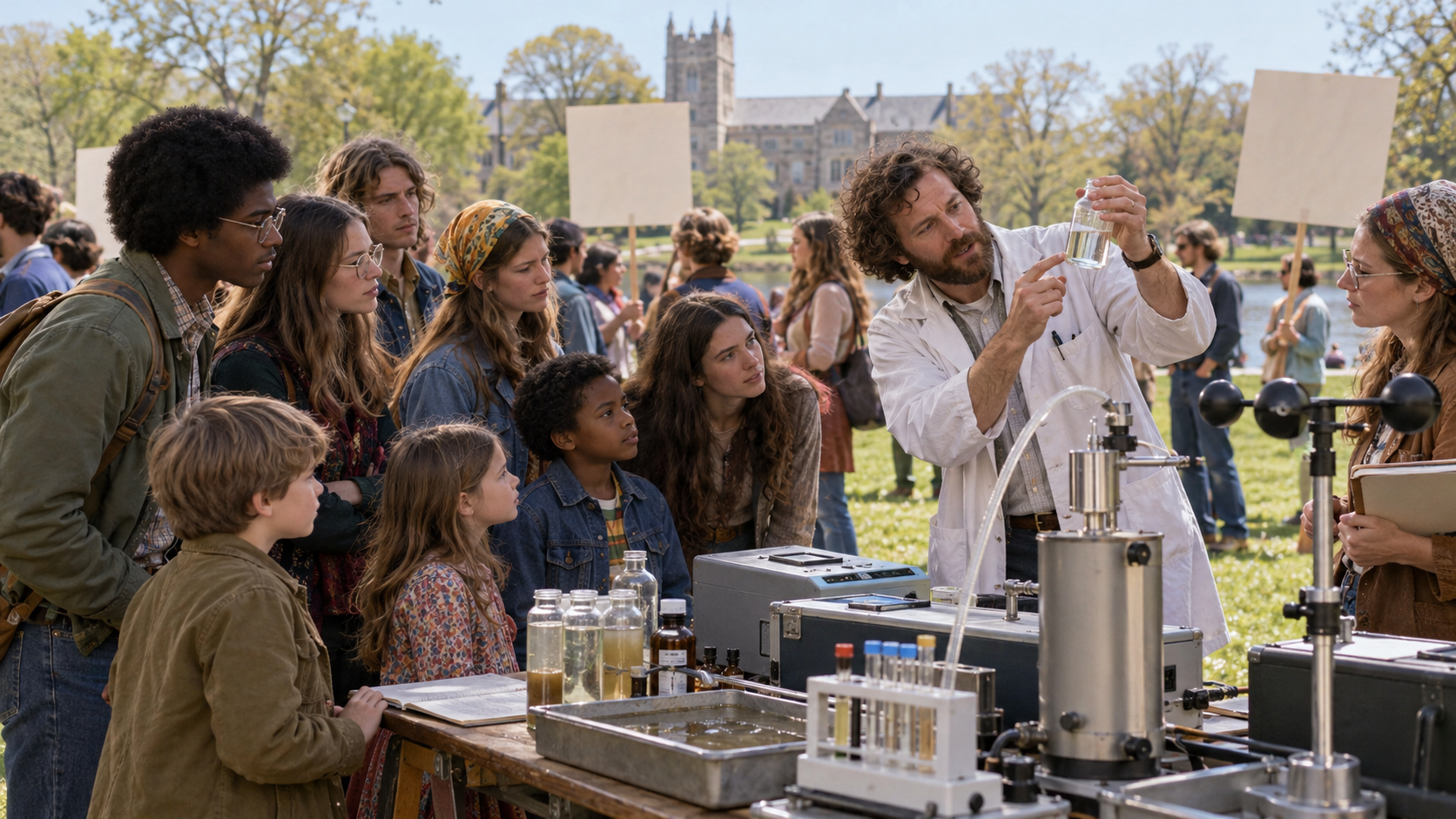
On April 22, 1970, millions of people across the United States took part in the first Earth Day. Students, scientists, teachers, workers, and community groups organized teach-ins, marches, cleanups, and public discussions about polluted air and water, pesticides, oil spills, waste, and habitat loss. Senator Gaylord Nelson promoted the nationwide effort with Representative Pete McCloskey and organizer Denis Hayes.
The event did not create environmental science, but it gave existing research a much larger civic audience. Measurements of smog, contaminated rivers, lead, persistent chemicals, species decline, and industrial exposure had already documented serious problems. Earth Day connected those separate findings into a broader claim: environmental conditions were public-health and economic issues that required coordinated policy.
The demonstrations occurred during a period of major legal change. By the end of 1970, the United States had created the Environmental Protection Agency, and the following years brought stronger air, water, pesticide, and species protections. No single day caused every law, and environmental burdens remained unequal, but the mobilization helped make scientific evidence politically difficult to ignore.
Earth Day became an annual international observance. Its history shows that data do not move automatically from laboratories into decisions; institutions, public communication, and organized pressure shape whether evidence changes practice. The anniversary is both a celebration and a reminder that environmental measurement matters only when communities can use it. Seen across a longer timeline, scientific milestones are junctions rather than isolated beginnings. Earlier experiments, tools, and institutions made the work possible, while later teams tested its limits and carried the result into new settings. What survives is a traceable chain of evidence, correction, and application that allows one moment to remain relevant as knowledge and technology continue to change. The anniversary highlights the difference between a first result and a finished understanding. A successful observation can settle one question while opening several harder ones, and even a failed objective can reshape later designs. Preserved data, specimens, photographs, and hardware allow new generations to revisit the work with better tools. Science advances through that continuity rather than stopping on a memorable date. Its calendar date is an entry point, not an endpoint. The people involved worked with the instruments, assumptions, and social conditions of their time, and later research has both extended and corrected their conclusions. Separating what was known that day from what became clear afterward protects the history from myth and shows how cumulative evidence turns an episode into lasting scientific knowledge.
The first Earth Day joined campus events, demonstrations, cleanups, and community organizing.
About twenty million Americans participated across many cities and towns.
Research had documented smog, polluted water, toxic chemicals, and ecological damage.
The mobilization connected those findings to public health and government responsibility.
The period brought the EPA and stronger federal protections for air, water, pesticides, and species.
Environmental progress continued unevenly, with exposure and enforcement differing among communities.
Explore more of "On This Day ..."
Discover more events from the same date across news, politics, technology, sports, and other fields. Each link highlights significant moments that shaped history on different fronts.