

On This Day in Science: April 27, 2005
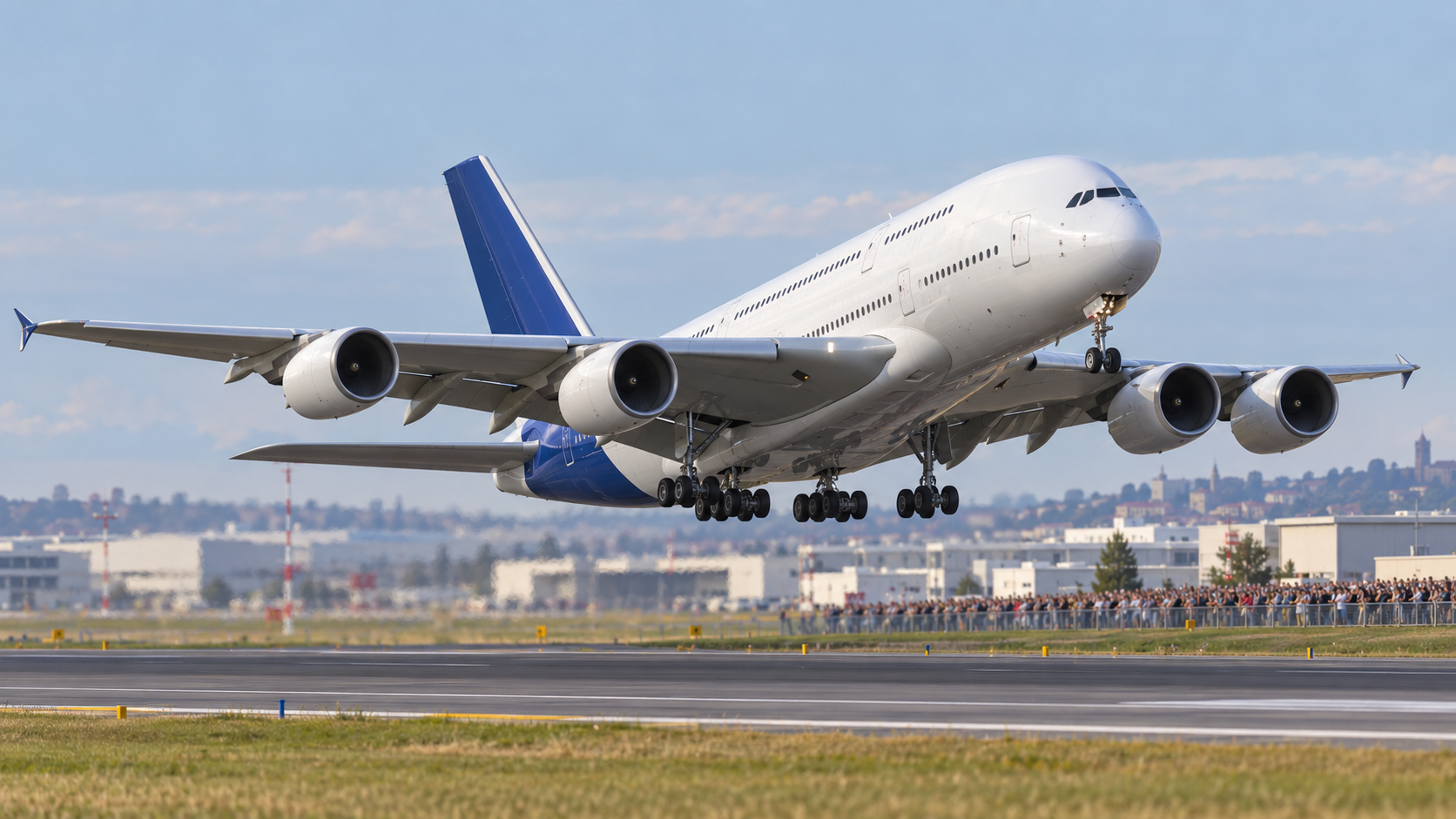
On April 27, 2005, the first Airbus A380 lifted off from Toulouse-Blagnac Airport in France at 10:29 a.m. local time. Test aircraft MSN001 carried a six-person flight crew and extensive instrumentation. At about 421 tonnes, it was the heaviest civil airliner to take off at that time. The flight began a certification campaign for the world’s largest passenger airliner.
The A380 used two full-length passenger decks, four engines, fly-by-wire controls, and a structure combining aluminum, composites, and other lightweight materials. Its size required new approaches to wing design, landing gear, evacuation testing, airport compatibility, and manufacturing across a multinational supply chain. Water ballast and sensors let engineers vary weight and record thousands of parameters.
Claude Lelaie and Jacques Rosay served as captains while engineers monitored systems and performance. The aircraft flew for nearly four hours before returning to Toulouse. A test fleet later explored takeoff, landing, high-altitude behavior, hot and cold conditions, system failures, and passenger operations. Certification led to airline service in 2007.
The A380 did not reshape airline networks exactly as planners expected, and production eventually ended, but its engineering influenced later aircraft. The first flight was not a demonstration stunt; it was the opening measurement in a long campaign designed to discover how a very large machine behaved throughout its operating envelope. The anniversary highlights the difference between a first result and a finished understanding. A successful observation can settle one question while opening several harder ones, and even a failed objective can reshape later designs. Preserved data, specimens, photographs, and hardware allow new generations to revisit the work with better tools. Science advances through that continuity rather than stopping on a memorable date. Its calendar date is an entry point, not an endpoint. The people involved worked with the instruments, assumptions, and social conditions of their time, and later research has both extended and corrected their conclusions. Separating what was known that day from what became clear afterward protects the history from myth and shows how cumulative evidence turns an episode into lasting scientific knowledge. For science history, the event also shows how evidence moves from an observation or engineered test into a durable body of knowledge. Instruments supplied measurements, specialists debated interpretation, and later work refined what the first result could mean. Archives preserve the early record while new methods let researchers ask different questions of it. That continuing revision is the process through which a dated milestone remains scientifically useful.
MSN001 departed Toulouse with water ballast and dense flight-test instrumentation.
Six crew members monitored handling, engines, controls, and structural behavior.
The double-deck aircraft required solutions for weight, landing gear, evacuation, airports, and manufacturing.
Composite materials and fly-by-wire controls helped manage the size.
The maiden sortie lasted nearly four hours and returned safely to Toulouse.
A larger test campaign then explored the full operating envelope before passenger service.
Explore more of "On This Day ..."
Discover more events from the same date across news, politics, technology, sports, and other fields. Each link highlights significant moments that shaped history on different fronts.