

On This Day in Science: May 5, 1961
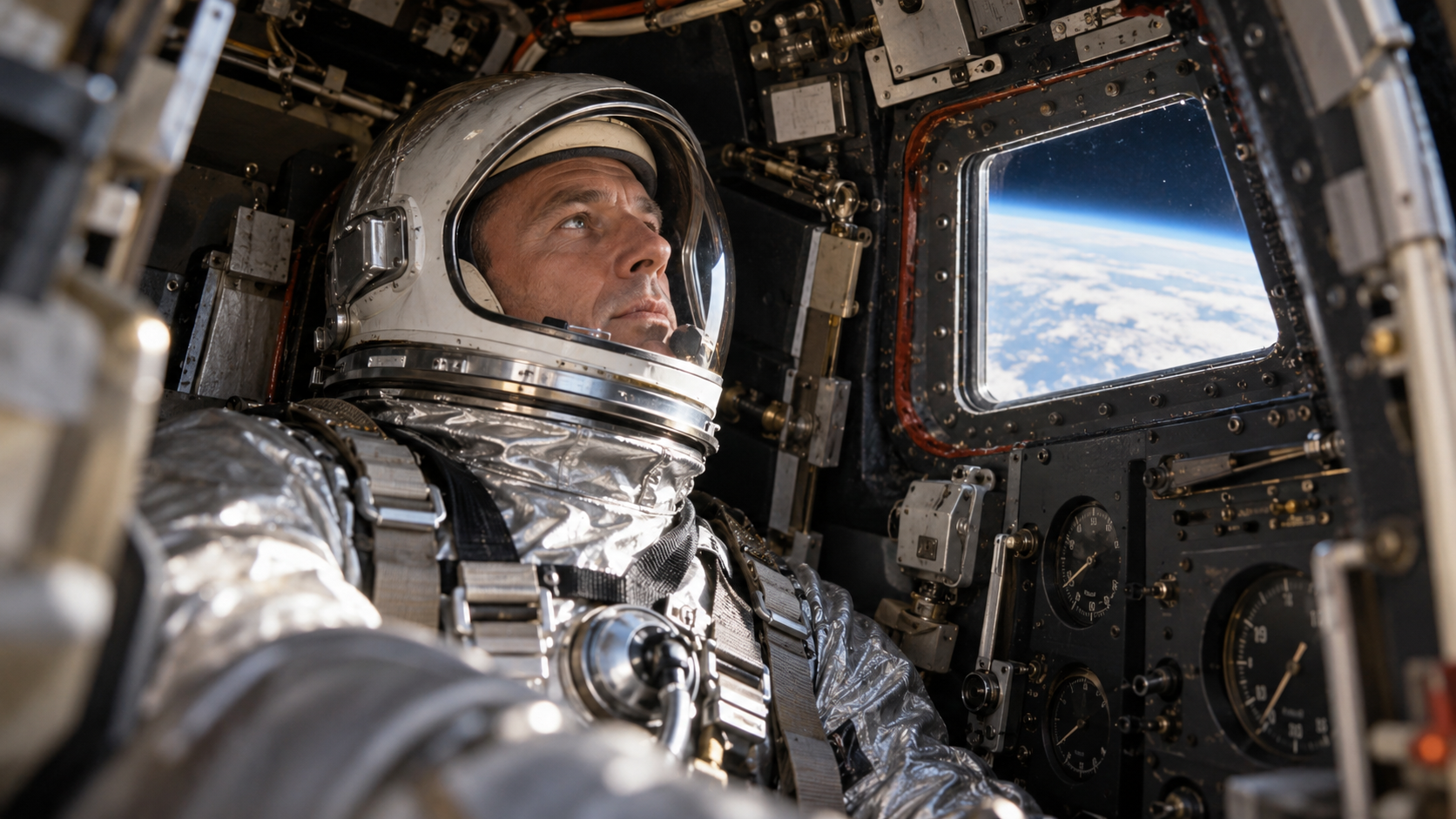
On May 5, 1961, Alan Shepard launched from Cape Canaveral aboard the Mercury capsule Freedom 7 and became the first American in space. A Redstone rocket carried him on a suborbital arc that lasted a little more than fifteen minutes. The capsule climbed above the atmosphere, crossed about three hundred miles of ocean, and splashed down for helicopter recovery near the USS Lake Champlain.
The mission was shorter than Yuri Gagarin’s orbital flight three weeks earlier, but it addressed crucial engineering and physiological questions. Shepard experienced launch acceleration and about five minutes of weightlessness, reported his condition, viewed Earth through the window, and used hand controllers to change the capsule’s attitude. That manual test supported astronauts’ argument that a pilot should be an active spacecraft operator.
Freedom 7’s blunt heat shield protected it during reentry, while parachutes slowed the capsule for the Atlantic landing. Biomedical sensors recorded Shepard’s heart rate, breathing, and temperature. The flight verified the Mercury-Redstone system and provided operational experience for tracking, communications, recovery, and the later orbital missions flown on Atlas rockets.
Shepard returned to space a decade later as Apollo 14 commander. His first flight mattered because it turned a tightly controlled test into direct evidence that a person could remain functional, make observations, and control a spacecraft during a brief journey beyond the atmosphere. For science history, the event also shows how evidence moves from an observation or engineered test into a durable body of knowledge. Instruments supplied measurements, specialists debated interpretation, and later work refined what the first result could mean. Archives preserve the early record while new methods let researchers ask different questions of it. That continuing revision is the process through which a dated milestone remains scientifically useful. Seen across a longer timeline, scientific milestones are junctions rather than isolated beginnings. Earlier experiments, tools, and institutions made the work possible, while later teams tested limits and carried the result into new settings. What survives is a traceable chain of evidence, correction, and application that allows one moment to remain relevant as knowledge and technology continue to change. The anniversary highlights the difference between a first result and a finished understanding. A successful observation can settle one question while opening several harder ones, and even a failed objective can reshape later designs. Preserved data, specimens, photographs, and hardware allow new generations to revisit the work with better tools. Science advances through that continuity rather than stopping on a memorable date. Its calendar date is an entry point, not an endpoint. The people involved worked with the instruments, assumptions, and social conditions of their time, and later research has both extended and corrected their conclusions. Separating what was known that day from what became clear afterward protects the history from myth and shows how cumulative evidence turns an episode into lasting scientific knowledge.
Freedom 7 followed a suborbital path rather than circling the planet.
The flight still included launch acceleration, weightlessness, reentry, and ocean recovery.
Shepard manually changed the capsule's pitch, yaw, and roll attitude.
His performance supported the case for keeping astronauts involved in spacecraft operation.
Tracking stations, medical teams, ships, and helicopters rehearsed a complete human-spaceflight system.
The lessons fed directly into later Mercury orbital missions.
Explore more of "On This Day ..."
Discover more events from the same date across news, politics, technology, sports, and other fields. Each link highlights significant moments that shaped history on different fronts.