

On This Day in Science: May 1, 1930
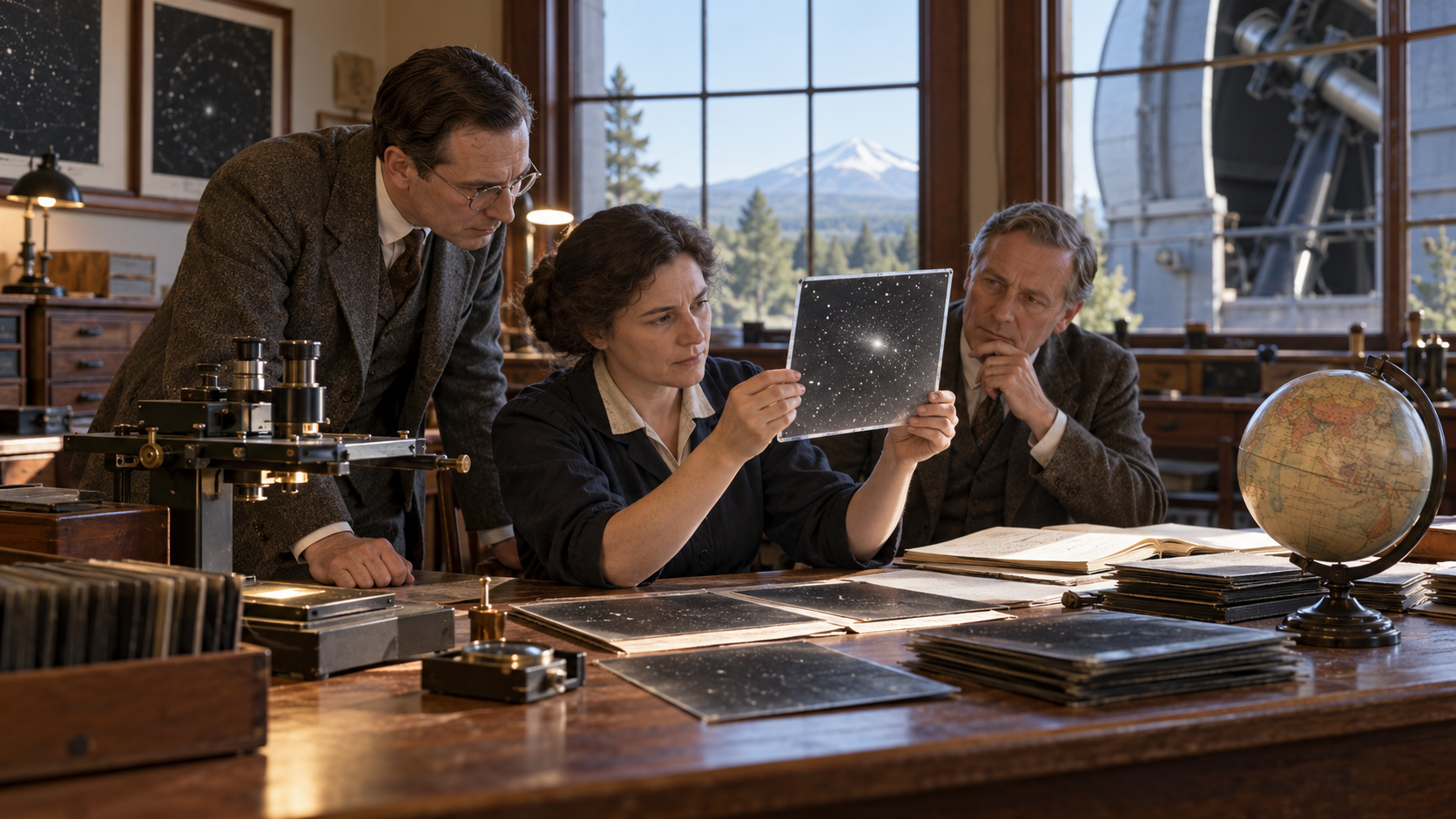
On May 1, 1930, Lowell Observatory formally announced Pluto as the name of the newly discovered world beyond Neptune. Clyde Tombaugh had identified the object on photographic plates at the observatory in Flagstaff, Arizona, earlier that year. The name came from Venetia Burney, an eleven-year-old schoolgirl in Oxford, England, who suggested the Roman god of the underworld after hearing news of the discovery from her grandfather.
Venetia’s suggestion traveled through Oxford astronomer Herbert Hall Turner to Lowell Observatory, which had received many proposals. Observatory staff selected Pluto in a vote. The name fit the tradition of using classical mythology for planets and began with the initials of Percival Lowell, whose search for a predicted Planet X had inspired the observing program, although Pluto later proved far too small to explain the orbital discrepancies Lowell had studied.
Pluto remained the ninth planet in schoolbooks for seventy-six years. Better measurements revealed a small icy body with an inclined, eccentric orbit, and discoveries of other trans-Neptunian objects changed the context around it. In 2006 the International Astronomical Union classified Pluto as a dwarf planet, a decision about scientific categories rather than about the richness of the world itself.
NASA’s New Horizons flyby in 2015 transformed Pluto from a distant point into a complex landscape of nitrogen ice, mountains, glaciers, haze, and five known moons. The naming announcement marks the moment a faint discovery became part of public language and planetary science. For science history, the event also shows how evidence moves from an observation or engineered test into a durable body of knowledge. Instruments supplied measurements, specialists debated interpretation, and later work refined what the first result could mean. Archives preserve the early record while new methods let researchers ask different questions of it. That continuing revision is the process through which a dated milestone remains scientifically useful. Seen across a longer timeline, scientific milestones are junctions rather than isolated beginnings. Earlier experiments, tools, and institutions made the work possible, while later teams tested limits and carried the result into new settings. What survives is a traceable chain of evidence, correction, and application that allows one moment to remain relevant as knowledge and technology continue to change. The anniversary highlights the difference between a first result and a finished understanding. A successful observation can settle one question while opening several harder ones, and even a failed objective can reshape later designs. Preserved data, specimens, photographs, and hardware allow new generations to revisit the work with better tools. Science advances through that continuity rather than stopping on a memorable date. Its calendar date is an entry point, not an endpoint. The people involved worked with the instruments, assumptions, and social conditions of their time, and later research has both extended and corrected their conclusions. Separating what was known that day from what became clear afterward protects the history from myth and shows how cumulative evidence turns an episode into lasting scientific knowledge.
Venetia Burney proposed Pluto after hearing about the newly discovered world over breakfast.
Her grandfather passed the idea through Oxford astronomer Herbert Hall Turner to Lowell Observatory.
Pluto followed the mythological naming tradition used for the major planets.
Its first two letters also recalled Percival Lowell, whose observatory conducted the search.
Later observations showed that Pluto belongs to a broad population beyond Neptune.
New Horizons revealed an active and varied world regardless of its formal classification.
Explore more of "On This Day ..."
Discover more events from the same date across news, politics, technology, sports, and other fields. Each link highlights significant moments that shaped history on different fronts.