

On This Day in Science: May 14, 1973
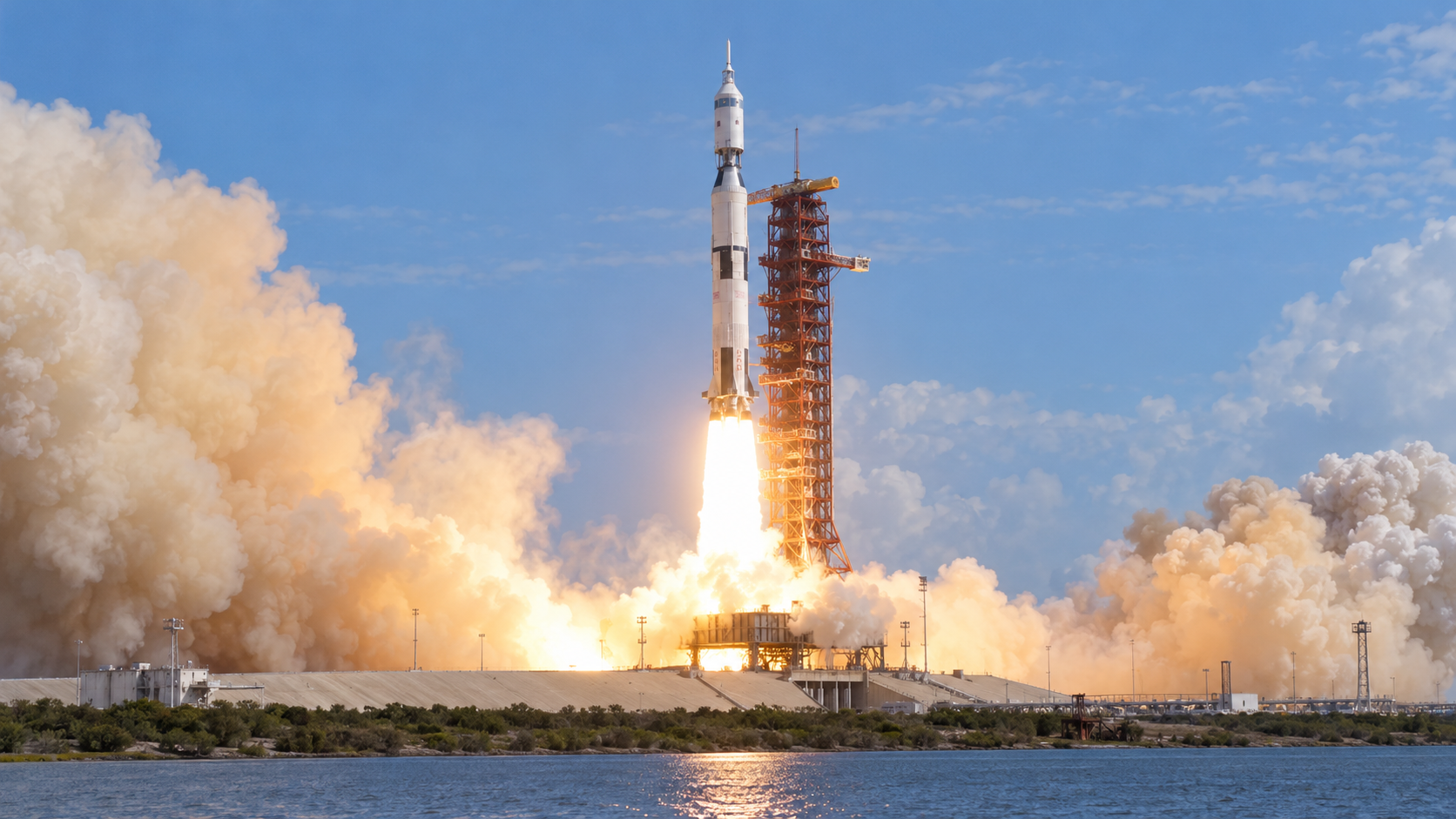
On May 14, 1973, the final Saturn V launched Skylab, the United States’ first space station, from Kennedy Space Center. The uncrewed workshop contained living quarters, laboratories, Earth-observation instruments, and the Apollo Telescope Mount for solar research. Within about a minute of liftoff, however, aerodynamic forces tore away its micrometeoroid shield, damaged one solar wing, and jammed the other.
The missing shield had also served as thermal protection. Without it, sunlight overheated the station while the loss of solar power threatened its electrical systems. Controllers changed Skylab’s attitude to reduce heating and postponed the first crew while engineers designed repair options on Earth. The station reached orbit, but its scientific program could begin only if people could stabilize and restore it.
The first crew launched eleven days later. They deployed a parasol-like sunshade through an airlock, then freed the jammed solar array during a spacewalk. Three crews eventually lived aboard Skylab, studying the Sun, Earth, materials, human adaptation, and long-duration operations. Solar observations helped establish the importance of coronal holes and recorded powerful activity in unprecedented detail.
Skylab became a success because the launch failure produced a repair problem rather than abandonment. Its story joined large-scale engineering with the improvisation needed to turn damaged hardware into a working scientific station. Seen across a longer timeline, scientific milestones are junctions rather than isolated beginnings. Earlier experiments, tools, and institutions made the work possible, while later teams tested limits and carried the result into new settings. What survives is a traceable chain of evidence, correction, and application that allows one moment to remain relevant as knowledge and technology continue to change. The anniversary highlights the difference between a first result and a finished understanding. A successful observation can settle one question while opening several harder ones, and even a failed objective can reshape later designs. Preserved data, specimens, photographs, and hardware allow new generations to revisit the work with better tools. Science advances through that continuity rather than stopping on a memorable date. Its calendar date is an entry point, not an endpoint. The people involved worked with the instruments, assumptions, and social conditions of their time, and later research has both extended and corrected their conclusions. Separating what was known that day from what became clear afterward protects the history from myth and shows how cumulative evidence turns an episode into lasting scientific knowledge. For science history, the event also shows how evidence moves from an observation or engineered test into a durable body of knowledge. Instruments supplied measurements, specialists debated interpretation, and later work refined what the first result could mean. Archives preserve the early record while new methods let researchers ask different questions of it. That continuing revision is the process through which a dated milestone remains scientifically useful.
A protective shield deployed too early and was ripped from the station.
One solar wing was lost and debris pinned the other against Skylab's side.
The missing shield exposed the workshop to intense solar heating.
Controllers adjusted attitude while engineers prepared a shade and solar-array repair.
The first crew stabilized Skylab and restored enough power for operations.
Three expeditions then carried out solar, Earth, biomedical, and materials research.
Explore more of "On This Day ..."
Discover more events from the same date across news, politics, technology, sports, and other fields. Each link highlights significant moments that shaped history on different fronts.