

How Carbon Capture Separates CO2 Explainer
Carbon capture separates carbon dioxide from a gas mixture so it can be kept out of the atmosphere. Point-source systems can treat flue gas from power or industrial plants, process streams from hydrogen or natural-gas facilities, or other concentrated sources. Direct air capture starts with much more dilute carbon dioxide and is a related but more energy-intensive separation problem.
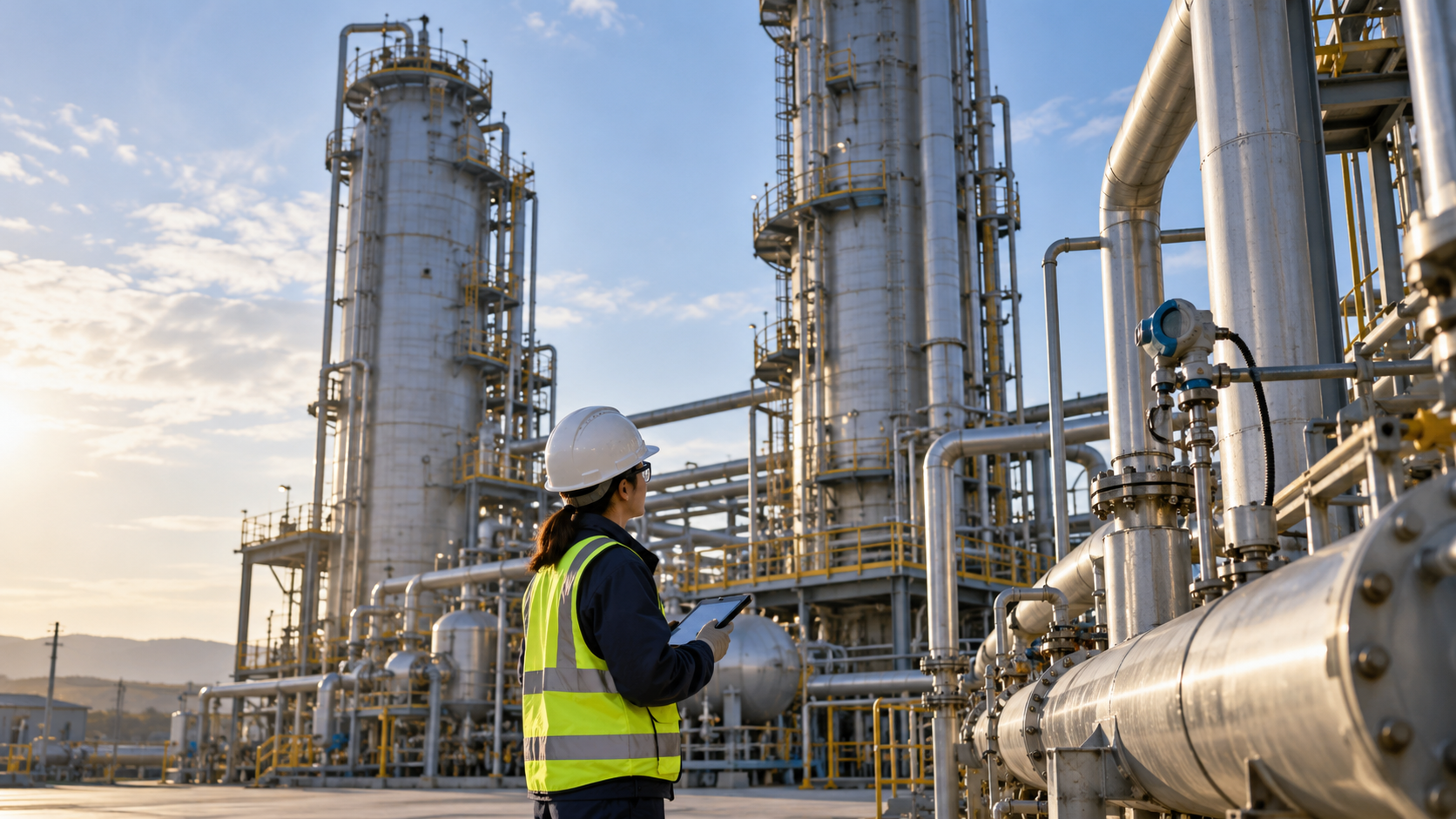
A mature post-combustion method uses a liquid solvent, often an amine solution. Flue gas enters an absorber where carbon dioxide selectively reacts with or dissolves into the liquid. The cleaned gas leaves separately. Carbon-rich solvent flows to a regeneration vessel, where heat releases concentrated carbon dioxide and restores the solvent for reuse.
Other systems use solid sorbents, membranes, chemical looping, mineral reactions, or cooling and pressure changes. The best approach depends on carbon-dioxide concentration, pressure, temperature, contaminants, scale, and product purity. Dust, sulfur compounds, oxygen, and water can degrade materials or interfere with capture, so pretreatment and solvent management may be necessary.
Separation and regeneration require energy. Supplying steam, electricity, pumps, compression, and cooling can reduce a plant’s net output or increase fuel use. Engineers improve contact surfaces, catalysts, heat integration, solvent capacity, and process control to lower this penalty. Capture rate alone is not enough; lifecycle accounting includes upstream energy, equipment, transport, and storage performance.
After separation, carbon dioxide is dried and compressed into a dense form for pipelines, ships, rail, or trucks. Most large climate-focused projects plan injection into deep saline formations or other carefully selected rock. Wells, caprock, pressure, seismic surveys, and monitoring are used to manage leakage risk. Some carbon dioxide is used in products, but durability varies by product.
Carbon capture does not remove other environmental impacts automatically and cannot substitute for every direct emissions reduction. It may be useful where process chemistry produces carbon dioxide or alternatives are difficult. Its value depends on reliable capture, low-emission energy, permanent storage, measured leakage, cost, and the system it is compared with.
Capture separates carbon dioxide from flue gas, process gas, or very dilute air.
Solvent absorbers bind CO2 and regeneration towers release a concentrated stream for reuse of the solvent.
Sorbents, membranes, looping, minerals, and cryogenic methods suit different gas conditions.
Heat, power, compression, cooling, contaminants, and material degradation create energy and cost penalties.
Captured CO2 is conditioned, transported, and monitored in durable storage or selected products.
Climate value requires lifecycle accounting, low leakage, reliable storage, and comparison with alternatives.
Explore more "Explainers"
Discover additional explainers across politics, science, business, technology, and other fields. Each explainer breaks down a complex idea into clear, everyday language—helping you better understand how major concepts, systems, and debates shape the world around us.