

On This Day in Science: June 15, 1991
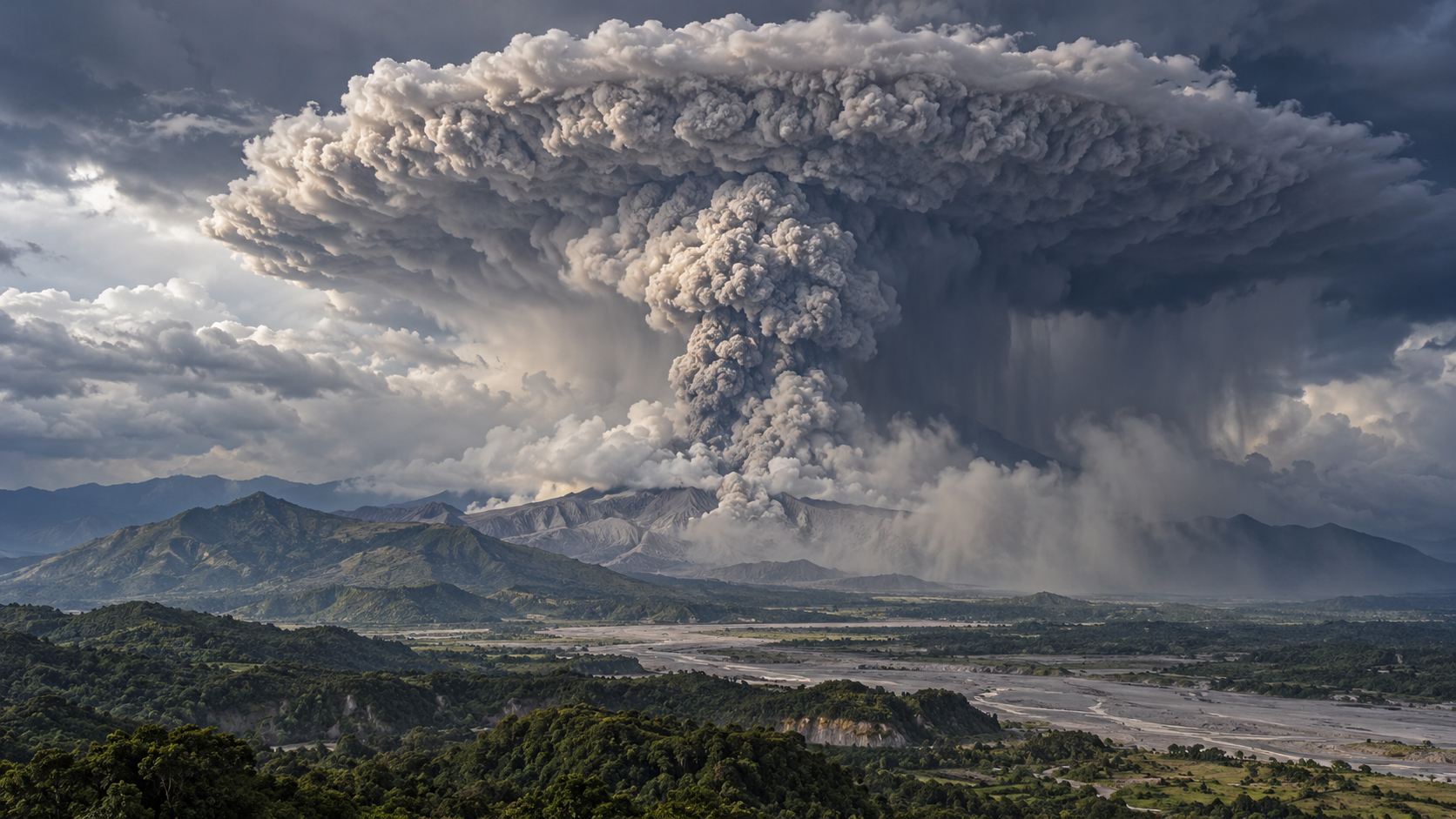
On June 15, 1991, Mount Pinatubo in the Philippines produced its climactic eruption after weeks of escalating earthquakes, steam explosions, and magma movement. The eruption column rose into the stratosphere and collapsed repeatedly, sending pyroclastic flows across valleys around the volcano. Typhoon Yunya passed nearby, mixing rain with ash and increasing roof loads.
Scientists from the Philippine Institute of Volcanology and Seismology and the U.S. Geological Survey had expanded monitoring after activity began in April. Seismicity, sulfur-dioxide measurements, ground deformation, and field observations supported forecasts that led to large evacuations, including from Clark Air Base. Those warnings saved many thousands of lives even though the eruption still caused severe destruction.
Pinatubo injected roughly twenty million metric tons of sulfur dioxide into the stratosphere. The gas formed sulfate aerosols that reflected sunlight and cooled Earth’s average surface temperature for a short period. The aerosols also affected stratospheric chemistry, while ash and continuing lahars transformed communities and river systems for years.
The event became a benchmark for volcanic forecasting and climate science because its signals were measured before, during, and after eruption. It showed that monitoring cannot prevent an eruption, but it can convert uncertain warning signs into decisions that greatly reduce loss of life. The anniversary highlights the difference between a first result and a finished understanding. A successful observation can settle one question while opening several harder ones, and even a failed objective can reshape later designs. Preserved data, specimens, photographs, and hardware allow new generations to revisit the work with better tools. Science advances through that continuity rather than stopping on a memorable date. Its calendar date is an entry point, not an endpoint. The people involved worked with the instruments, assumptions, and social conditions of their time, and later research has both extended and corrected their conclusions. Separating what was known that day from what became clear afterward protects the history from myth and shows how cumulative evidence turns an episode into lasting scientific knowledge. For science history, the event also shows how evidence moves from an observation or engineered test into a durable body of knowledge. Instruments supplied measurements, specialists debated interpretation, and later work refined what the first result could mean. Archives preserve the early record while new methods let researchers ask different questions of it. That continuing revision is the process through which a dated milestone remains scientifically useful. Seen across a longer timeline, scientific milestones are junctions rather than isolated beginnings. Earlier experiments, tools, and institutions made the work possible, while later teams tested limits and carried the result into new settings. What survives is a traceable chain of evidence, correction, and application that allows one moment to remain relevant as knowledge and technology continue to change.
Earthquakes, gas emissions, deformation, and small explosions revealed magma approaching the surface.
Scientists revised hazard zones as the evidence changed.
Rain from Typhoon Yunya saturated falling ash and increased the load on roofs.
Water remobilized loose deposits into destructive lahars long after the main eruption.
Stratospheric sulfur dioxide formed droplets that reflected incoming sunlight.
The temporary cooling offered a measured example of how volcanic aerosols influence climate.
Explore more of "On This Day ..."
Discover more events from the same date across news, politics, technology, sports, and other fields. Each link highlights significant moments that shaped history on different fronts.