

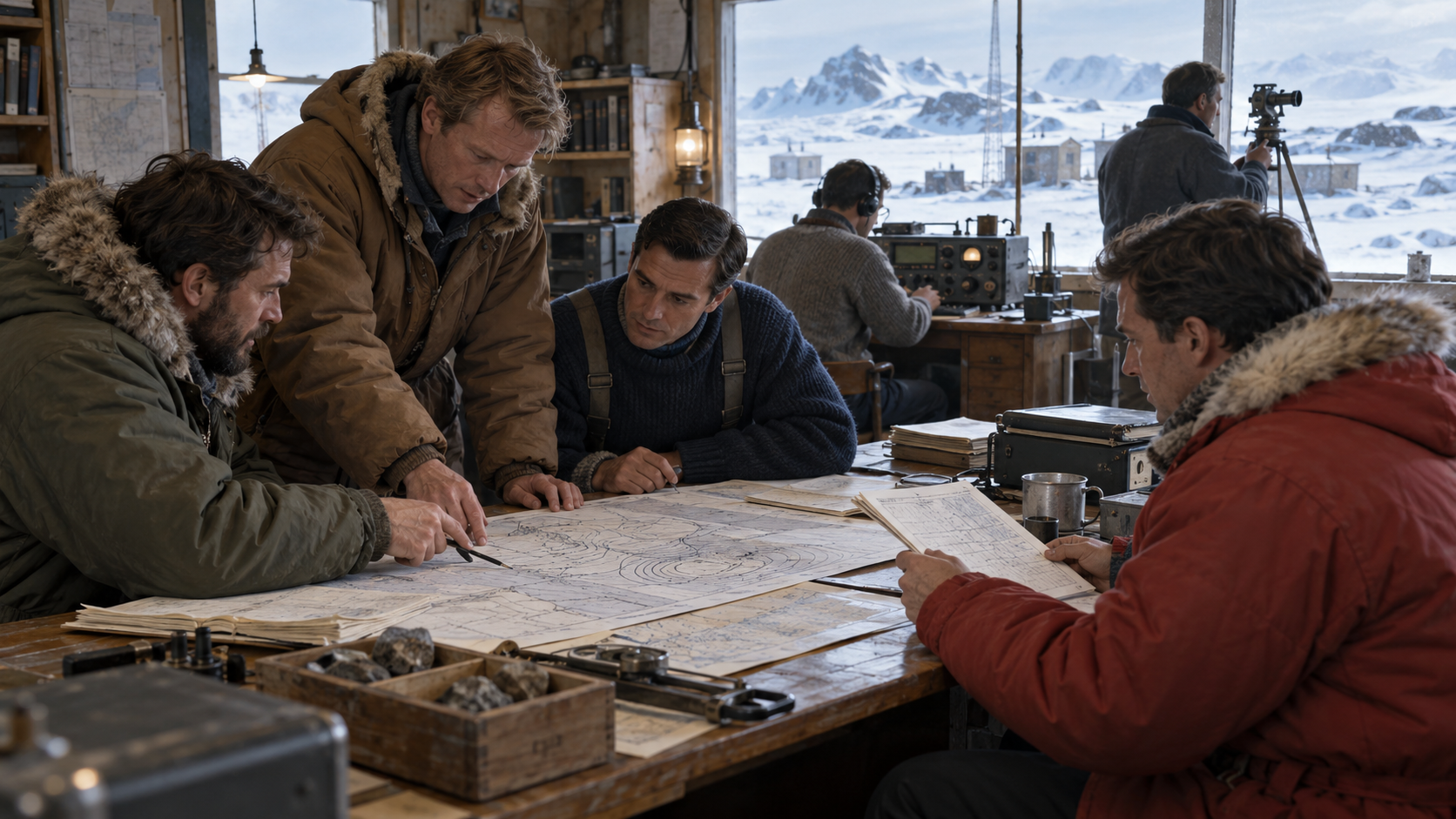
On This Day in Science: June 23, 1961
On June 23, 1961, the Antarctic Treaty entered into force after ratification by the twelve countries whose scientists had worked in Antarctica during the 1957–1958 International Geophysical Year. The agreement set aside the region south of sixty degrees south latitude for peaceful purposes and created a durable framework for research across competing territorial claims.
The treaty prohibits military measures such as weapons testing and fortification, while permitting military personnel or equipment to support peaceful science and logistics. It guarantees freedom of scientific investigation, calls for exchange of plans, observations, and personnel, and allows inspection of stations and equipment to build confidence that the rules are being followed.
It also prohibits nuclear explosions and disposal of radioactive waste in the treaty area. The text neither resolves nor recognizes disputed sovereignty claims; instead, it freezes their legal effect while cooperation continues. Later agreements in the Antarctic Treaty System added conservation, environmental protection, and management of living resources.
The treaty matters to science because openness is built into the governing structure of an entire continent. Fieldwork still operates under national programs and geopolitical pressures, but shared data, station access, and peaceful use made Antarctica a long-running experiment in international scientific governance. The anniversary highlights the difference between a first result and a finished understanding. A successful observation can settle one question while opening several harder ones, and even a failed objective can reshape later designs. Preserved data, specimens, photographs, and hardware allow new generations to revisit the work with better tools. Science advances through that continuity rather than stopping on a memorable date. Its calendar date is an entry point, not an endpoint. The people involved worked with the instruments, assumptions, and social conditions of their time, and later research has both extended and corrected their conclusions. Separating what was known that day from what became clear afterward protects the history from myth and shows how cumulative evidence turns an episode into lasting scientific knowledge. For science history, the event also shows how evidence moves from an observation or engineered test into a durable body of knowledge. Instruments supplied measurements, specialists debated interpretation, and later work refined what the first result could mean. Archives preserve the early record while new methods let researchers ask different questions of it. That continuing revision is the process through which a dated milestone remains scientifically useful. Seen across a longer timeline, scientific milestones are junctions rather than isolated beginnings. Earlier experiments, tools, and institutions made the work possible, while later teams tested limits and carried the result into new settings. What survives is a traceable chain of evidence, correction, and application that allows one moment to remain relevant as knowledge and technology continue to change.
The original parties had cooperated during the International Geophysical Year.
The treaty preserved freedom of investigation and exchange of scientific results.
Military activity is prohibited except when personnel or equipment support peaceful purposes.
Any party may inspect stations, ships, aircraft, and equipment under the treaty's procedures.
The agreement does not settle national claims to Antarctic territory.
It prevents treaty activity from strengthening or weakening those positions while cooperation continues.
Explore more of "On This Day ..."
Discover more events from the same date across news, politics, technology, sports, and other fields. Each link highlights significant moments that shaped history on different fronts.