

On This Day in Science: July 21, 2011
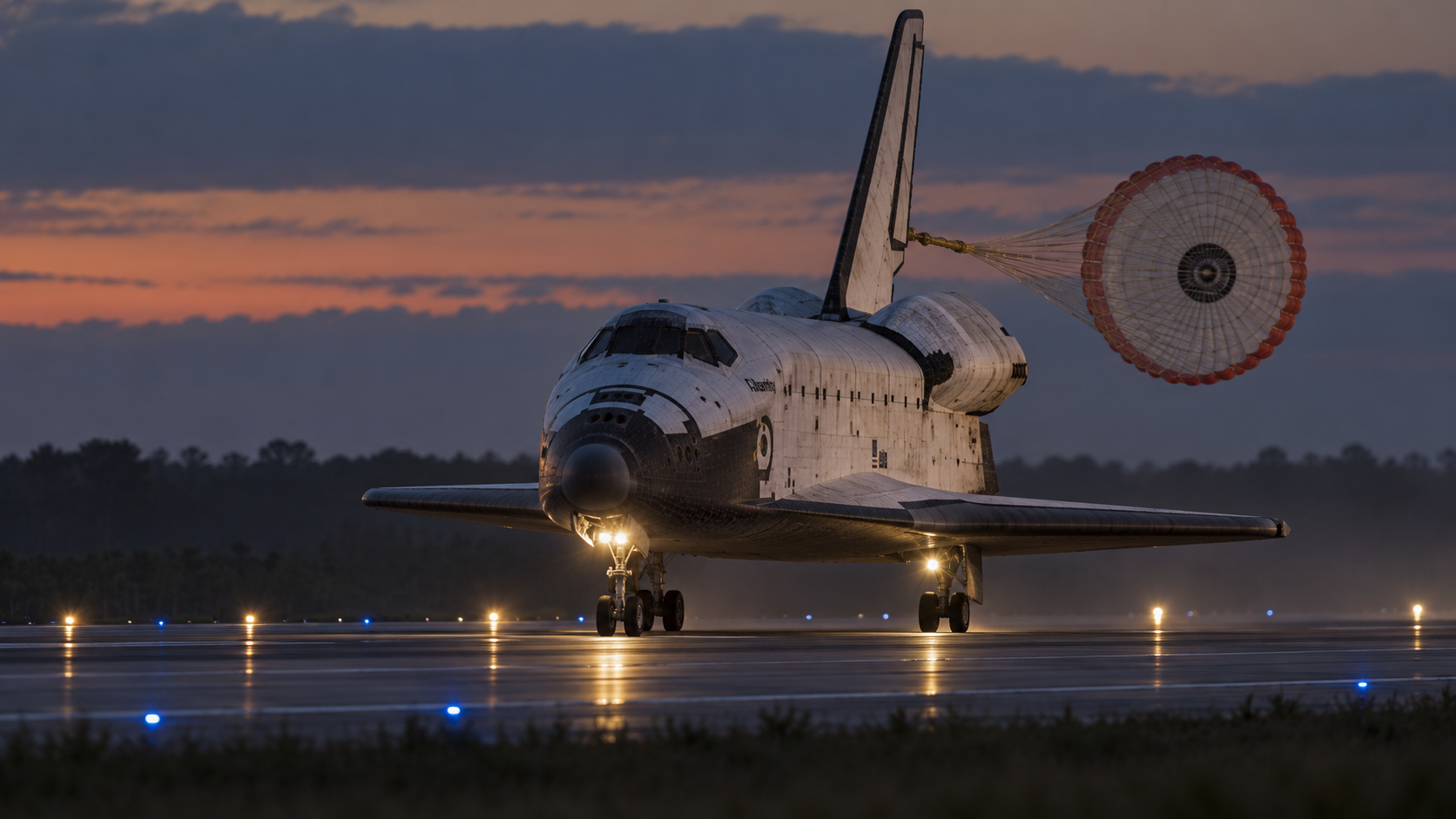
On July 21, 2011, Space Shuttle Atlantis touched down on Kennedy Space Center’s Runway 15 before dawn, completing mission STS-135. Commander Chris Ferguson and pilot Doug Hurley guided the orbiter through reentry and an unpowered glide, while Sandy Magnus and Rex Walheim joined them on the flight deck for the program’s final landing.
Atlantis had spent nearly thirteen days in space and delivered a heavily loaded logistics module to the International Space Station. The crew transferred supplies, spare parts, experiments, and equipment intended to sustain the station after the shuttle’s retirement. They returned cargo and a failed ammonia pump module to Earth.
The landing closed a fleet history that began with Columbia in April 1981. Across 135 missions, five orbiters carried people, laboratories, satellites, and station components. Challenger and Columbia were lost with their crews, and both accidents led to long investigations and changes in design, management, and flight operations.
After wheels stopped, the United States entered a gap in domestic crewed orbital launches. NASA astronauts continued flying aboard Russian Soyuz spacecraft until commercial crew missions began in 2020. Atlantis’s final glide therefore ended one transportation system while the station it helped build continued as the main destination for international human spaceflight. For science history, the event also shows how evidence moves from an observation or engineered test into a durable body of knowledge. Instruments supplied measurements, specialists debated interpretation, and later work refined what the first result could mean. Archives preserve the early record while new methods let researchers ask different questions of it. That continuing revision is the process through which a dated milestone remains scientifically useful. Seen across a longer timeline, scientific milestones are junctions rather than isolated beginnings. Earlier experiments, tools, and institutions made the work possible, while later teams tested limits and carried the result into new settings. What survives is a traceable chain of evidence, correction, and application that allows one moment to remain relevant as knowledge and technology continue to change. The anniversary highlights the difference between a first result and a finished understanding. A successful observation can settle one question while opening several harder ones, and even a failed objective can reshape later designs. Preserved data, specimens, photographs, and hardware allow new generations to revisit the work with better tools. Science advances through that continuity rather than stopping on a memorable date. Its calendar date is an entry point, not an endpoint. The people involved worked with the instruments, assumptions, and social conditions of their time, and later research has both extended and corrected their conclusions. Separating what was known that day from what became clear afterward protects the history from myth and shows how cumulative evidence turns an episode into lasting scientific knowledge.
Atlantis shed orbital speed through atmospheric heating and banking turns.
With no powered go-around, the orbiter had one chance to reach the runway.
STS-135 delivered supplies intended to bridge the end of shuttle cargo service.
Its large payload bay also brought bulky equipment back to Earth.
The orbiters retired after thirty years of flight.
The International Space Station remained active and new crew vehicles were developed.
Explore more of "On This Day ..."
Discover more events from the same date across news, politics, technology, sports, and other fields. Each link highlights significant moments that shaped history on different fronts.