

On This Day in Science: July 25, 1984
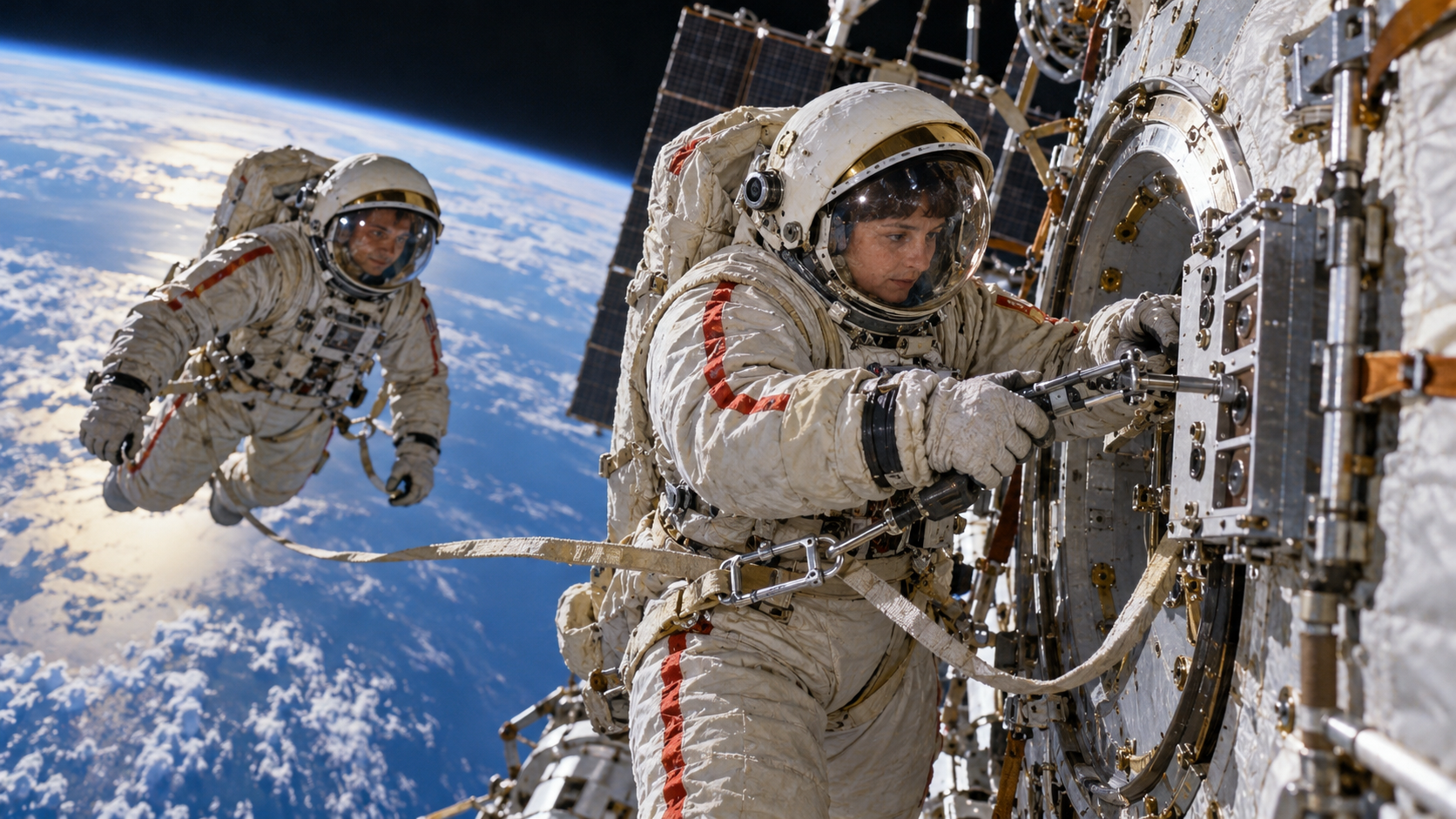
On July 25, 1984, Soviet cosmonaut Svetlana Savitskaya left the Salyut 7 space station and became the first woman to perform a spacewalk. Accompanied by Vladimir Dzhanibekov, she spent more than three and a half hours outside while commander Igor Volk remained inside the station.
The principal task was testing the Universal Hand Tool, a system designed for welding, brazing, cutting, and coating metal in vacuum. Savitskaya and Dzhanibekov mounted samples, operated the electron-beam device, and returned materials for analysis. The work examined whether fabrication and repair techniques could be practical in orbit.
Savitskaya had already become the second woman in space in 1982. Her 1984 flight occurred during a Soviet program that included both symbolic competition and serious technical assignments. As with all early spacewalks, the suit, tether, handholds, thermal conditions, and limited mobility shaped what could be done.
The achievement expanded the record of women’s participation in human spaceflight, though equal access to crews and leadership remained far from complete. Later women performed spacewalks for assembly, repair, and science on the Space Shuttle, Mir, and the International Space Station. Savitskaya’s excursion combined a historic first with a demanding materials-engineering experiment. For science history, the event also shows how evidence moves from an observation or engineered test into a durable body of knowledge. Instruments supplied measurements, specialists debated interpretation, and later work refined what the first result could mean. Archives preserve the early record while new methods let researchers ask different questions of it. That continuing revision is the process through which a dated milestone remains scientifically useful. Seen across a longer timeline, scientific milestones are junctions rather than isolated beginnings. Earlier experiments, tools, and institutions made the work possible, while later teams tested limits and carried the result into new settings. What survives is a traceable chain of evidence, correction, and application that allows one moment to remain relevant as knowledge and technology continue to change. The anniversary highlights the difference between a first result and a finished understanding. A successful observation can settle one question while opening several harder ones, and even a failed objective can reshape later designs. Preserved data, specimens, photographs, and hardware allow new generations to revisit the work with better tools. Science advances through that continuity rather than stopping on a memorable date. Its calendar date is an entry point, not an endpoint. The people involved worked with the instruments, assumptions, and social conditions of their time, and later research has both extended and corrected their conclusions. Separating what was known that day from what became clear afterward protects the history from myth and shows how cumulative evidence turns an episode into lasting scientific knowledge.
Savitskaya and Dzhanibekov exited through the station's airlock.
Tethers and handholds controlled their movement during more than three hours outside.
The cosmonauts used an electron-beam tool on prepared samples.
Researchers evaluated welding, cutting, brazing, and coating after return to Earth.
Savitskaya's EVA was a milestone for women in space.
It was also an operational experiment aimed at future construction and repair.
Explore more of "On This Day ..."
Discover more events from the same date across news, politics, technology, sports, and other fields. Each link highlights significant moments that shaped history on different fronts.